

How Finland Used an Outdated Fighter to Humiliate the Red Air Force
YouTube / AllthingsWW2
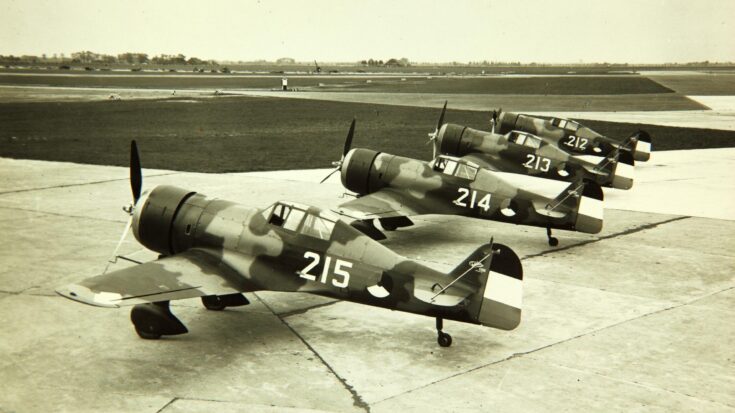
The Fokker D.XXI was already outdated by the time the Second World War began. It had fixed landing gear, fabric-covered surfaces, and lacked armor or self-sealing fuel tanks. On paper, it looked unfit for modern air combat. Yet in Finnish service, this modest fighter achieved one of the most lopsided combat records of the early war.

A Product of Decline, Not Innovation
In 1935, the Netherlands East Indies Army issued a requirement for a simple, rugged fighter. Fokker’s response, led by engineer Erich Schatzki, produced an aircraft built around steel tubing, wooden wings, and fabric covering. Power came from an 830 hp Bristol Mercury radial engine.
The aircraft first flew in February 1936 and met all official requirements. Dutch defense policy shifts slowed adoption, but Finland’s interest revived the program. Finland ordered the D.XXI in late 1936 and later produced it under license, modifying it for winter operations with ski-equipped landing gear.

Service Over Western Europe
The D.XXI entered Dutch service in 1938. Its light weight gave it strong climb performance and good ceiling, making it effective as an interceptor. During neutrality patrols in 1939, Dutch pilots scored their first victory against a German He 111.
When Germany invaded in May 1940, only 28 D.XXIs were available. Despite being heavily outnumbered, Dutch squadrons shot down ten German aircraft before most were destroyed or burned after surrender. Denmark’s D.XXIs saw even less action, with several lost on the ground during the German invasion.

The Winter War Proves Its Worth
The D.XXI earned its reputation during the Winter War between Finland and the Soviet Union. Facing over 3,000 Soviet aircraft, Finland had just 35 D.XXIs available for frontline fighter duty. Deployed mainly as bomber interceptors, the aircraft’s climb rate and maneuverability proved decisive.
Soviet bombers lacked armor and self-sealing tanks, making them vulnerable to the D.XXI’s four machine guns. During the early months, Finnish pilots inflicted heavy losses while suffering minimal attrition. As Soviet tactics improved and fighter escorts appeared, results declined, but the damage was already done.

Over three months, D.XXI pilots flew nearly 2,500 sorties and claimed 127 enemy aircraft. Finland lost only 12 D.XXIs, nine in combat. Twelve Finnish pilots became aces while flying the type.
A Small Aircraft With a Clear Lesson
Only 148 Fokker D.XXIs were built, and its global impact was limited. Yet in Finnish hands, it demonstrated how training, organization, and tactical discipline could overcome numerical and technical disadvantages. The aircraft did not win the Winter War, but it forced the Soviet Union to pay a far higher price than expected.








