

JFK’s survival story in the Pacific Theatre during World War 2
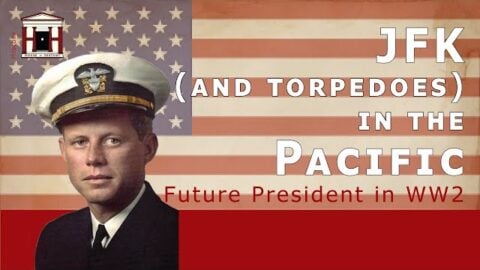
YouTube / House of History
During World War II, the United States relied heavily on fast, agile Patrol Torpedo boats in the Pacific. These small craft became famous after Captain John Bulkeley used one to rescue General Douglas MacArthur and his family. But another young officer would also become closely linked to these boats. His PT boat was sunk by a Japanese warship, leaving him and his crew stranded for days with little hope of survival. If they hadn’t made it through, America would have lost a future president. That young officer was John F. Kennedy, serving aboard one of these remarkable Patrol Torpedo boats.
Long before he entered the White House, John F. Kennedy was a young naval officer eager to serve his country during World War II. Despite chronic back problems and a history of illness, he insisted on active duty. His determination placed him in the heart of the Pacific Theatre, commanding Patrol Torpedo Boat 109, better known as PT-109. These small wooden vessels carried out perilous nighttime operations, striking quickly at Japanese ships before slipping back into darkness.
A Deadly Night in the Blackett Strait
On the night of August 2, 1943, PT-109 was one of several boats assigned to intercept Japanese destroyers moving through the Blackett Strait. The waters were pitch-black, and visibility was poor. Suddenly, out of the night, the Japanese destroyer Amagiri appeared. In seconds, the massive ship slammed into the much smaller PT-109, cutting it clean in two. The explosion and impact killed two crewmen instantly, and the survivors were thrown into flaming fuel and debris-filled water.
Shocked, injured, and adrift, the surviving crew looked to their young skipper for direction. Kennedy, despite his own injuries, rallied his men and helped them cling to the drifting bow section, one of the few parts of the boat still afloat. Realizing they couldn’t stay in open water, he made a plan. The nearest island was over three miles away, and the swim would be long, exhausting, and dangerous. Still, Kennedy made the decision to lead his men toward safety.
Days of Uncertainty and Survival
With no other options, the crew set off. Kennedy took responsibility for the most badly injured crewman, Patrick McMahon, towing him by gripping the strap of his life jacket with his teeth. The swim took hours as the group battled currents, fatigue, and hunger. At last, they reached Plum Pudding Island, a tiny, uninhabited patch of land that offered little more than shelter and hope.
The next several days were a test of endurance. The men had almost no food, no fresh water, and no means of signaling Allied forces. Kennedy made repeated swims into open water searching for American patrols or friendly islanders who might help. The danger was constant- enemy boats, sharks, exhaustion, and the possibility of never being found. Yet Kennedy continued, refusing to give up on his crew.
Help Arrives in an Unexpected Form
Fortune changed when two Solomon Islander coastwatchers, Biuku Gasa and Eroni Kumana, found signs of the stranded men. They made contact with Kennedy and offered to help arrange a rescue. Because PT-109 had no working equipment, Kennedy carved a message into a coconut shell detailing their location and condition. The islanders carried this coconut through treacherous waters to an Allied base- a risky journey that finally alerted U.S. forces.
On August 8, 1943, nearly a week after the sinking, Kennedy and his surviving crew were rescued. The young lieutenant earned the Navy and Marine Corps Medal for his extraordinary leadership and bravery. His actions became one of the most celebrated survival stories of the Pacific War, significantly shaping his image when he later entered politics.
The Enduring Legacy of PT-109
The story of PT-109 is more than a wartime anecdote. It is a defining moment in Kennedy’s life. Had he and his men not survived, the United States would have lost a future president who would go on to guide the nation through some of the most critical events of the 20th century. Today, JFK’s survival remains a powerful testament to courage, resilience, and leadership in the face of overwhelming odds.







