P-47 Thunderbolt vs P-51 Mustang – Which Was Best?
YouTube / Imperial War Museums

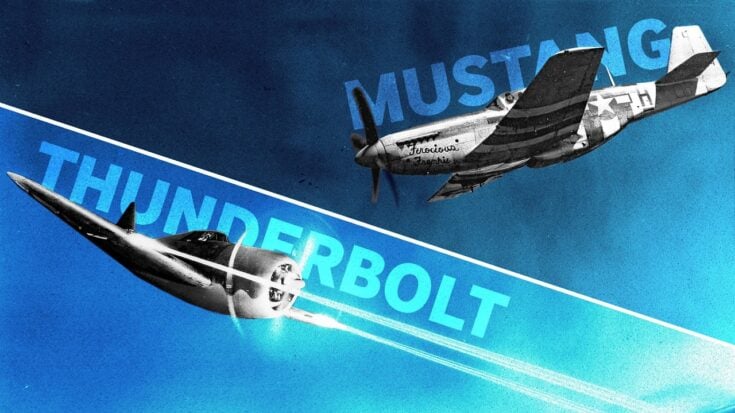
When P-51 Mustangs arrived at Duxford on December 16, 1944, the reaction among many pilots of the 78th Fighter Group was not excitement. For nearly two years, they had flown the massive, battle-hardened P-47 Thunderbolt. The sleek Mustang may have looked superior on paper, but many Thunderbolt pilots saw it as fragile compared to their trusted Jug. That skepticism reflected a deeper debate that still continues today. Which fighter was truly better, the P-47 or the P-51?

Different Design Philosophies

The P-47 Thunderbolt was designed as a high-altitude, heavily armed interceptor. Alexander Kartveli at Republic Aviation built it around the powerful Pratt and Whitney R-2800 radial engine and a turbo-supercharger system. The result was a large, heavily protected fighter optimized for survivability and sustained combat.

YouTube / Imperial War Museums

The P-51 Mustang began as a British-requested design for tactical use. Early versions used Allison engines and were limited at altitude. The breakthrough came when a Rolls-Royce Merlin engine was fitted to the Mustang airframe at RAF Duxford. This transformed the aircraft into a high-performance escort fighter with exceptional efficiency and speed.

Durability, Firepower, and Handling

The Jug was significantly larger and heavier. Its armored cockpit, air-cooled radial engine, and rugged structure allowed it to absorb serious damage and keep flying. Many pilots trusted the P-47 to bring them home even after taking heavy hits. It also carried eight .50 caliber machine guns and a large ammunition supply, giving it tremendous sustained firepower.

YouTube / Imperial War Museums

The Mustang was lighter and more aerodynamically refined. It carried six .50 caliber machine guns and had less armor, but its lower weight gave it better maneuverability. The P-51 climbed faster, rolled more quickly, and generally handled better in fighter-versus-fighter combat.

Range and Strategic Impact

The decisive difference was range. Early P-47s could not escort bombers deep into Germany, forcing American bombers to continue alone beyond fighter cover. Losses in late 1943 made this situation unsustainable.

YouTube / Imperial War Museums

The Merlin-powered P-51 solved that problem. With drop tanks and efficient fuel use, Mustangs could escort bombers to Berlin and beyond. They also aggressively hunted German fighters, helping break the Luftwaffe’s ability to defend the Reich and paving the way for Allied air superiority before D-Day.

The Real Answer

For long-range escort and air combat, the P-51 Mustang was the superior aircraft. For durability, firepower, and ground attack, the P-47 Thunderbolt remained unmatched. The truth is that each was best at different jobs. Together, they formed the backbone of American fighter power in Europe and helped secure victory in the air war.

YouTube / Imperial War Museums

YouTube video

Don’t Miss Out! Sign up for the Latest Updates