

When Germans Cut His B-17 in Half at 24,000 Feet – He Kept Shooting All the Way Down
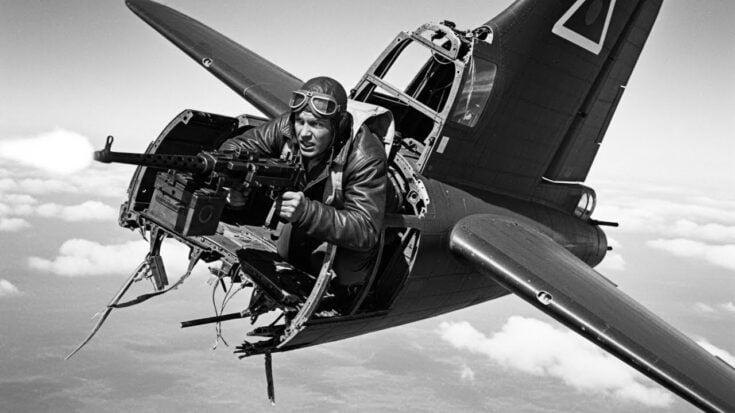
YouTube / WW2 Records
On the morning of November 29, 1943, nineteen year old Staff Sergeant Eugene Moran flew his first combat mission as a tail gunner aboard a B-17 Flying Fortress named Ricky Tick Tavi. The target was Bremen, one of Germany’s most heavily defended industrial cities. More than 300 bombers crossed the North Sea that day, and German fighters and flak had already destroyed several aircraft before the formation reached the target.

Moran occupied the loneliest position on the bomber. Seated at the extreme rear, separated from the rest of the crew by forty feet of fuselage, his role was simple and deadly serious. He was the last line of defense against fighters attacking from behind, a favored tactic used by German pilots to isolate a single gunner.
Cut Off and Falling
After bombs were released over Bremen, Ricky Tick Tavi turned for home with a damaged engine and began falling behind the formation. That made it a target. German fighters closed in from above and below, firing 20 mm cannon rounds that tore through aluminum skin and internal structure. One by one, Moran lost contact with the rest of the crew as gun positions fell silent.

Despite wounds to both arms, Moran continued firing his twin .50 caliber machine guns. He shot down at least one attacker before cannon fire severed control cables and structural members in the tail. Moments later, the aircraft broke apart. The entire forward section separated and plunged away, leaving Moran trapped inside the detached tail section at 24,000 feet. His parachute had already been shredded by cannon fire.
Fighting While Falling
The severed tail spun violently as it fell, yet Moran kept firing at German fighters that approached the wreckage. The vertical and horizontal stabilizers slowed the descent, turning the fall into a crude glide. That unintended aerodynamic effect saved his life. The tail section struck trees before slamming into frozen ground in a forest south of Bremen.

Moran survived the impact with catastrophic injuries. Both forearms were shattered, his ribs were broken, and part of his skull was torn away, exposing brain tissue. He was captured and left untreated for days before being transferred to a prisoner hospital.
Survival Against the Odds
Two Serbian doctors, themselves prisoners, performed a seven hour operation using minimal tools and almost no anesthesia. They stabilized Moran’s wounds and prevented fatal infection. He survived seventeen months as a prisoner of war, including brutal camp transfers, a transport aboard a Baltic Sea prison ship, and the Black March of early 1945, during which thousands of Allied prisoners died.

Liberated in April 1945, Moran weighed just 93 pounds. He returned home to Wisconsin later that year and lived a quiet life, rarely speaking about the war. One of only three Allied airmen known to survive a fall of that distance without a parachute, Eugene Moran’s survival remains one of the most extraordinary individual stories of the air war over Europe.







