Killer Chick in an A-10 Warthog
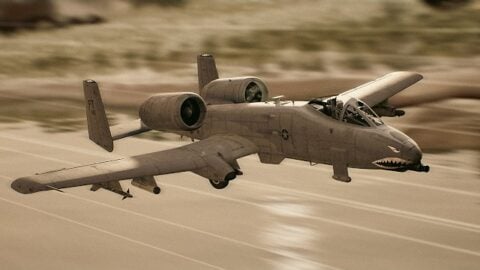
YouTube / Yarnhub
On April 7, 2003, at the height of Operation Iraqi Freedom, U.S. troops near Baghdad urgently requested close air support as they faced heavy engagement near a strategic bridge in northern Baghdad.
Answering the call was Captain Kim Campbell, a pilot whose daring and skill in the A-10 Thunderbolt II had earned her the nickname “Killer Chick” among her peers. Flying the Fairchild Republic A-10 Thunderbolt II, she was about to prove why the moniker was well deserved.
Into the Fire
Descending to low altitude, Campbell executed multiple strafing runs to support the embattled troops. Operating so close to the ground placed her directly within the range of enemy air defenses, but this was the essence of the A-10’s mission: to protect soldiers on the ground, even at great personal risk.
On her way out from one attack pass, her aircraft entered a concealed MANPADS ambush. A shoulder-fired missile struck the tail, causing immediate and catastrophic damage.
Catastrophic System Failure
The missile impact disabled both hydraulic systems, which normally control the aircraft’s flight surfaces. With hydraulic pressure at zero, Campbell’s A-10 became barely controllable.
Flying over a hostile city under heavy combat, she was forced into Manual Reversion, a rare and demanding emergency mode that bypasses hydraulics and relies solely on mechanical linkages. Even minor maneuvers required tremendous strength and precision, and in a damaged aircraft, the margin for error was nearly nonexistent.
Mastering Manual Reversion
Manual Reversion is notoriously difficult, offering minimal responsiveness and requiring constant adjustments. In this extreme situation, Campbell demonstrated exceptional skill and courage. She stabilized the aircraft, navigated through Baghdad’s airspace, and maintained control despite the compromised flight systems. Each second of flight tested both her training and nerve, yet she kept her focus on safely returning the aircraft and completing the mission to protect ground forces.
Over approximately an hour in Manual Reversion, she managed to fly the crippled A-10 back to friendly territory. Her mastery of the aircraft’s emergency systems and her calm decision-making under pressure allowed her to bring the damaged plane home safely. Post-flight inspections revealed extensive structural damage, particularly to the tail and flight controls, yet the aircraft had survived what would have been fatal for most other jets.
A True Benchmark
This incident has become a widely cited example of the A-10 Thunderbolt II’s legendary survivability and the extraordinary skill of its pilots. Kim Campbell’s actions not only saved her own life but also highlighted the aircraft’s role as a guardian of ground troops. Her courage, precision, and determination under fire turned a near-catastrophe into a benchmark story of modern air combat heroism.