How Aircraft Carrier Crews EAT, SHOWER & SLEEP on MASSIVE Aircraft Carrier
YouTube / The Daily Navy
At any given moment, thousands of sailors live and work aboard the USS Gerald R. Ford. The ship stretches roughly the length of three football fields and carries a full air wing, yet its effectiveness depends on something more basic. Every day, the crew must be fed, housed, and kept healthy while operating at sea for months at a time.
Feeding a Floating City
Sustaining more than 4,000 sailors requires constant coordination. The ship serves over 17,000 meals daily, including late-night rations for crews working around the clock. Dozens of trained culinary specialists operate in shifts, preparing food in high-temperature galleys using industrial equipment.

Supplies are delivered at sea every 7 to 10 days. Cargo ships transfer hundreds of thousands of pounds of food while both vessels remain in motion. Menus rotate on a fixed schedule, and calorie intake is carefully managed to maintain performance. Even with planning, missed meals can happen when drills or operations interrupt daily routines.

Sleeping in Tight Quarters
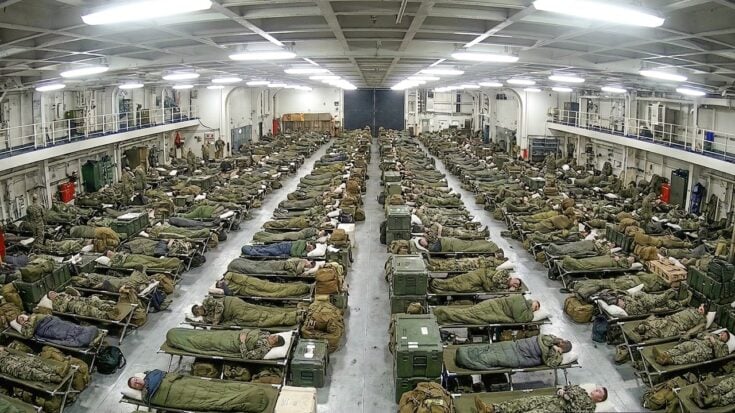
Living space is limited. Most enlisted sailors sleep in racks stacked three high inside compartments that may hold dozens of personnel. Each rack offers minimal clearance and only a small storage area for personal belongings.

Noise is constant. Aircraft operations, machinery, and movement through passageways continue day and night. Combined with rotating shifts, sleep cycles are frequently disrupted. Artificial lighting and the absence of natural daylight add to the strain over long deployments.
Hygiene Under Constraint
Sanitation is critical in such close quarters. Shared bathrooms serve large groups, and systems rely on vacuum-powered plumbing similar to aircraft. Failures can affect multiple compartments and require immediate repair.

Water conservation is essential. Sailors use short, controlled showers to limit consumption. Strict hygiene standards are enforced to prevent illness, as outbreaks can quickly affect operational readiness.
Keeping the Ship Running
Laundry operations handle massive volumes each week using industrial machines. Workspaces often reach extreme temperatures, requiring controlled shifts to prevent heat-related injuries. Despite upgrades in newer carriers, delays and lost items remain common challenges.

Beyond essentials, the ship includes medical facilities, stores, and fitness areas. These support both physical health and morale, which directly affect performance during long deployments.
The System Behind the Mission
Aircraft carriers project power through their air wings, but their effectiveness depends on the people who sustain daily operations. Every meal prepared, bunk assigned, and system maintained contributes to mission readiness.