Why This Fighter’s Engine Is In The Middle Of The Plane
YouTube / Greg's Airplanes and Automobiles
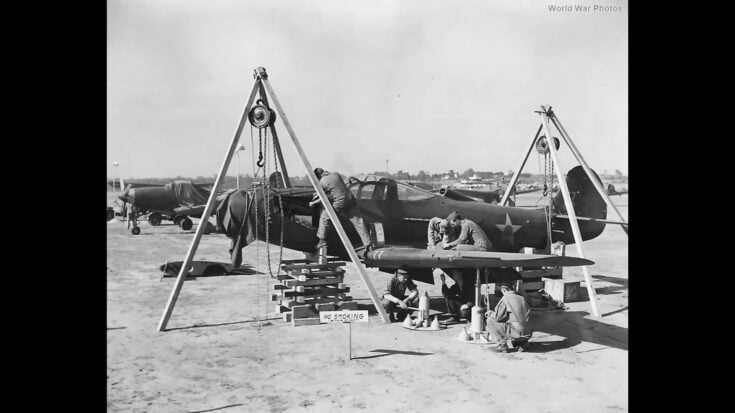
The Bell P-39 Airacobra entered World War II with one of the most unconventional designs of any American fighter. Built around a mid-engine layout and a heavy nose-mounted cannon, it reflected a bold attempt to solve multiple aerodynamic and combat challenges at once. Its performance, however, was shaped by decisions made early in its development.

A Radical Layout
The Airacobra’s most distinctive feature was its engine placement. Instead of sitting in the nose, the engine was mounted behind the pilot, driving the propeller through a long shaft. This layout allowed for a streamlined nose and made room for a 37 mm cannon firing directly through the propeller hub.
The design also improved weight distribution. With mass concentrated near the center of gravity, the aircraft responded quickly in pitch and maneuvering. The tricycle landing gear, rare for fighters at the time, improved ground handling and reduced takeoff accidents.

These advantages came with trade-offs. The internal layout left little room for fuel in the fuselage. Most fuel had to be stored in the wings, which limited range once self-sealing tanks were added.
Performance and Handling
At low and medium altitudes, the P-39 performed adequately. Its handling was stable, and flight testing showed that stall recovery was predictable. Spin behavior required specific inputs, but recovery remained possible when procedures were followed.

The aircraft’s limitations appeared at higher altitudes. Without a turbocharger or multi-stage supercharging, engine performance dropped off quickly. This made it less effective in European air combat, where engagements often occurred at higher elevations.
Where It Found Success
In U.S. service, the P-39 was quickly overshadowed by later fighters with stronger high-altitude performance. Aircraft such as the P-47 and P-51 better matched evolving combat requirements.
In Soviet service, the situation differed. Much of the fighting on the Eastern Front took place at lower altitudes, where the P-39’s strengths applied. Soviet pilots used it effectively, particularly in ground attack and close-range air combat.
Defined by Timing

The P-39 Airacobra combined advanced ideas with unresolved challenges. Its mid-engine layout, heavy armament, and tricycle landing gear reflected forward-thinking design. However, the removal of the turbocharger and the rapid pace of aerodynamic development limited its overall impact.