

The Best WWII Fighter That Never Fought

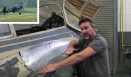
YouTube / Vintage Warbirds
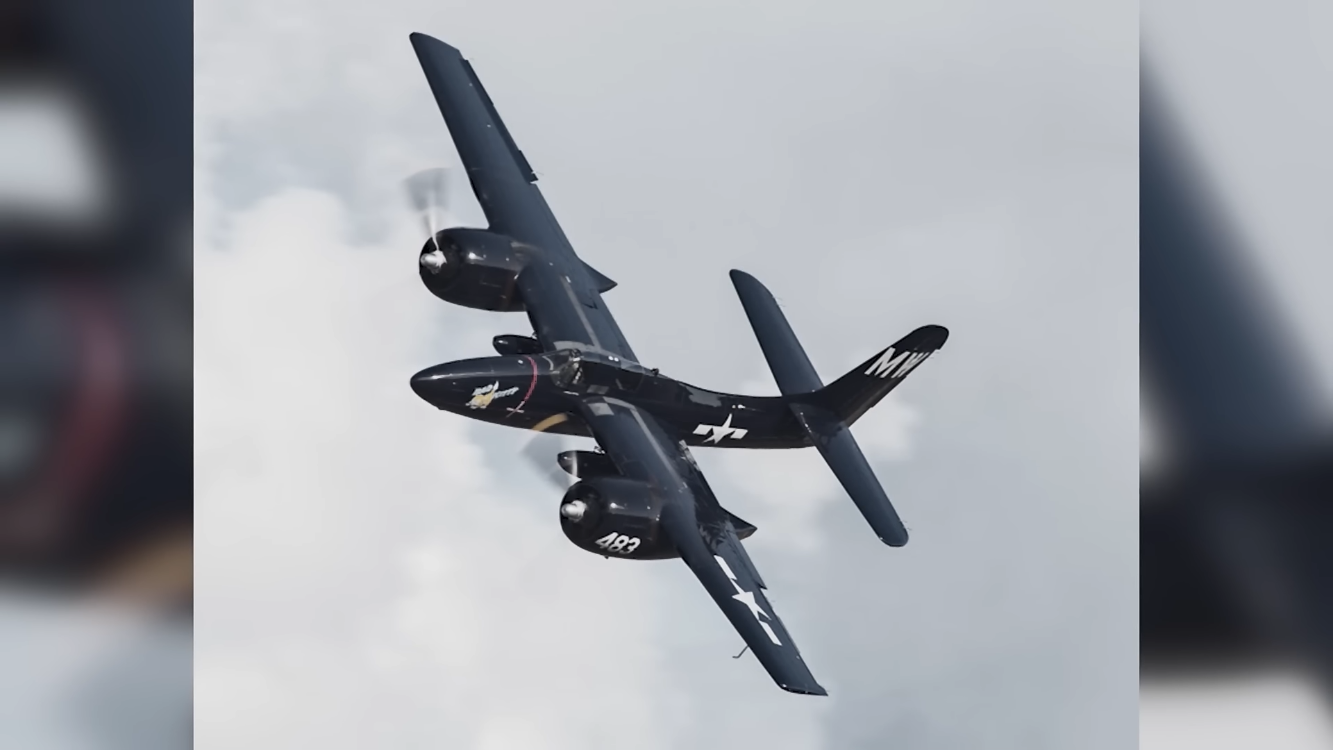
The Grumman name became familiar to every American who followed the war at sea. The Wildcat held the line in 1942, the Hellcat arrived in massive numbers, and the Bearcat closed out the piston era with raw performance. These fighters earned reputations for toughness and reliability. Yet one design with greater potential never reached the front lines of World War II. The aircraft was the F7F Tigercat, a twin engine fighter built for the largest carriers the Navy had ever planned.
Building a Heavy Twin for New Carriers
By 1941, the Navy prepared for the Midway class carriers. These ships could support larger, more powerful aircraft. Two prototypes were ordered from Grumman. One became the F6F Hellcat. The other was the new twin engine fighter known as the XF7F. It was far bigger than the Skyrocket and weighed more than 16,000 pounds empty. Two Pratt and Whitney R-2800 engines pushed it to 435 miles per hour with a climb rate higher than 4,500 feet per minute.
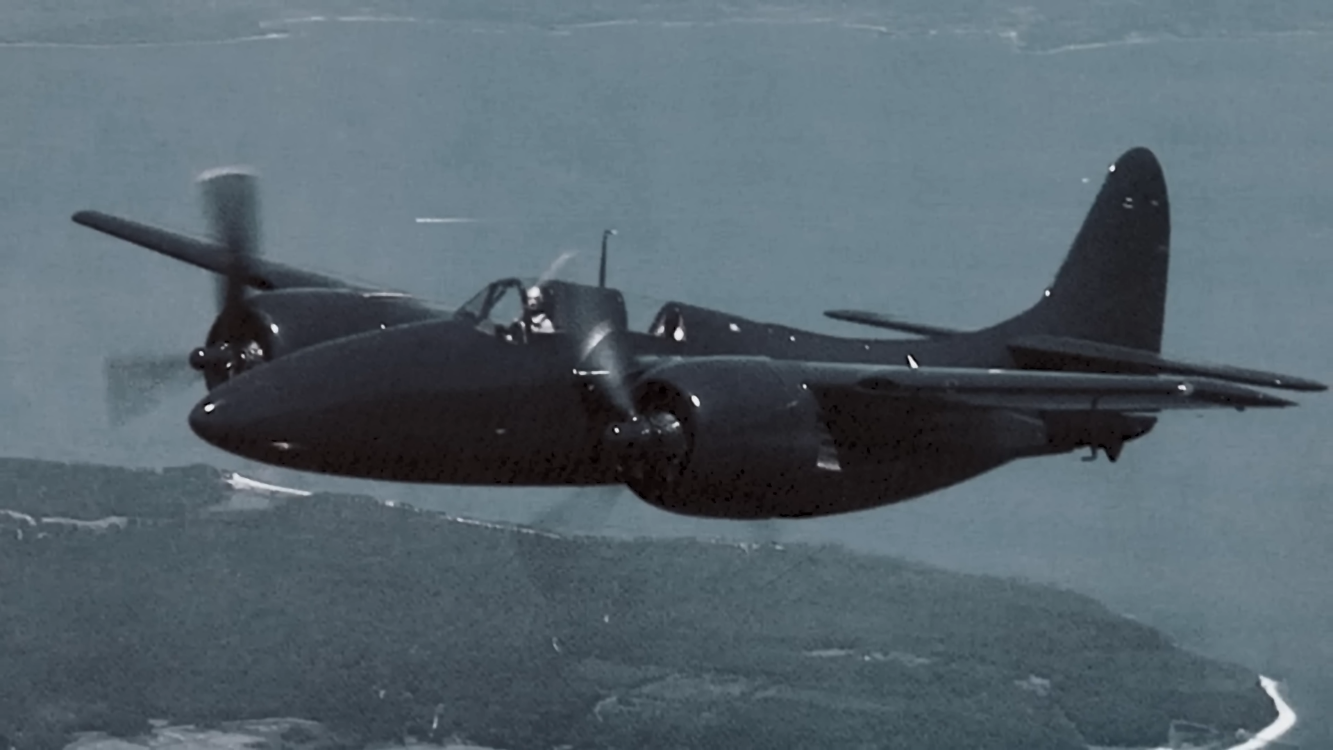
The aircraft carried four 20 millimeter cannons, four heavy machine guns, and provisions for bombs or rockets. It had tricycle landing gear and a long fuselage that created a more conventional appearance than the earlier Skyrocket.
Testing an Aircraft Built for Strength
The prototype flew for the first time in November 1943. Test pilot Corwin Meyer praised the aircraft and called it one of the best fighters he had flown. Early evaluations showed strong performance, but carrier trials exposed critical problems.
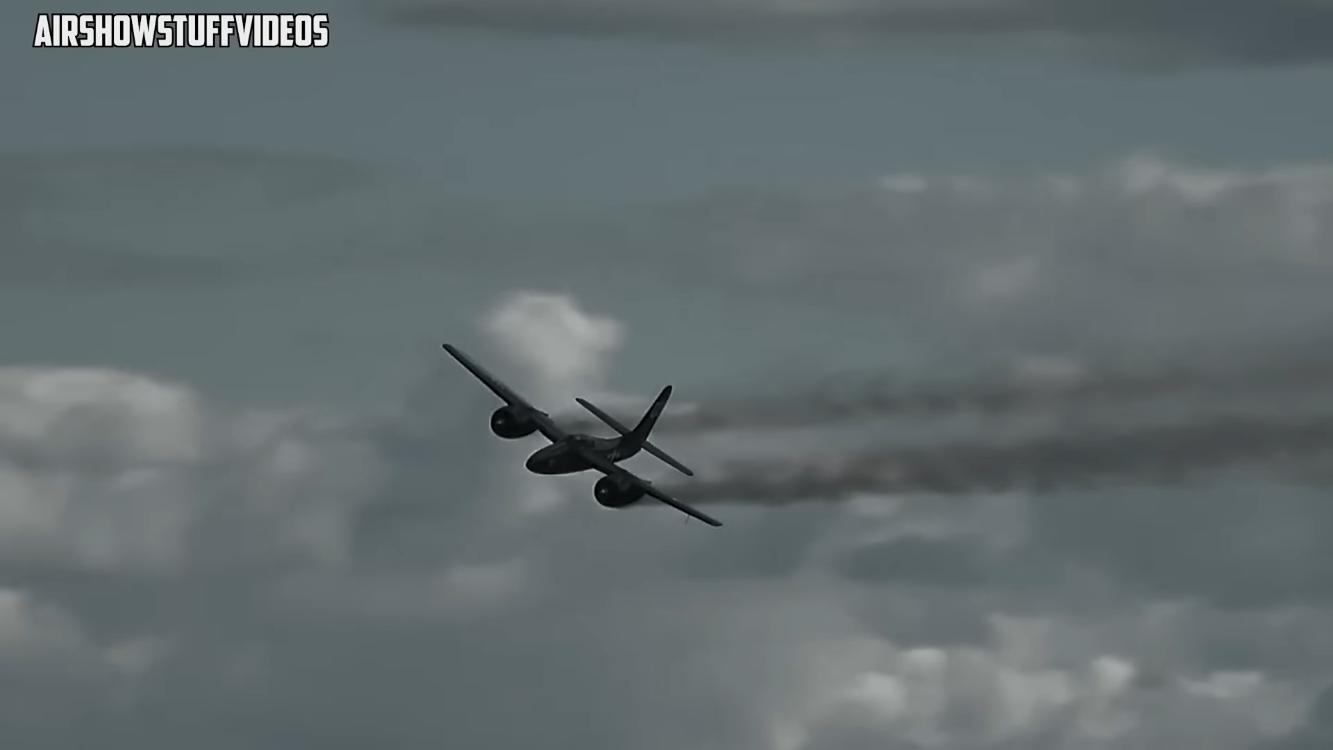
The tail hook layout did not match Navy standards, and single engine handling during landing was judged unsafe. The aircraft could take off from a carrier, but recovery was too risky. The Navy decided it would not operate from carriers.
Variants That Arrived Too Late
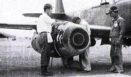
Grumman continued development. The F7F-1 entered limited production but still faced stability issues. A two seat night fighter version, the F7F-2N, followed with radar installed in the nose. The most numerous model was the F7F-3 with improved engines and a larger tail.
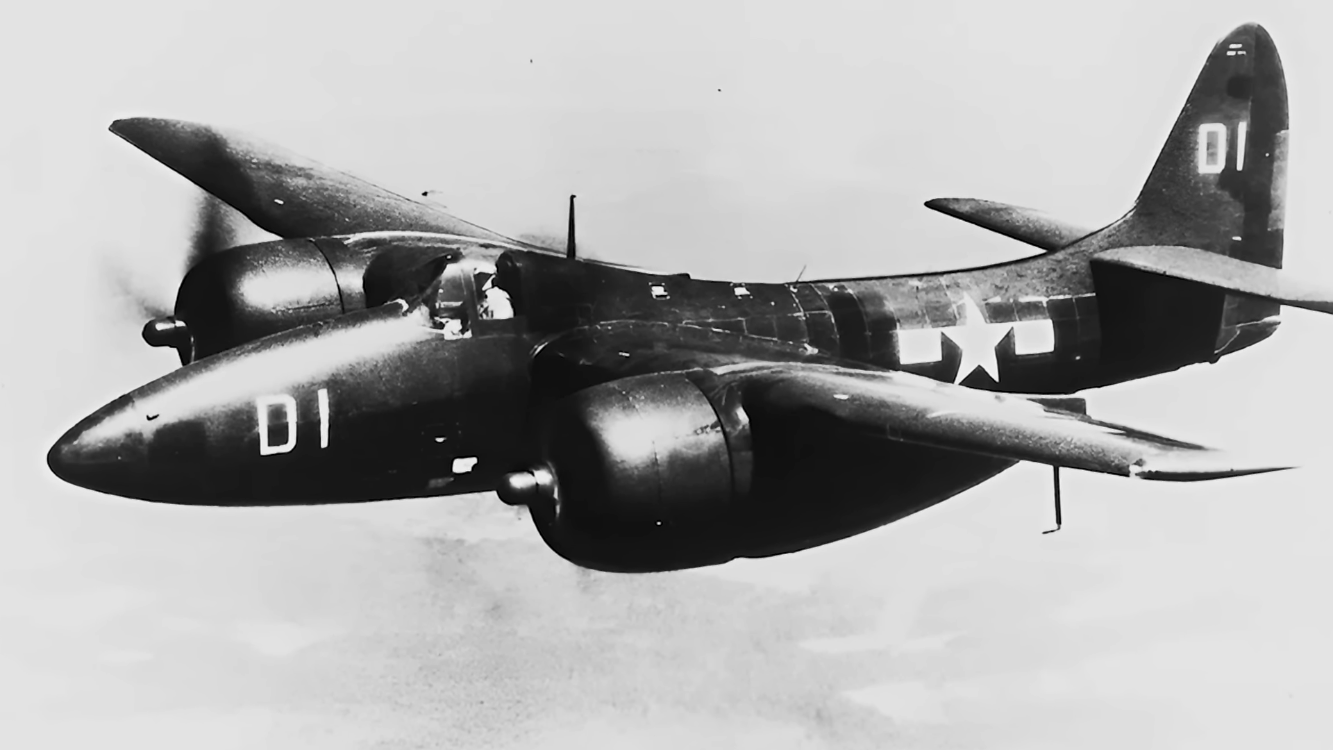
A final night fighter variant eventually passed carrier tests. The approval came after the war ended. Marine squadrons prepared to bring the Tigercat to Okinawa, but Japan surrendered before deployment.
After the War
The Tigercat remained useful in the early jet era. Marine units flew it during the Korean War on night patrol, reconnaissance, and ground attack missions. The aircraft proved reliable and effective at low level strike work. Its only confirmed air victories were two North Korean biplanes.
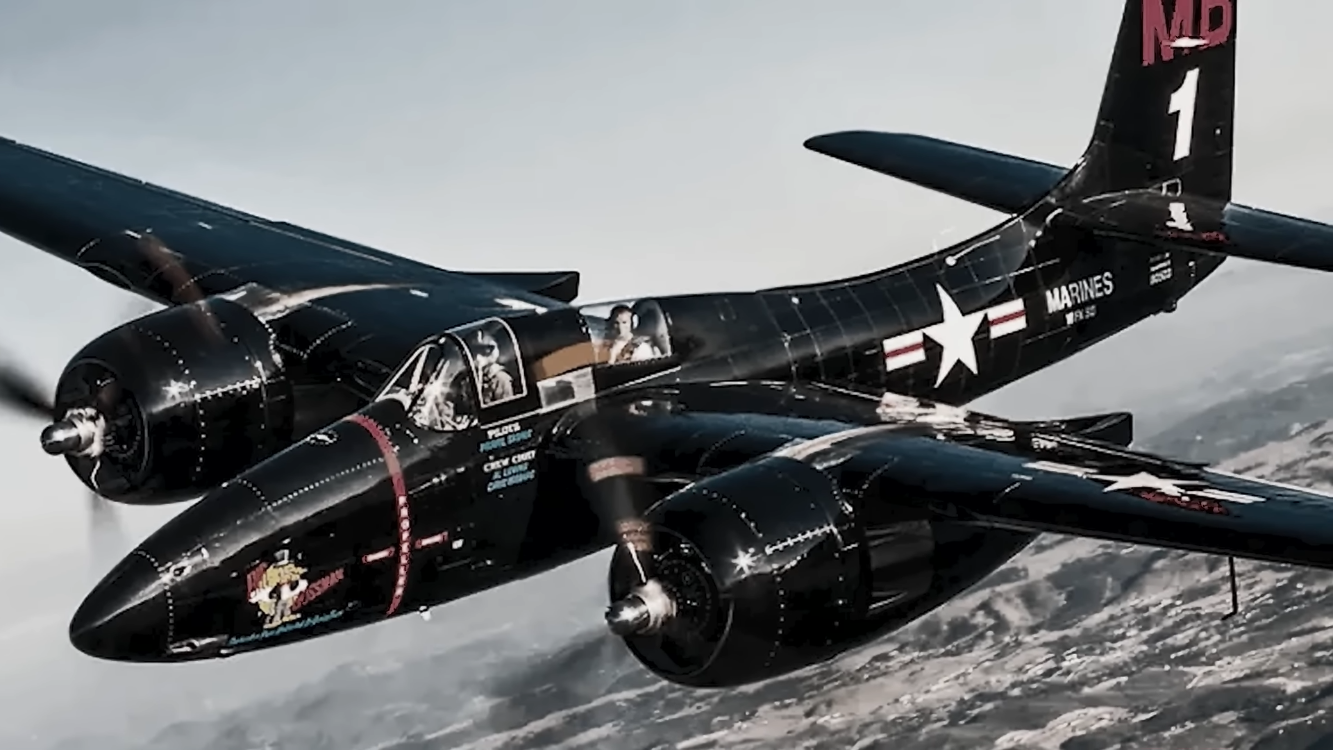
The Tigercat stood at the midpoint between propeller and jet aircraft. It had the speed, firepower, and climb rate to excel in late war combat, but events moved faster than its development. It arrived too late for World War II and too early to compete with jets that changed military aviation.