Why Every Military Aircraft Starts With a Letter
YouTube / The Infographics Show
Every U.S. military aircraft carries a short combination of letters and numbers that defines its role. These designations are not random. They form a structured system developed over decades to identify what an aircraft does, how it is used, and how it fits into a mission.
From Early Labels to Standard Roles
In the early days of military aviation, naming systems were inconsistent and often complicated. Before 1924, aircraft used multiple-letter codes that described technical details, which made classification difficult. The system was simplified by assigning a single letter to represent a primary role.
By World War II, this approach had become standard. Aircraft were labeled clearly based on mission. “B” identified bombers, “P” was used for pursuit aircraft, and training aircraft were split into categories such as primary and advanced trainers. In 1948, the newly formed U.S. Air Force replaced “P” with “F” for fighter, reflecting a shift toward more defined combat roles.
The Problem of Competing Systems
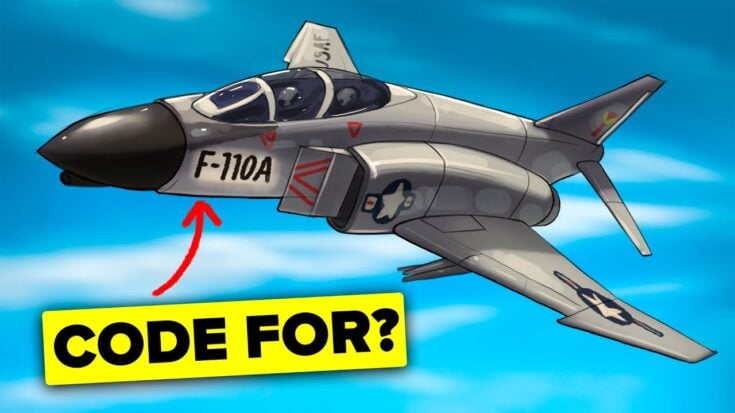
As aircraft technology advanced during the Cold War, each military branch developed its own naming conventions. This created confusion, especially when the same aircraft operated across multiple services. One example was the F-4 Phantom II, which carried different designations depending on whether it was used by the Navy or the Air Force.
This lack of standardization created operational risk. Clear identification is critical in combat, where delays or miscommunication can affect mission outcomes. The need for a unified system became increasingly urgent.
The 1962 Tri-Service System
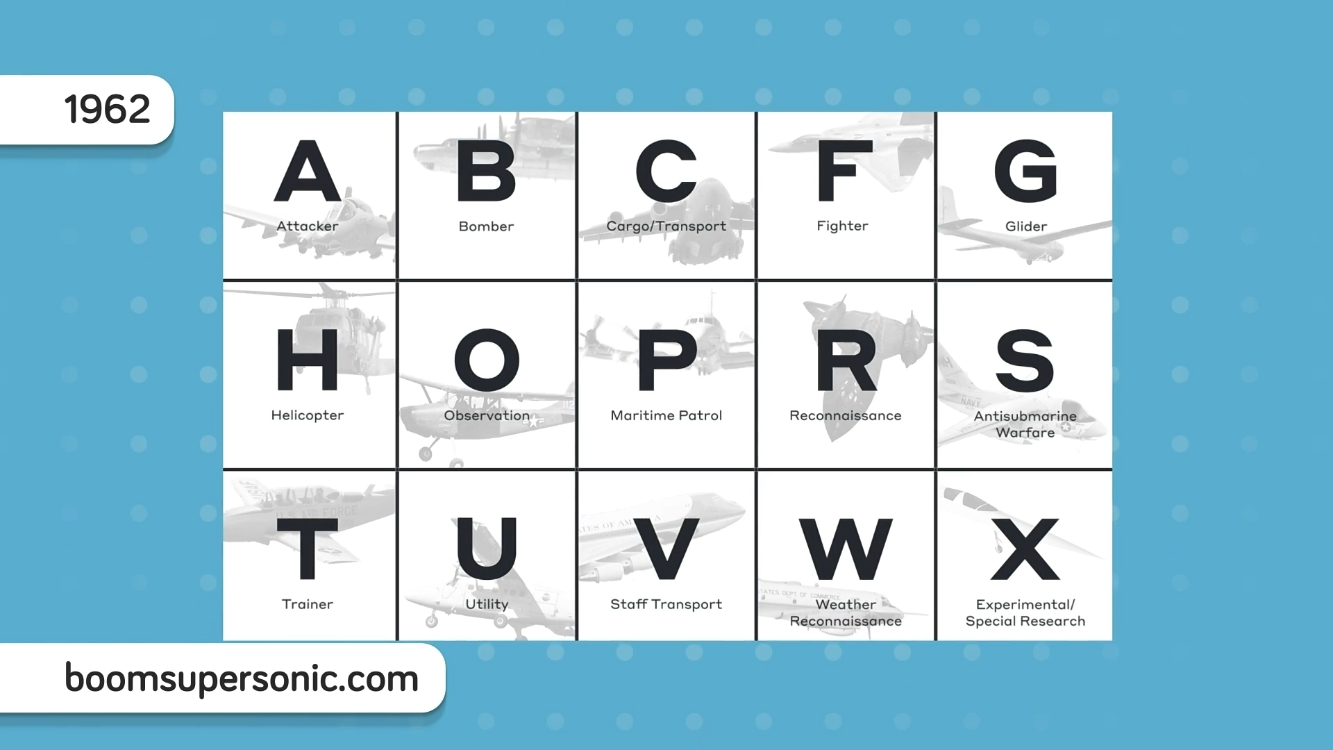
In 1962, the U.S. military introduced a unified designation system used across all branches. This system standardized how aircraft are named and categorized, ensuring consistency in joint operations.
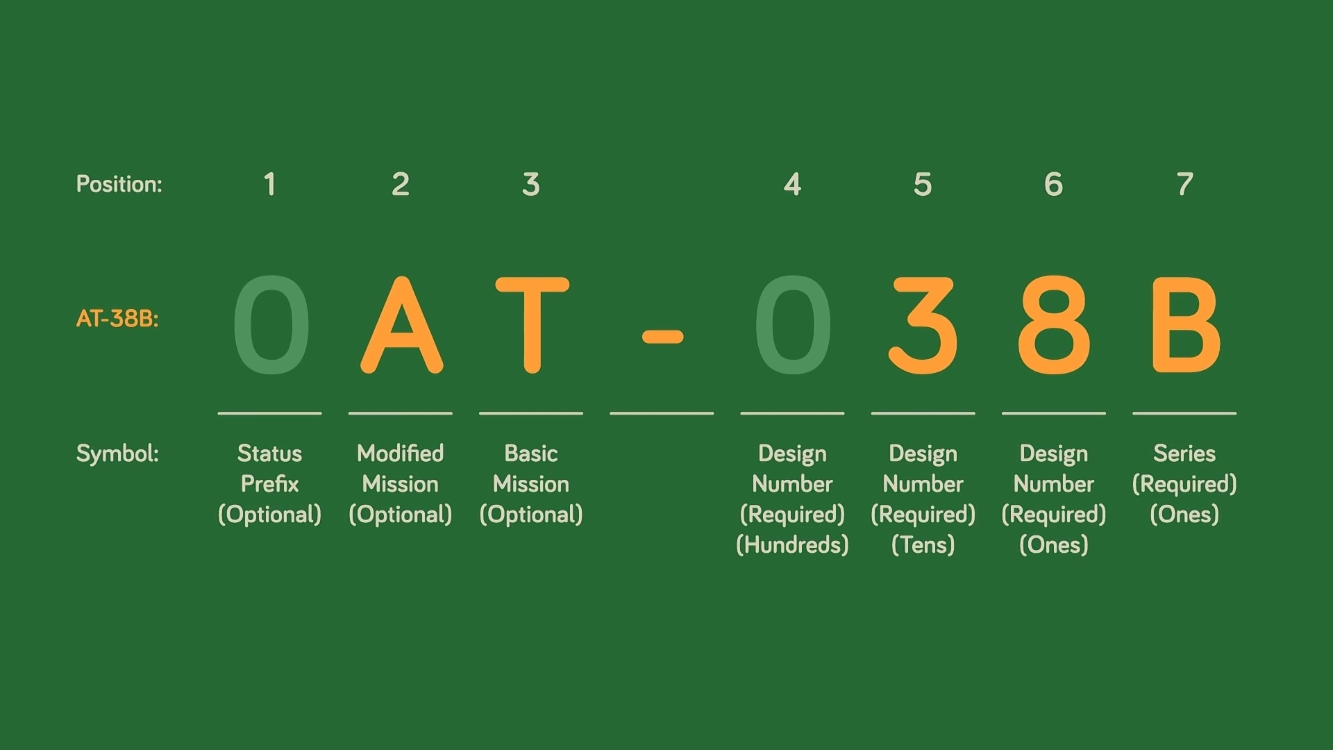
Each aircraft designation includes several components. A basic mission letter defines the aircraft’s primary role. Additional letters can indicate modified missions, special status, or vehicle type. A number identifies the design, while a series letter shows the version.
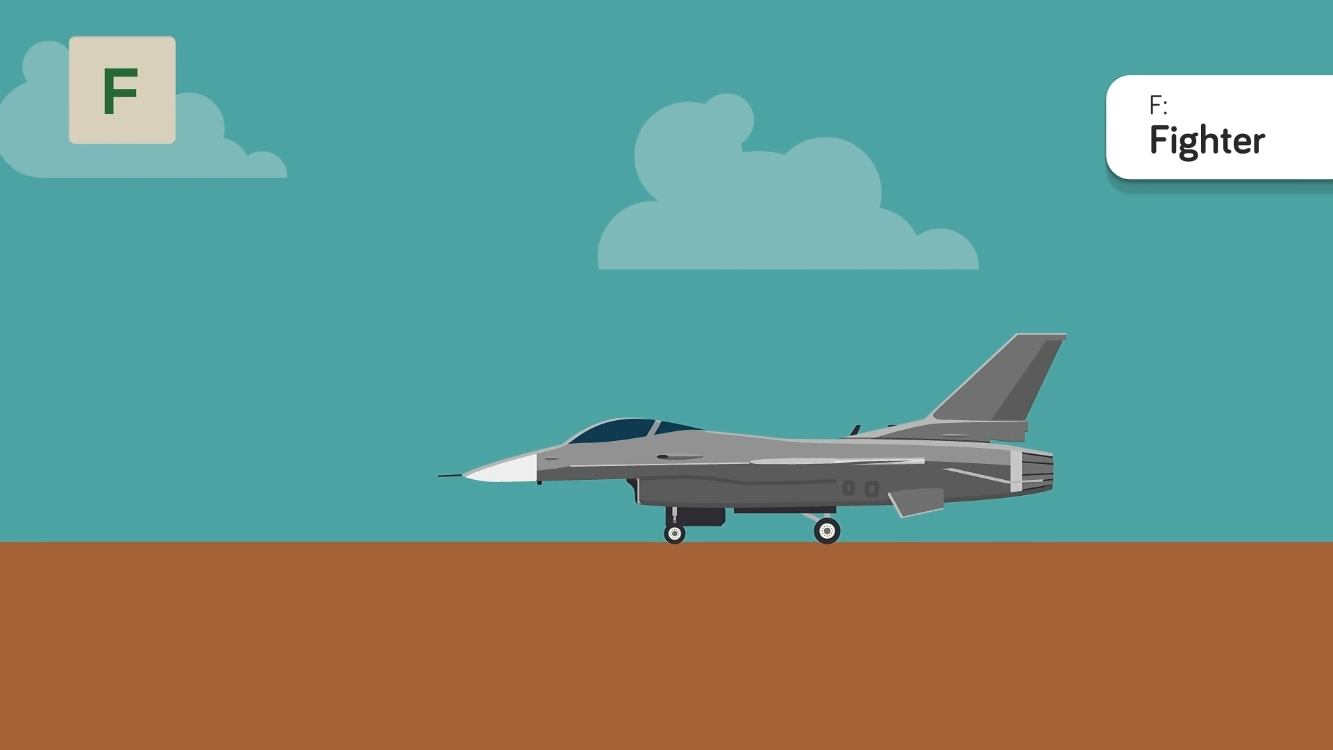
For example, “F” represents a fighter built for air-to-air combat, while “B” indicates a bomber designed to strike ground or naval targets. “C” refers to cargo aircraft responsible for transport, and “R” identifies reconnaissance platforms used for intelligence gathering. Newer designations such as “Q” are used for unmanned systems.