

On This Day (1945): Twentieth Air Force Drops 367 Tons on Iwo Jima
U.S. Navy, Public domain, via Wikimedia Commons
In early 1945, the United States prepared for one of the most difficult battles of the Pacific War. The small volcanic island of Iwo Jima stood about halfway between the Marianas and Japan, and Allied planners believed that seizing it would help with long-range bombing raids and provide a staging area for fighters and rescue aircraft. Long before Marines landed on the beaches on February 19, 1945, the island was subject to sustained air attacks from both the Army Air Forces and Naval aircraft.
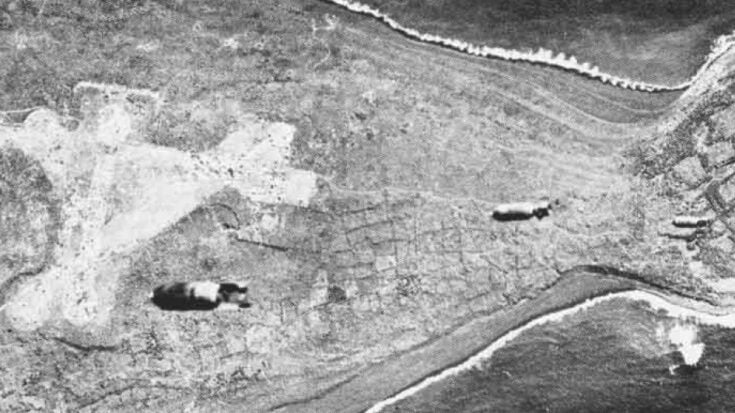
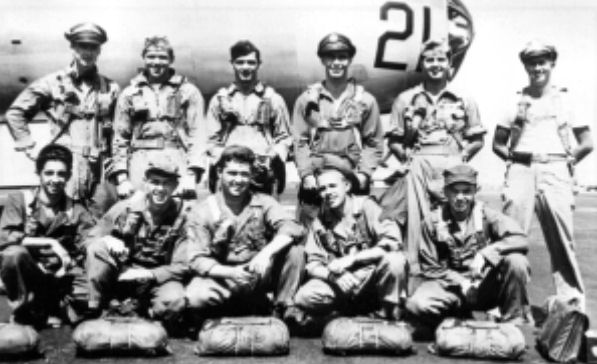
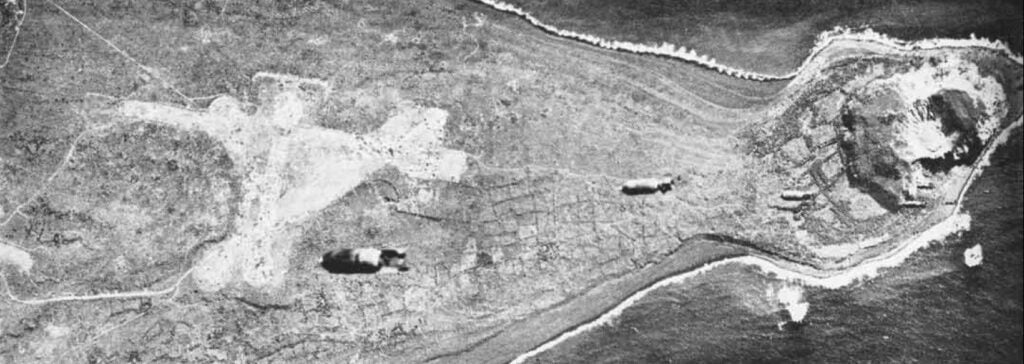
The Twentieth Air Force, operating Boeing B-29 Superfortresses from the Mariana Islands, contributed to this buildup by targeting Iwo Jima’s airfields and defensive positions. On January 24, 1945, American heavy bombers struck the island, and subsequent raids followed on January 29 and February 12. By that point, bombers of the Twentieth Air Force had dropped a combined total of approximately 367 tons of bombs on Iwo Jima as part of the preparation for the coming invasion.
Strategic Importance of Iwo Jima
Iwo Jima was a small island, only a few miles long, but its location made it strategically significant. Japanese aircraft based there could spot and report approaching bomber formations returning from raids over the Japanese home islands. They also threatened the bases in the Marianas used to launch B-29 missions. Capturing the island was intended to reduce these threats and help Allied air operations become more effective.
The U.S. command also saw value in controlling the island’s airfields once it was taken. In American hands, Iwo Jima could serve as a forward base for shorter-range fighters, such as P-51 Mustangs, to escort the heavy B-29s on their long flights. It would also provide an emergency landing spot for damaged Superfortresses returning from missions over Japan, potentially saving the lives of many aircrews.
Early Bombardment Efforts
Even before the American invasion was formally set to begin, Iwo Jima was subject to repeated attacks aimed at weakening Japanese defenses and interrupting air operations from the island. The U.S. Seventh Air Force flew repeated bombing raids, and U.S. Navy aircraft contributed to the broader air campaign. These early raids, including those by B-24 Liberators from the Marianas, sought to destroy infrastructure and flatten Japanese positions.
The weight of aerial explosives dropped on Iwo Jima by early February 1945 — about 367 tons — reflected the intensity of this effort. These raids targeted airfields, supply depots, and defensive positions in an attempt to soften resistance before the amphibious assault. B-29s in formation carried heavy loads from bases such as Saipan and Tinian, flying hundreds of miles over open ocean to reach the island.
Context of the Pacific Air War
Twentieth Air Force Superfortresses were primarily tasked with the strategic bombing campaign against the Japanese home islands at this stage of the war. These large four-engine bombers were pushing the boundaries of long-range airpower, flying missions hundreds of miles from remote bases to drop their bombs on industrial and military targets. While Iwo Jima itself was not a major industrial target, it lay in the path of air routes and posed operational challenges for the heavy bomber fleets.
The decision to use part of the Twentieth Air Force’s strength against Iwo Jima reflected the broader strategy of weakening Japanese defensive capabilities and reducing early-warning and interceptor activity around key target areas. Coordinating these bombing raids with naval bombardment and carrier strikes required careful planning, even as weather and terrain made the operations difficult.
Preparing for Invasion
By mid-February 1945, the stage was set for the amphibious landings that would become Operation Detachment. Despite heavy bombardment by sea and air, Japanese defenders had constructed extensive underground fortifications that withstood much of the preinvasion attacks. Marines and other ground forces knew they faced well-concealed positions that bombing alone could not destroy.
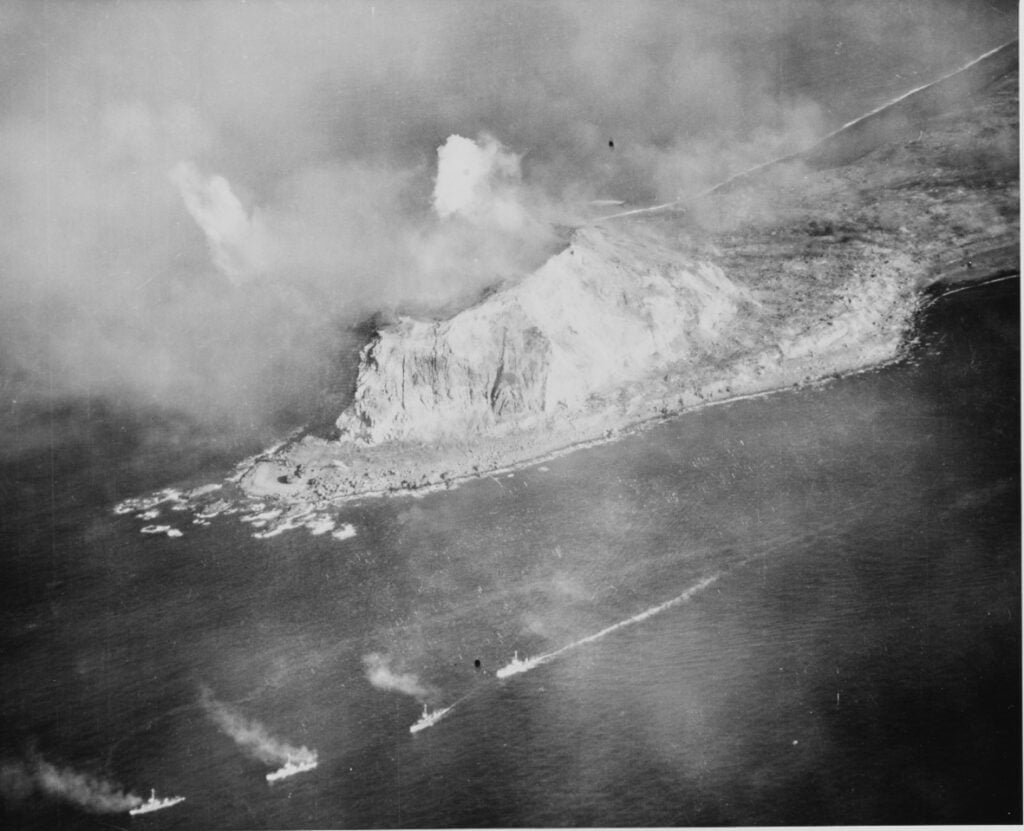
The bomb tonnage dropped by the Twentieth Air Force in early 1945 was only a portion of the total explosive weight directed at Iwo Jima. Naval gunfire and other air attacks by medium and heavy bombers added to the pressure on the defenders. Even so, Japanese forces remained entrenched when the Marines began landing on February 19. The fighting that followed would become one of the most intense ground battles of the Pacific War, far beyond the effects of preinvasion bombing.


![U.S. Navy photo [1]](https://commons.wikimedia.org/wiki/File:Mount_Suribachi,_on_the_southern_end_of_Iwo_Jima.jpg)