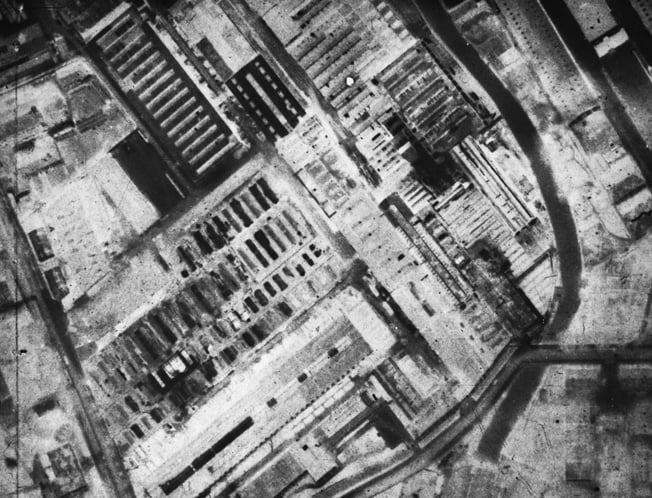
On This Day: Augsburg Engulfed as 600 RAF Bombers Strike Under Clear Skies (1944)
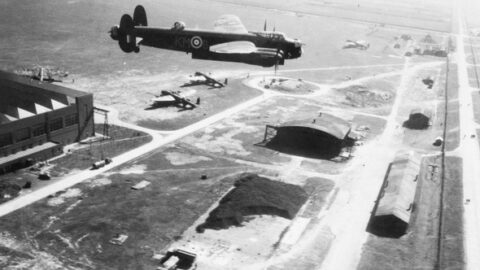
Royal Air Force Official Photgrapher, Public domain, via Wikimedia Commons
In late February 1944, Allied air forces continued intense bombing operations over Germany as World War II entered its final year. One of the most dramatic raids came on the night of February 25–26, 1944, when nearly 600 British Royal Air Force bombers attacked the city of Augsburg under clear weather conditions. This mission, part of the broader Allied strategic bombing campaign, struck deep into southern Germany, far from the English bases from which the planes took off.
Augsburg was selected as a target because it had industrial sites and manufacturing facilities linked to the German war effort. Earlier that day, the Eighth Air Force had struck the city’s Messerschmitt aircraft works in a daylight attack. Bomber Command’s night raid later fell on the urban center, hitting the old town and industrial areas alike.
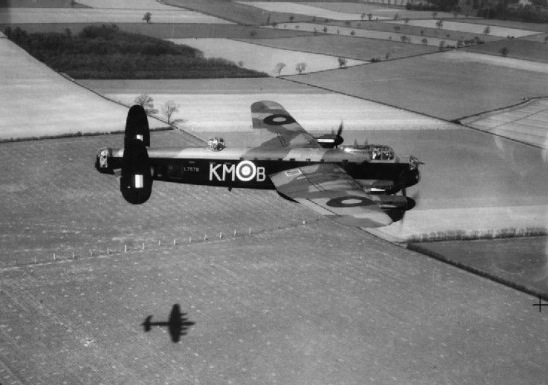
Clear Weather Helps RAF Precision
Unlike many earlier night attacks that relied heavily on radar markers, the raid on Augsburg took place under unusually clear skies for a winter night. This allowed RAF crew members to use visual targeting in addition to the radio navigation aids of the day. Pathfinders—specialized crews tasked with guiding the main bomber stream—marked the target with flares so that the large force of Lancasters and Halifaxes could release their bombs more accurately.
The mission was notable for its scale. About 594 aircraft made the trip, primarily Avro Lancaster and Handley Page Halifax bombers. The raid destroyed large parts of Augsburg’s city center and started hundreds of fires. Later records noted 246 large or medium fires and 820 smaller ones across the urban area. Because the attack took place in very cold weather—temperatures reportedly dropped to minus 18 degrees Celsius—firefighting efforts were hampered, as water in hydrants and hoses froze quickly.
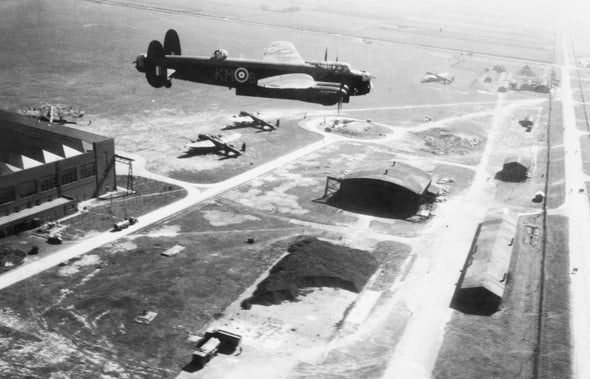
Damage and Civilian Impact
Contemporary accounts and later assessments indicate that the raid caused severe damage. Large parts of the historic old town were destroyed, including residential neighborhoods and significant industrial facilities. Estimates from post‑war research suggest that several hundred people lost their lives and more than a thousand were injured. Thousands of residents were left homeless, and a quarter of the city’s housing stock was reported destroyed.
The RAF lost aircraft and crews during the raid as well. Records show that at least 21 bombers, or about 3.6% of the force, were lost to collisions or enemy action during the operation. These losses occurred despite diversionary tactics and efforts to scatter flak defenses.
Strategic Role in Allied Air Campaign
The Augsburg attack took place within a larger Allied effort to weaken German industry and infrastructure in advance of the upcoming ground campaigns in France and western Europe. This broader offensive, known as “Big Week,” had begun days earlier and focused largely on the German aircraft industry. Bomber Command’s night raids, including the attack on Augsburg, were designed to complement daylight raids by U.S. air forces by hitting additional industrial centers and stretching German air defenses.
Though strategic bombing remains a debated topic among historians, the Augsburg raid marked one of the most intense periods of Allied air operations in southern Germany. The destruction there—especially of the city’s heart and manufacturing areas—reflected the Allies’ growing ability to strike far inside enemy territory with large bomber forces on consecutive day and night missions.
The effects of the raid were felt long after the conflict ended. Augsburg’s post‑war rebuilding took years, and the scars seen in city records and photos stood as a reminder of the reach and force of Allied air power in 1944.