

USS Langley’s Final Hours: Bombed, Crippled, and Scuttled in the Battle for the Dutch East Indies
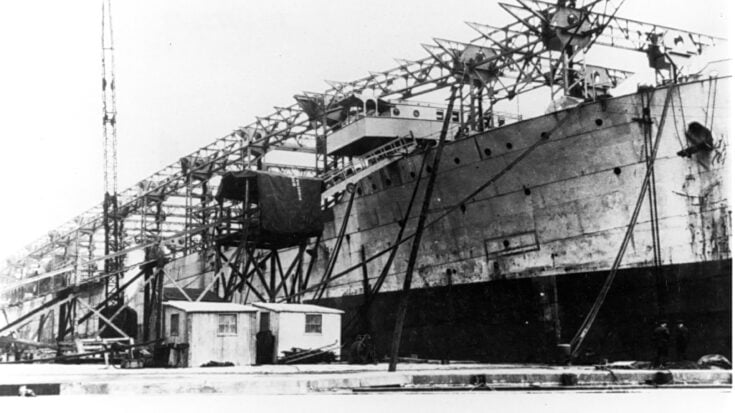
U.S. Navy, Public domain, via Wikimedia Commons
In the early months of 1942, Allied forces in the Pacific faced rapid advances by Japanese troops across Southeast Asia. Among the ships caught in this widening conflict was the USS Langley (AV-3), a vessel with a unique place in American naval history. Once the U.S. Navy’s first aircraft carrier, Langley had been converted into a seaplane tender by the time war reached the Dutch East Indies.
On February 27, 1942, Langley met her end south of Java after coming under attack from Japanese land-based bombers. Her final mission was urgent and dangerous. The loss of the ship and the aircraft she carried marked a serious setback for Allied efforts to defend the region.
From First Carrier to Seaplane Tender
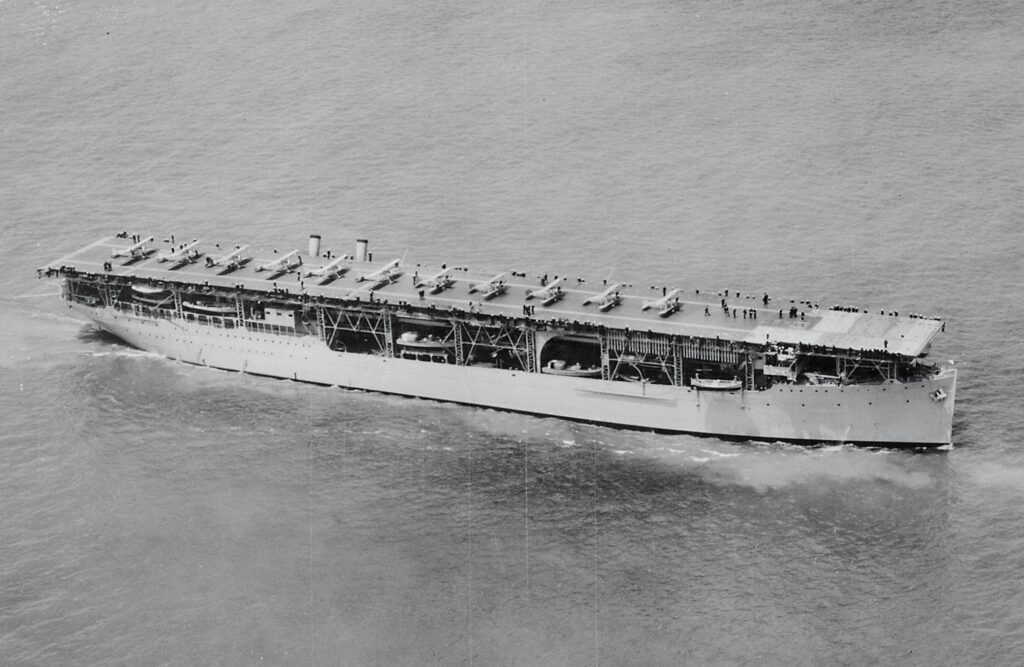
Commissioned in 1922 as CV-1, USS Langley began life as a converted collier named USS Jupiter. She became the Navy’s first aircraft carrier, serving as a testing ground for early carrier aviation. Pilots practiced takeoffs and landings on her wooden deck, shaping tactics that would later define naval warfare.
By the late 1930s, newer and more capable carriers had joined the fleet. Langley was converted into a seaplane tender and redesignated AV-3. In this new role, she supported patrol aircraft, transported planes, and assisted in maintenance duties. Though no longer a frontline carrier, she remained an important support ship at the outbreak of war in the Pacific.
The Mission to Reinforce Java
In February 1942, Allied defenses in the Dutch East Indies were collapsing under heavy pressure. Japanese forces had moved swiftly through Malaya and the Philippines and were closing in on Java. To strengthen air defenses, Langley was tasked with delivering 32 Curtiss P-40 Warhawk fighters to the island.
The fighters had been assembled in Australia and loaded aboard Langley for transport. Once near Java, they were to be offloaded and flown into action against advancing Japanese forces. The mission was part of a larger effort by the American-British-Dutch-Australian Command to slow the invasion and hold key territory for as long as possible.
Attack in Open Waters
As Langley approached the southern coast of Java on February 27, she was escorted by the destroyers USS Whipple and USS Edsall. Around midday, Japanese twin-engine bombers located the small formation. With little fighter cover available, the ships had to rely on anti-aircraft fire and evasive maneuvers.
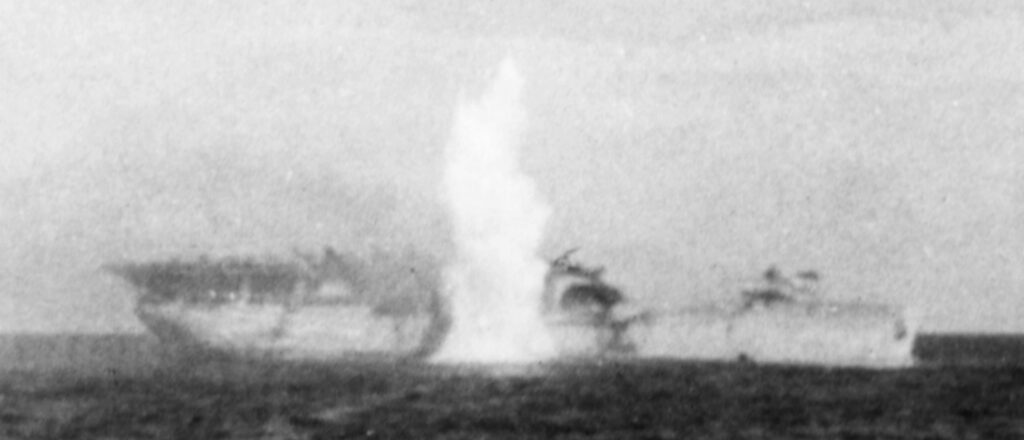
The attacking aircraft released several bombs in successive runs. Langley managed to avoid the first strikes, but later attacks proved more accurate. She was hit by multiple bombs, which caused heavy damage to her engine room and flight deck area. Fires broke out, and the ship began to list. Steering control was lost, and her speed dropped sharply, leaving her exposed.
The Decision to Scuttle
With flooding increasing and machinery disabled, it became clear that Langley could not be saved. Efforts to tow her failed as the list worsened. The commanding officer ordered the crew to abandon ship. Survivors were taken aboard the escorting destroyers under continued threat of air attack.
To prevent the damaged vessel from falling into enemy hands, USS Whipple and USS Edsall fired torpedoes and shells into Langley. The former carrier and seaplane tender sank beneath the waves, taking all 32 P-40 fighters with her. The loss of the aircraft was a severe blow to Allied air strength in Java at a critical moment.
The sinking of USS Langley came just one day before the larger naval clash known as the Battle of the Java Sea. Her destruction underscored the vulnerability of Allied shipping in the region and the growing dominance of Japanese air power in early 1942.
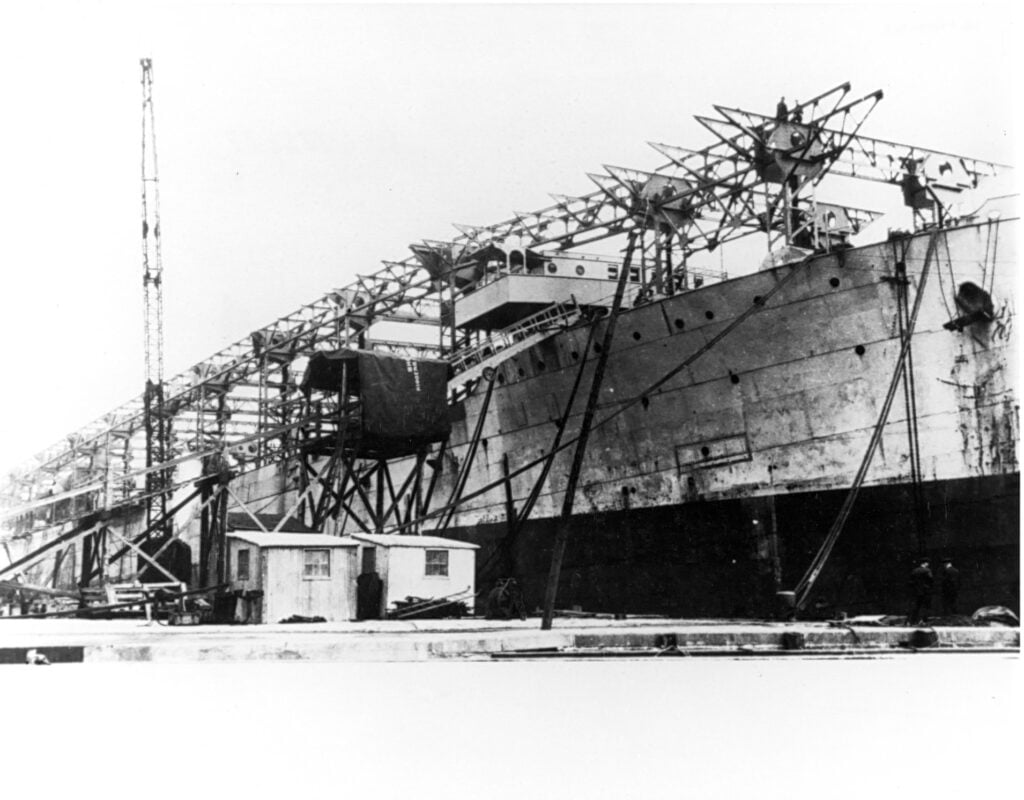







_being_converted_to_an_aircraft_carrier_at_the_Norfolk_Naval_Shipyard,_14_May_1921_(NNAM.1996.488.010.002).jpg)
_underway_in_June_1927_(cropped).jpg)
_is_hit_by_torpedo_on_27_February_1942_(cropped).jpg)