On This Day in 1940: Hawker Typhoon Prototype Takes Maiden Flight, Later Devastates German Tanks
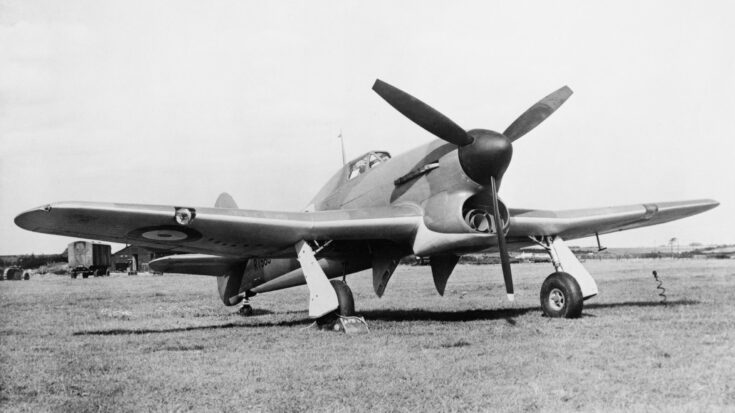
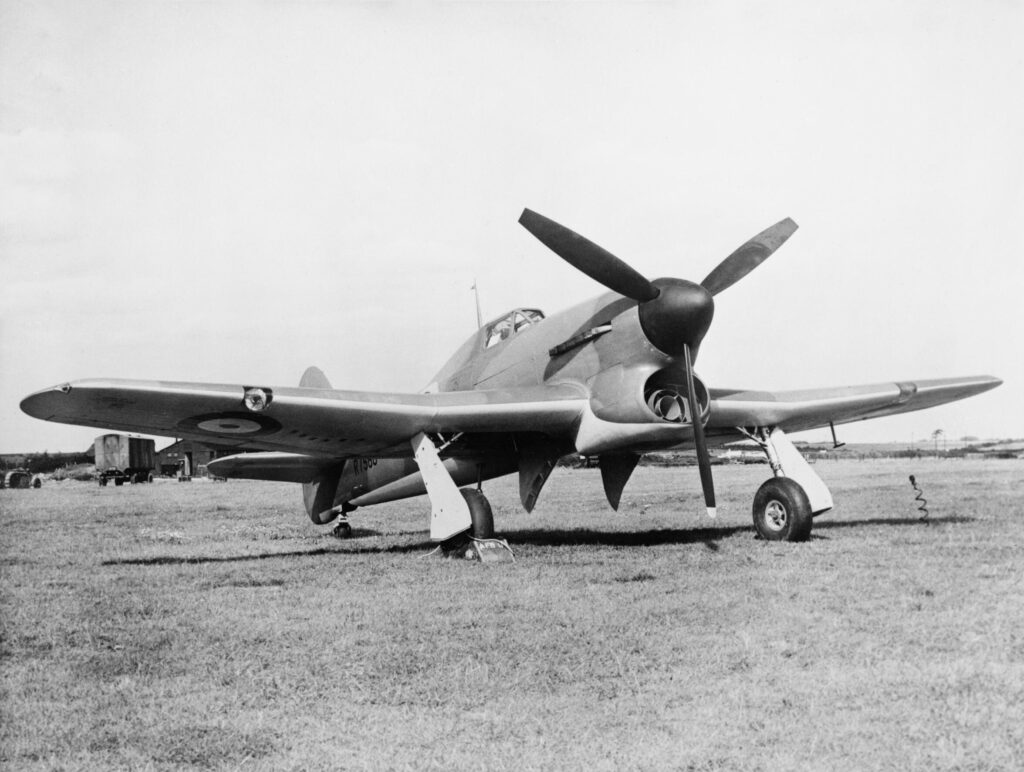
Royal Air Force official photographer, Public domain, via Wikimedia Commons
A Troubled Beginning in Wartime Britain
On February 24, 1940, the prototype of the Hawker Typhoon made its first flight. Designed by Sydney Camm and built by Hawker Aircraft, the Typhoon was intended to replace the Hawker Hurricane as a high-performance interceptor. Britain was already at war, and the need for faster and more powerful fighters was urgent.
The aircraft was built around the new Napier Sabre engine, a 24-cylinder powerplant that promised high speed at low altitude. On paper, the design looked impressive. It had a thick wing, heavy armament, and strong construction. Early plans called for it to counter advanced German fighters expected to dominate the skies. Yet the first months of testing revealed serious problems. The engine proved unreliable. Exhaust fumes sometimes entered the cockpit. Structural weaknesses in the tail section also caused concern.
From Interceptor to Ground-Attack Role
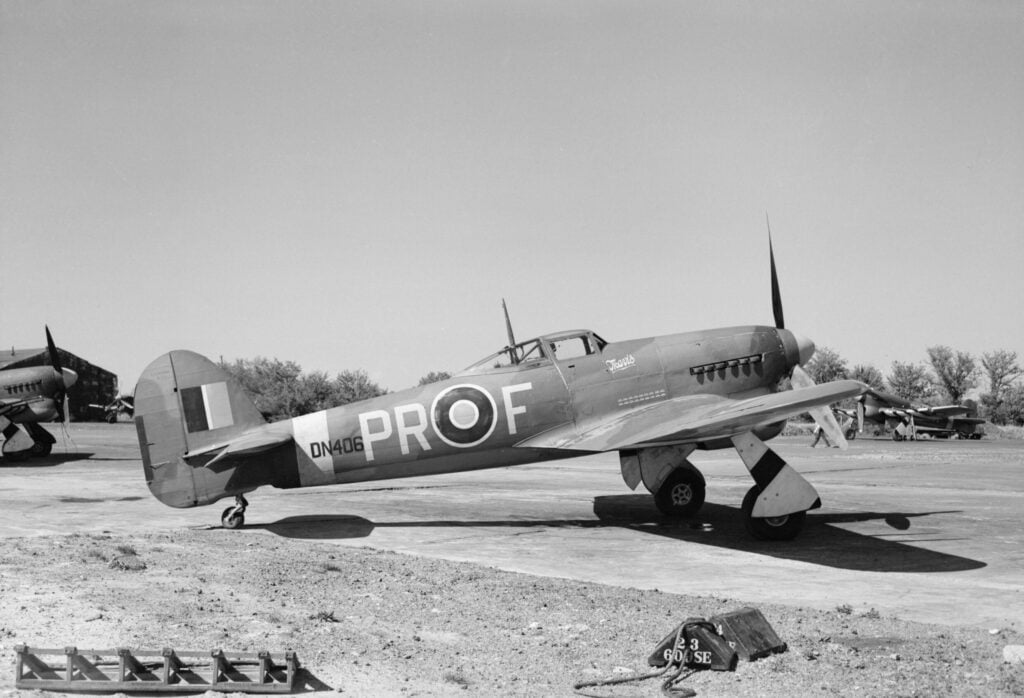
As the air war over Europe developed, the Typhoon struggled in its original role. At higher altitudes, it could not match the performance of newer German fighters. Meanwhile, the Supermarine Spitfire continued to improve and remained the Royal Air Force’s main air defense fighter. Instead of abandoning the Typhoon, British planners reconsidered how it could best serve the war effort.
Its strong airframe and powerful engine made it well suited for low-level operations. Engineers addressed early faults, reinforcing the tail and refining the engine. The aircraft’s heavy armament became one of its greatest strengths. It carried four 20mm Hispano cannons mounted in the wings. Later versions were equipped to carry bombs or eight 60-pound rockets under the wings. These changes transformed the Typhoon into a dedicated ground-attack aircraft.
The “Tank Buster” Over Normandy
By 1943 and 1944, Typhoon squadrons were operating over occupied Europe. The aircraft earned a fearsome reputation during the Battle of Normandy following the Allied landings on June 6, 1944. Flying at low altitude, pilots targeted German armored units, supply columns, and transport routes. The sight and sound of rocket-armed Typhoons diving toward their targets had a strong psychological effect on enemy troops.
While later studies showed that not every rocket strike destroyed a tank, the overall impact of Typhoon attacks was significant. The aircraft disrupted movements, damaged vehicles, and forced German units to move cautiously during daylight. Its role extended beyond direct attacks on armor. Typhoons also struck bridges, trains, and defensive positions, limiting the ability of German forces to reinforce or withdraw.
A Lasting Place in Aviation History
The Typhoon’s story reflects how wartime needs can reshape technology. What began as an interceptor that struggled to meet expectations became one of the Royal Air Force’s most effective tactical weapons. Pilots who flew it often spoke of its speed at low level and the power of its weapons, though they also remembered its demanding handling.
Production continued until 1945, with more than 3,000 aircraft built. The Typhoon later led to the development of the improved Hawker Tempest, which refined many of its features. Though it faced early setbacks, the Typhoon secured its place in history as a key aircraft in the Allied campaign in Western Europe.