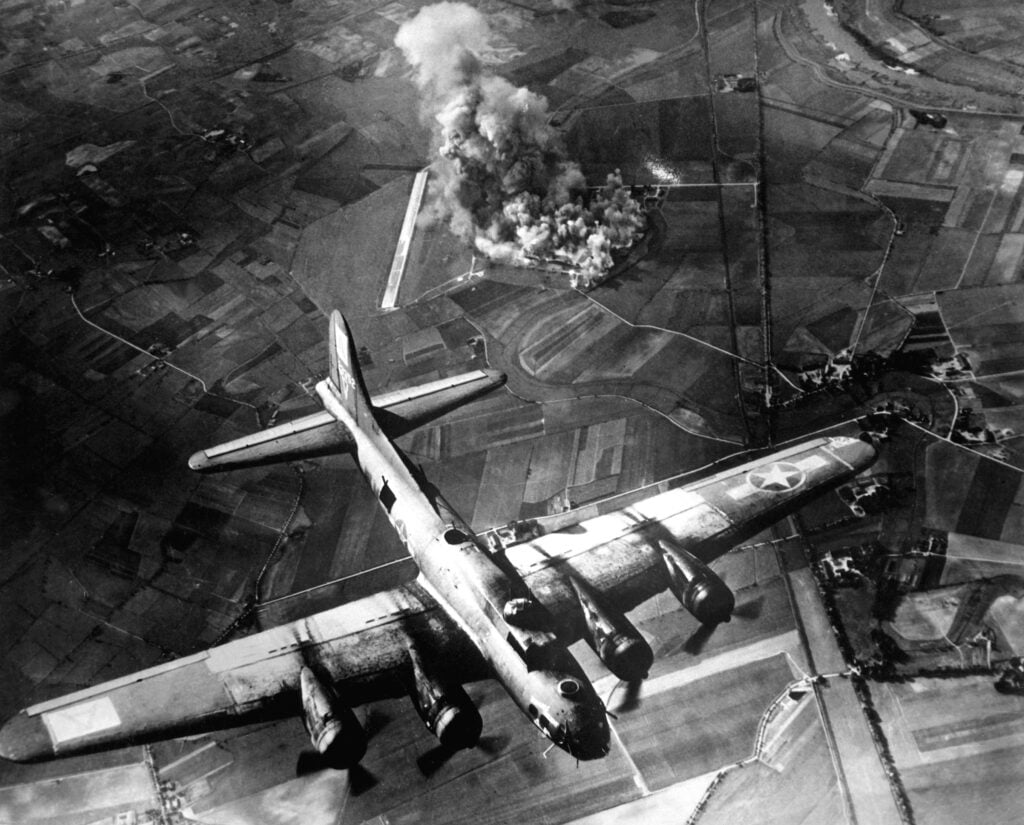
On This Day in 1944: “Big Week” Air Battles Peak Over Germany to Crush Luftwaffe Production
NARA FILE #: 208-YE-7, Public domain, via Wikimedia Commons
A Strategic Air Offensive Takes Shape
On February 24, 1944, the Allied air campaign known as “Big Week” reached one of its most intense moments. Officially called Operation Argument, the operation began on February 20 and lasted several days. Its purpose was clear and direct: destroy German aircraft factories and weaken the German fighter force before the planned invasion of Western Europe.
By early 1944, Allied leaders understood that control of the air would be necessary for any landing on the continent. The United States Army Air Forces and the British Royal Air Force worked together in a coordinated effort. American heavy bombers flew by day, while British bombers struck by night. Together, they targeted aircraft production centers, assembly plants, and related industries across Germany.
Strikes on Aircraft Factories
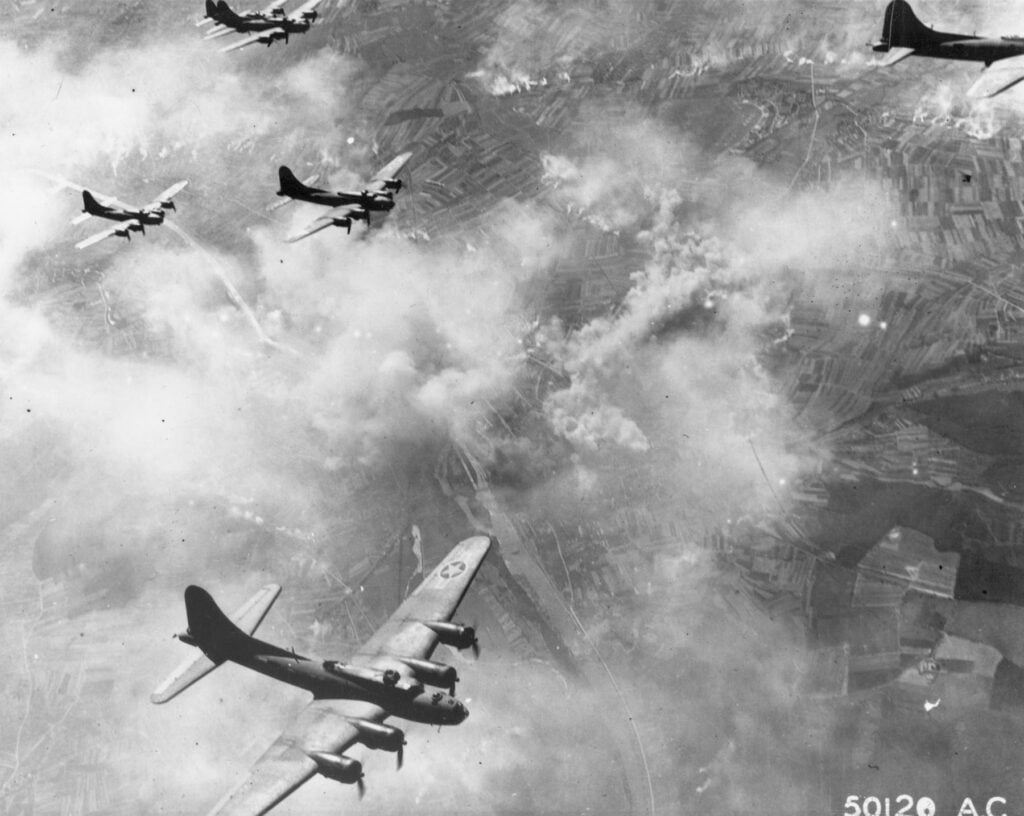
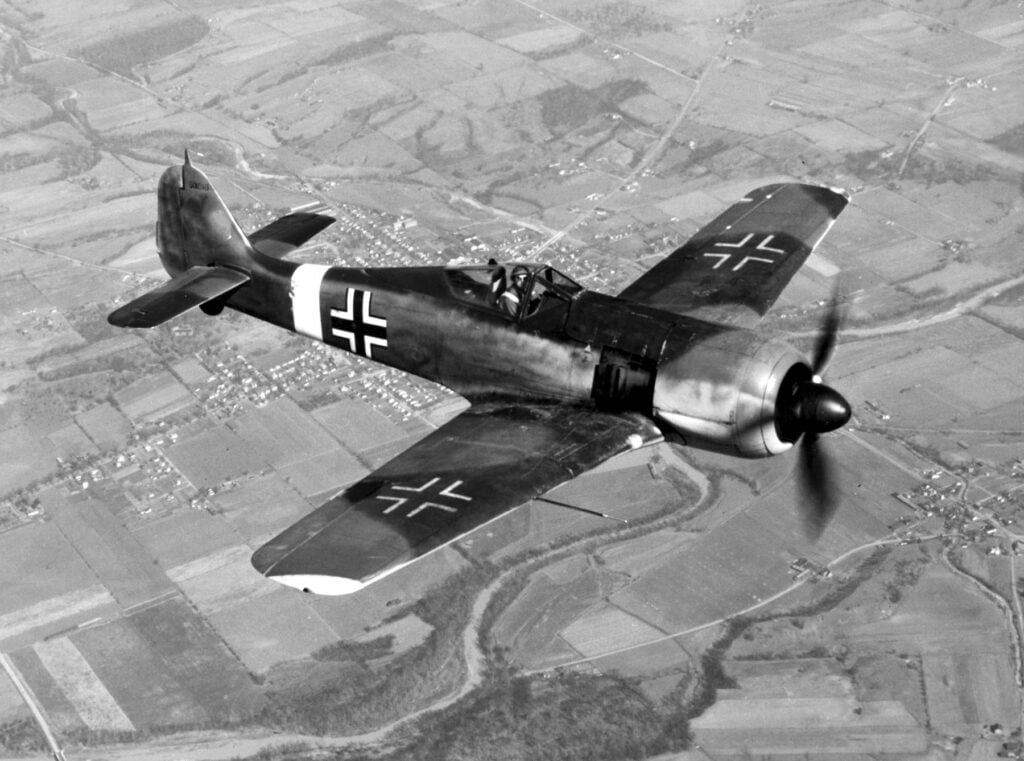
The main targets included factories in cities such as Leipzig, Regensburg, Schweinfurt, Gotha, and Augsburg. These locations were central to the production of German fighters, including the Messerschmitt Bf 109 and the Focke-Wulf Fw 190. By striking these facilities, Allied planners hoped to reduce the number of new aircraft reaching German squadrons.
On February 24, hundreds of American B-17 and B-24 bombers crossed into German airspace. They were escorted by long-range fighters, including the North American P-51 Mustang, which now had the range to protect bombers deep inside enemy territory. This marked a major change from earlier missions, when bombers often flew without full escort and suffered heavy losses.
Fierce Air Battles Above the Reich
German air defenses responded in force. Fighter units rose to intercept the incoming bomber streams. The skies over central Germany filled with aircraft, contrails, and anti-aircraft fire. The goal of the Allies was not only to destroy factories but also to draw German fighters into combat, where they could be shot down by escorting fighters.
The air battles were intense and costly on both sides. During Big Week, the United States lost several hundred bombers and fighters. German losses were also heavy, especially among experienced pilots. Although German factories continued to produce aircraft in the months that followed, replacing trained aircrew proved far more difficult. The campaign strained Germany’s ability to defend its airspace.
Impact on the War in Europe
By the end of Big Week on February 25, thousands of tons of bombs had been dropped on aircraft-related targets. Many factory buildings were damaged, and production was temporarily disrupted. In some cases, assembly lines were moved or dispersed to reduce the risk of future attacks. Even so, the pressure on the German aviation industry increased steadily.
More important than the physical damage was the effect on the German fighter force. The repeated need to confront large bomber formations led to mounting losses in both aircraft and pilots. In the months leading up to the Allied landings in Normandy in June 1944, German air strength in Western Europe continued to decline. Big Week did not end the air war, but it marked a turning point in the struggle for control of the skies over Europe.