On This Day in 1940: U.S. Army Air Corps Orders the “Super Bomber” That Would Become the B-29
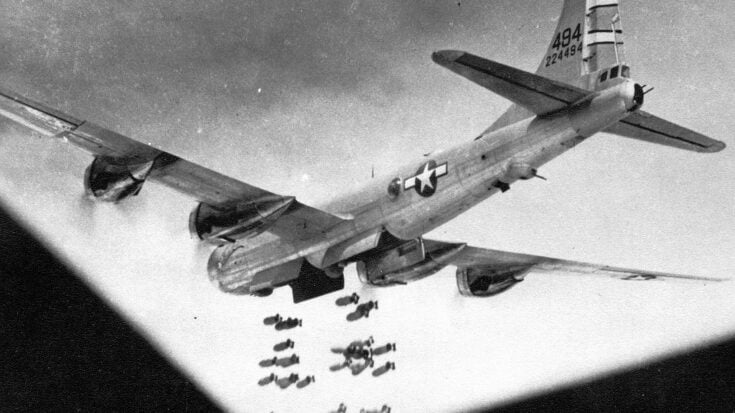
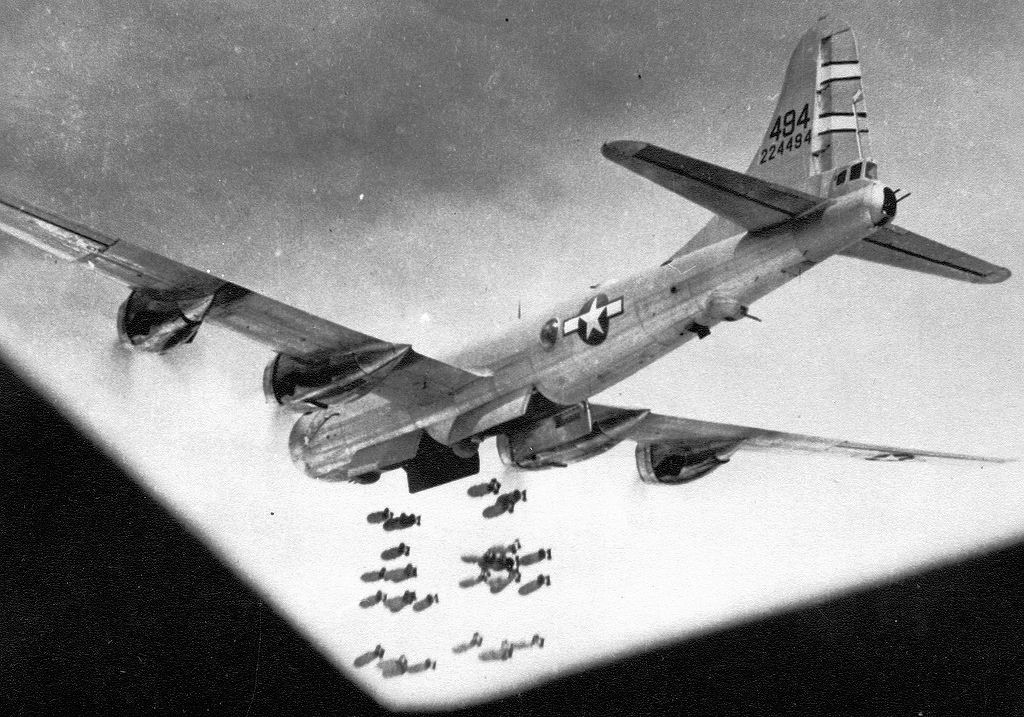
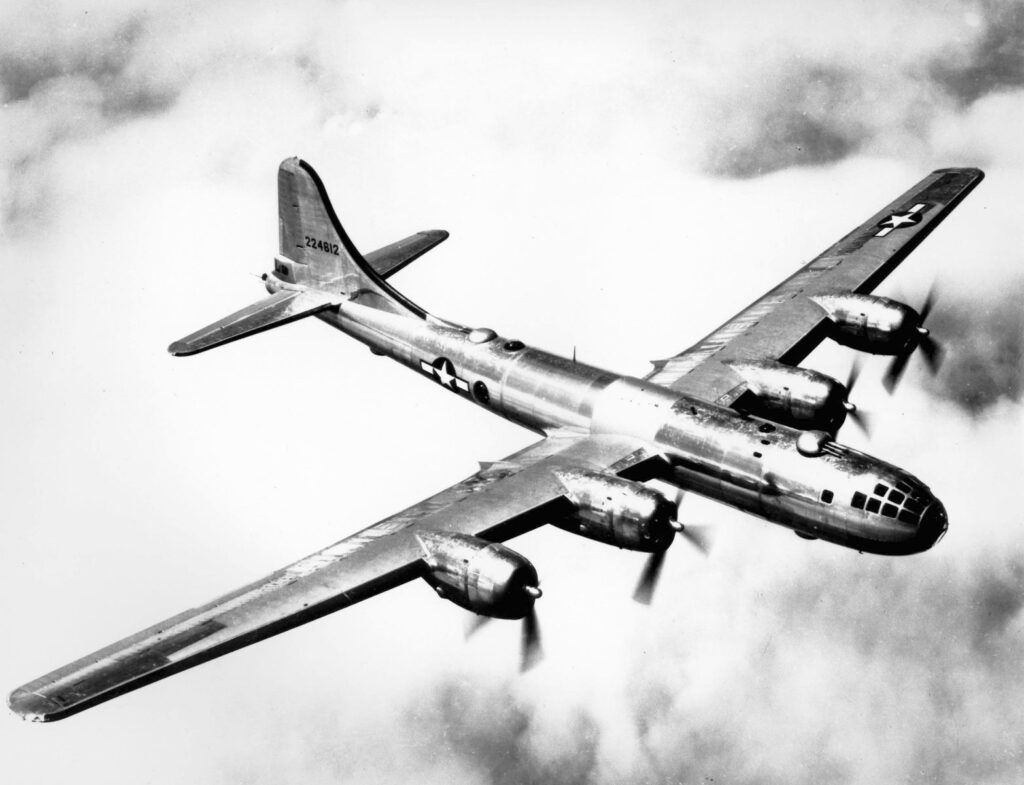
United States Army Air Forces, Public domain, via Wikimedia Commons
In early 1940, the United States Army Air Corps began planning for a new kind of bomber. Military leaders knew that future wars might require striking distant targets deep inside enemy territory. Europe was already at war, and the Japanese threat was rising in Asia. In January of that year, the Army Air Corps wrote detailed specifications for what it called a “super bomber.” This aircraft needed to carry heavy bomb loads over very long distances, far beyond the range of existing bombers. Designers at aircraft companies across the country responded.
The specifications issued in 1940 set demanding goals. The Army wanted a bomber with a range of roughly 5,000 miles and a bomb load that could carry thousands of pounds of explosive weight at long range. These figures far exceeded the performance of the B-17 Flying Fortress and the B-24 Liberator, the main heavy bombers in U.S. service at the time. The requirements reflected a growing need to project air power across oceans, especially in the vast Pacific, where distances between bases and targets could span thousands of miles.
Designing the “Super Bomber”
Aircraft designers at Boeing, Lockheed, Consolidated, and Douglas submitted proposals in response to the Army’s 1940 request for designs. Many early concepts were studied, but only a few would move beyond preliminary drawing boards. Boeing’s submission drew on its earlier work with large military aircraft, including the B-17 and experimental designs for long-range aircraft. Their proposal featured a large wingspan, a pressurized cabin, and four powerful engines, traits that would become hallmarks of the new bomber.
Later in 1940, Boeing and Consolidated won contracts to build prototypes based on the Army’s requirements. Boeing’s Model 345 evolved into the prototype that would lead to the B-29 Superfortress. The Army placed orders for service test versions and projected hundreds of production aircraft even before the prototype had flown. This early commitment showed how seriously the military took the need for a long-range heavy bomber.
Early Development Challenges
Work on the new bomber continued through 1941 and into 1942. Boeing engineers had to solve many engineering problems, including how to pressurize the crew compartments for high-altitude flight and how to control defensive gun turrets remotely. At the same time, the Wright R-3350 radial engines used on the prototype required development to meet demands for reliability and power. Despite these challenges, progress continued steadily.
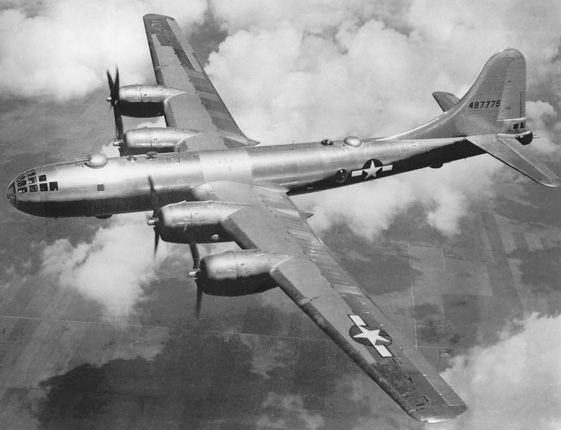
When the first prototype of the Boeing design flew on September 21, 1942, it represented a major advance in American aviation. The aircraft already showed the range and payload capacity its designers had aimed for in the 1940 specifications. A pressurized cabin allowed crews to fly at higher altitudes without oxygen masks for long periods, and the large bomb bay could accommodate thousands of pounds of ordnance.
From Specification to Service
By late 1943 and into 1944, B-29s began to reach combat units. While early planning in 1940 had focused on Europe, changing strategic realities shifted the bomber’s main role to the Pacific. Its long range made it ideal for flying missions from bases in China and, later, from captured islands such as Saipan, Guam, and Tinian. These flights took crews over thousands of miles of ocean to reach targets on the Japanese home islands, something no other bomber in U.S. service could do at that time.
In service, the Superfortress carried both conventional and incendiary bombs against industrial and urban targets. It also carried atomic weapons on missions that played a role in ending World War II. The aircraft’s advanced systems, large fuel capacity, and heavy payload made it unlike any bomber that had come before.
Legacy of a 1940 Decision
More than 3,900 B-29s were built by the end of the war, and the type remained in service into the 1950s in various roles. Its development began with that early 1940 request from the Army Air Corps for a bomber with unprecedented range and payload. The decisions made that year shaped not only the design of one of the most advanced aircraft of World War II, but also the way future air campaigns would be conducted.