On This Day in WWII (1944): Over 800 Heavy Bombers Strike Frankfurt in Massive “Mighty Eighth” Raid
In the winter of 1944, the air war over Europe entered a new phase. American leaders pushed for larger daylight attacks aimed at weakening German industry and transport systems. On January 29, the United States Eighth Air Force carried out one of its largest missions to that date. More than 800 heavy bombers were sent toward Frankfurt am Main, a key industrial and rail center. The scale of the force showed how much American air power had grown since the early years of the conflict.
This raid came before the famous series of attacks later called “Big Week,” which began in February. Even so, the January mission already showed the same rising tempo. Crews, planners, and ground staff had worked for months to build the strength needed for such an effort. Airfields in England were crowded with aircraft, fuel trucks, bomb carts, and maintenance teams. The movement of so many machines and people was a sign of how the air campaign had expanded.
Building the Force
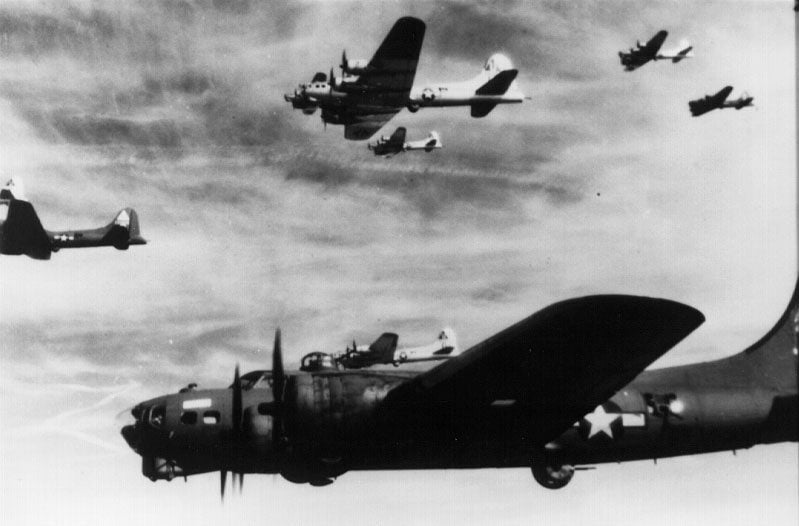
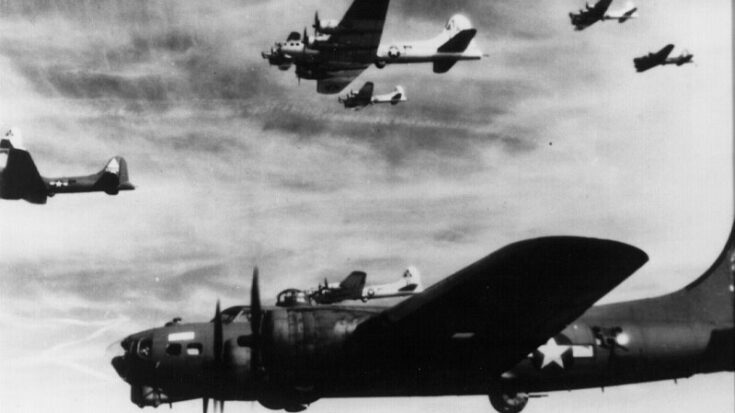
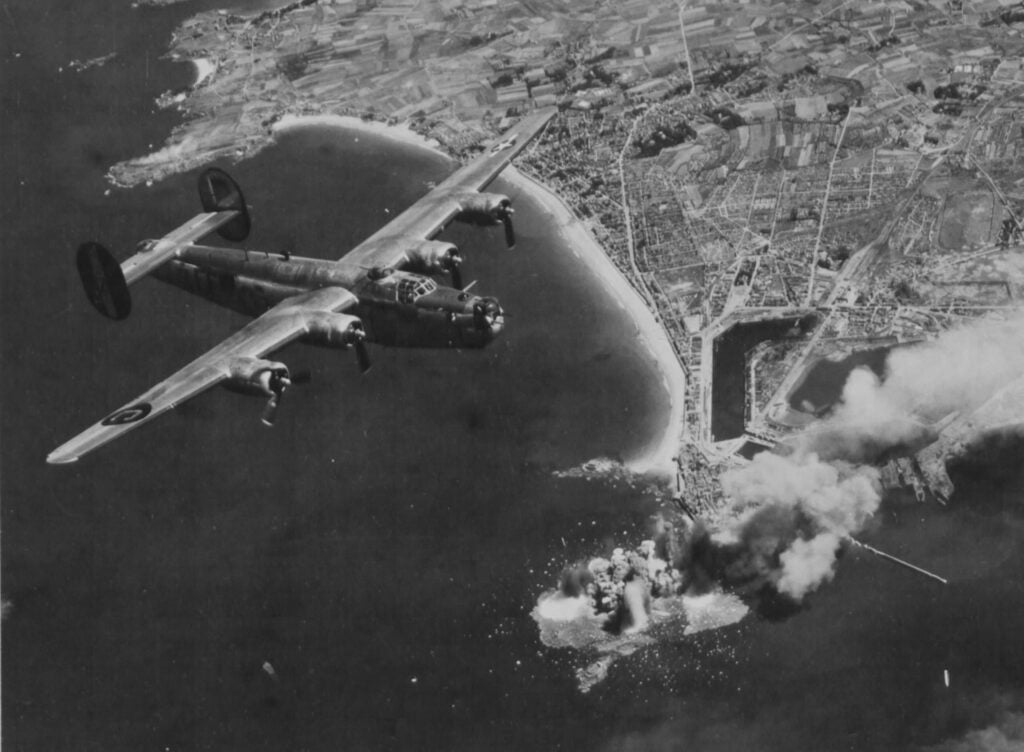
The bomber stream included Boeing B-17 Flying Fortresses and Consolidated B-24 Liberators. These four-engine aircraft were designed to carry heavy bomb loads over long distances. Each plane required a crew of about ten men, including pilots, navigators, gunners, and radio operators. Many had already flown earlier missions over occupied Europe, gaining experience but also facing steady danger. Losses in past months had been heavy, and replacement crews arrived often, still learning under pressure.
Escort fighters played a growing role by early 1944. Republic P-47 Thunderbolts and North American P-51 Mustangs met the bombers along the route. Their task was to defend the larger aircraft from German fighters. Earlier in the war, bombers often had to go deep into enemy airspace with limited cover. By this time, longer-range escorts could stay with the formations much farther, changing the balance in the air. Their presence did not remove the risk, but it gave bomber crews more confidence.
The Targets at Frankfurt
Frankfurt was chosen for both its industry and its rail network. The city contained factories, repair shops, and storage areas linked to the German war effort. Its marshalling yards sorted freight cars moving in many directions, making the area vital for supplies and troop movement. Hitting such places aimed to disrupt production and slow the flow of material to the front lines. Planners believed repeated blows against transport centers could strain the enemy’s system.
Weather often shaped how these missions unfolded. Over Frankfurt, cloud cover and smoke could hide aiming points. Some crews bombed using visual methods when breaks in the clouds appeared. Others relied on instruments and pathfinder aircraft that marked target areas with flares or radar guidance. This mix of methods meant results differed across the force. Still, large numbers of high-explosive and incendiary bombs fell on the city and rail facilities during the attack.
Air Battle and Return
As the bombers approached and left the target, they faced anti-aircraft fire from the ground. Bursts of flak filled the sky around the formations. German fighters also rose to challenge the raid, trying to break through the escort screen. Air battles spread across wide areas, with escorts engaging attackers while bombers held tight formations for defense. Even with improved cover, some aircraft were damaged or shot down, and crews were lost.
After releasing their loads, surviving planes turned back toward England. The long flight home tested men and machines already strained by hours in the air. Reports gathered later showed damage to rail yards and urban areas, along with American losses in aircraft and personnel. The mission on January 29 showed how far the Eighth Air Force had come in size and coordination, and it pointed toward even larger operations that would follow within weeks.