On This Day in 1942: Butch O’Hare Shoots Down Five Japanese Bombers in Four Minutes, Wins Medal of Honor
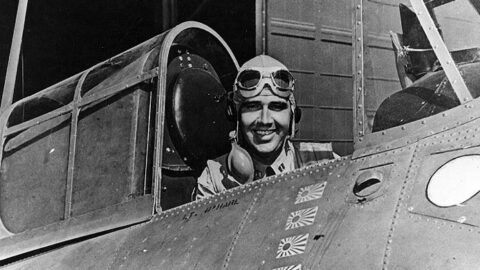
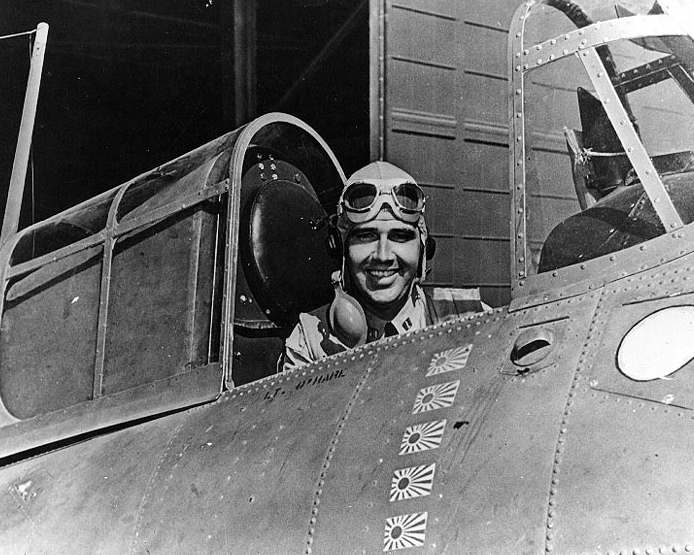
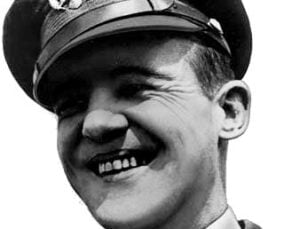
US Navy employee, Public domain, via Wikimedia Commons
Early War Pressure in the Pacific
On February 20, 1942, just weeks after the United States entered the global conflict in the Pacific, U.S. aircraft carrier forces were operating near the Solomon Islands, far from home but under constant threat. One of the key ships was the USS Lexington, a large carrier tasked with helping hold back advancing enemy forces in the region. Radar on the ship soon picked up a large group of enemy heavy bombers heading straight toward the carrier. American pilots scrambled to intercept them.
Among the American fliers that day was Lieutenant Edward Henry “Butch” O’Hare, part of Fighting Squadron 3 aboard the Lexington. O’Hare and his wingman took off in Grumman F4F Wildcat fighters to meet the approaching bombers. Shortly after entering combat, O’Hare’s wingman found that his guns had jammed, leaving him unable to fire at the attackers. At that point, O’Hare faced the enemy formation almost alone.
A Solo Fight Above the Sea
With only his own plane and limited ammunition, O’Hare dove into the group of approaching bombers. The attackers were Japanese G4M bombers, twin-engine aircraft that carried bombs for attacks on ships. O’Hare made several firing passes, putting short bursts of fire into the bombers’ engines and airframes. In less than four minutes, he was credited with shooting down five of those bombers and damaging a sixth before they reached the range from which they could drop their bombs.
O’Hare’s action that day was widely praised even at the time. His accuracy with machine guns that had very few seconds of firing time left made the defense effective. By attacking early and aggressively, he helped prevent any bombs from hitting the Lexington. Some gunners aboard the carrier even mistook him for an enemy aircraft as he landed and fired at him by mistake, but he was not hurt.
Recognition and Honor
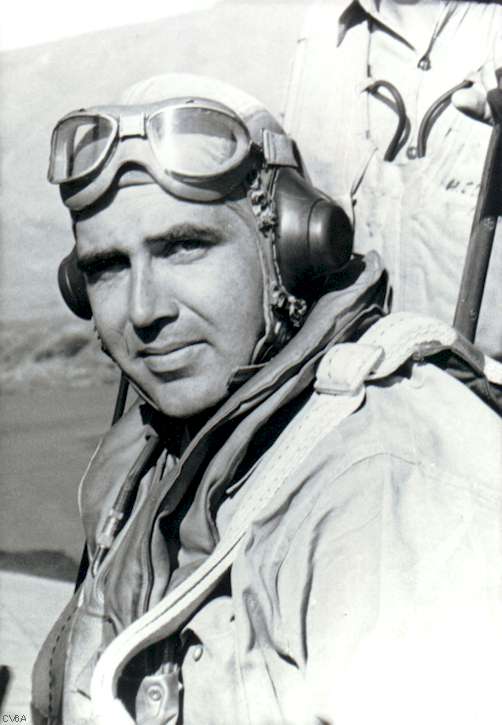
For his actions on that day, O’Hare was awarded the Medal of Honor, the highest U.S. military decoration, signed by President Franklin D. Roosevelt and presented in April 1942. His citation noted that he acted “without hesitation, alone and unaided” and used every shot of his limited ammunition to stop the bombers before they could attack the Lexington. The award made him the first naval aviator that war to receive the honor and the first U.S. Navy fighter ace of the conflict.
Following his famous flight, O’Hare became a well-known figure in the United States. He was sent on a tour to promote support for the war effort and encourage bond sales. Later in the war, he continued to serve as a pilot and commander, training others and returning to combat in the Pacific.
Legacy and Later Service
In recognition of his role, the main airport near Chicago was renamed in his honor in 1949. Displayed in the terminal is a restored Wildcat fighter similar to the one he flew in 1942. After leaving the bond tour, O’Hare assumed command of a fighter squadron on another carrier and took part in further combat operations. For actions in later missions around Marcus and Wake islands, he received additional awards for bravery.
O’Hare’s flying career ended in late 1943 during a night action over the Pacific when his plane disappeared and was never found. He was declared missing in action and later honored with further commendations. The name of a U.S. Navy destroyer was also given in his memory.
His performance on February 20, 1942, remains one of the most intense single engagements of aerial combat in the war and stands as an early example of how air power would shape the conflict in the Pacific.