

On This Day in 1942: Dive-Bomber Legend Dick Best Leads SBD Strike Against Wake Island
Return to a Contested Island
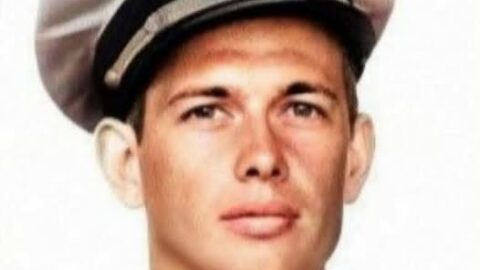
On February 24, 1942, American carrier aircraft struck Wake Island, which had fallen to Japanese forces two months earlier. Among the pilots that day was Lieutenant Commander Richard H. Best, known to many as Dick Best. He led a division of dive-bombers in a carefully planned attack launched from the carrier USS Enterprise (CV-6).
Wake Island had become a symbol of early Pacific resistance. In December 1941, a small Marine garrison and civilian workers had held out against repeated assaults before being forced to surrender. By February 1942, the United States Navy was seeking ways to strike back. Fast carrier raids were one method. These operations aimed to damage enemy bases, gather experience, and show that American naval air power could reach deep into contested waters.
The Aircraft and the Mission
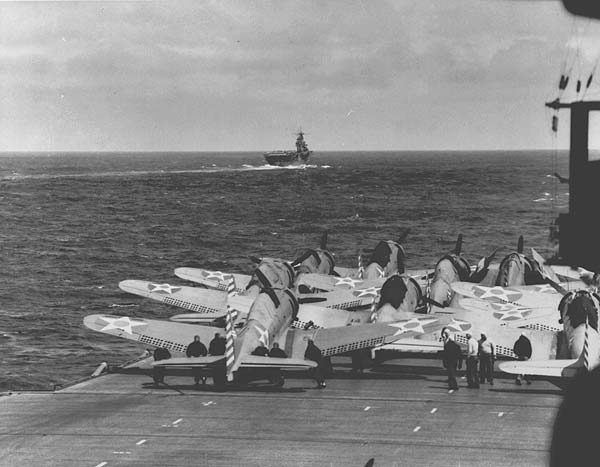
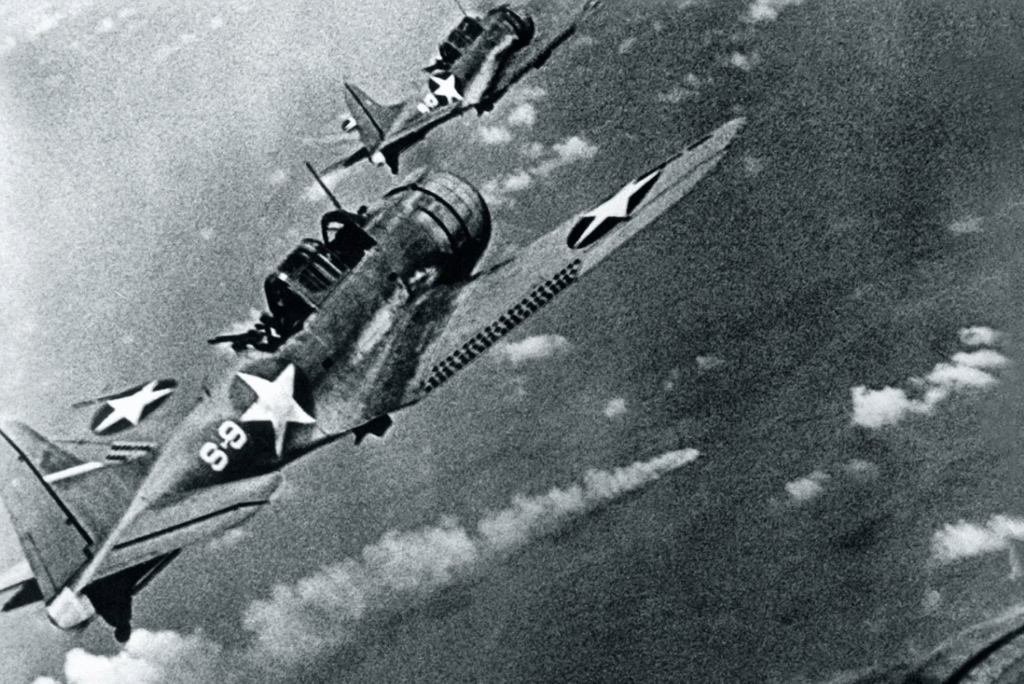
Best flew the Douglas SBD Dauntless, a carrier-based dive-bomber known for its accuracy. The aircraft carried a pilot and a rear gunner, along with a bomb mounted under the fuselage. Its perforated dive brakes allowed it to descend steeply toward a target while maintaining control. This method increased bombing precision but exposed crews to heavy anti-aircraft fire.
On the morning of the raid, planes from Enterprise approached Wake Island in coordinated groups. Best led Bombing Squadron Six in an attack against Japanese facilities on the island. Targets included fuel storage areas, aircraft on the ground, and defensive positions. As the SBDs rolled into their dives, gunners below opened fire. Pilots had to hold steady as they lined up their aim, release their bombs at low altitude, then pull out sharply to avoid the ground and return fire.
Experience Before Midway
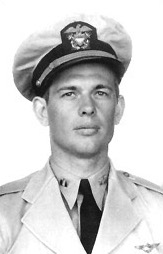
By February 1942, Best was already a respected officer with strong training in dive-bombing tactics. The Wake Island strike was one of several early-war raids carried out by Enterprise. Similar attacks were launched against the Marshall and Gilbert Islands. These actions did not involve large fleets in direct battle, but they helped build confidence and sharpen coordination among pilots, deck crews, and commanders.
The raid on Wake Island caused damage to installations and aircraft. American forces reported destroying planes on the ground and hitting supply areas. Losses were limited, though several aircraft were damaged by defensive fire. For many involved, the mission showed that well-planned carrier strikes could deliver focused blows and withdraw before major enemy forces could respond. These lessons would soon prove important in larger engagements.
A Pilot’s Growing Reputation
Dick Best would later gain wider recognition during the Battle of Midway in June 1942. On that day, he led attacks that struck two Japanese aircraft carriers, contributing to their sinking. His performance at Midway became part of naval aviation history. Yet earlier operations, including the Wake Island raid, formed the background to that later fame.
The February 24 attack did not change the balance of power in the Pacific by itself. Wake Island remained under Japanese control for the rest of the war. Still, the strike demonstrated that American carriers could operate boldly across wide distances. For Best and the crews who flew with him, it was another demanding test in a long conflict at sea, carried out with discipline, training, and resolve under fire.







_in_April_1942.jpg)
