

On This Day in 1944: Big Week Ends With 900 Allied Bombers Striking Regensburg and Augsburg
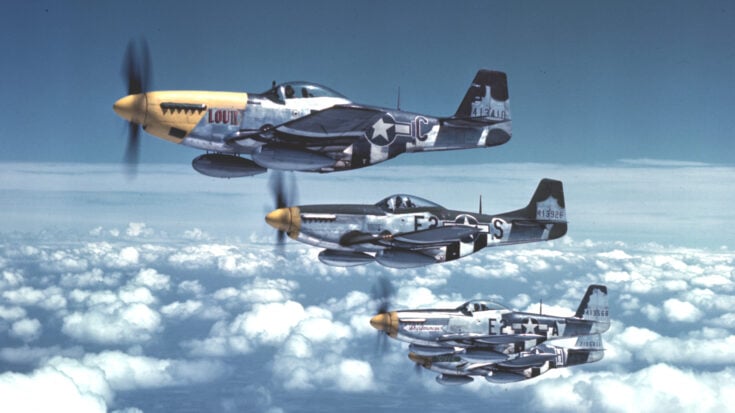
By USAAF, photographed for a series of U.S. 8th Air Force publicity pictures for widespread distribution (photos were taken from B-17G bombers of the 91st Bomb Group) - https://making-history.ca/2020/12/30/the-bottisham-blues/This photograph FRE 6428 comes from the collections of the Imperial War Museums., Public Domain, Link
The Final Blows of a Massive Air Campaign
In late February 1944, the Allied air offensive known as Big Week reached its closing phase. The operation, officially called Operation Argument, had begun on February 20 with one clear aim: weaken German aircraft production and reduce the strength of the German fighter force before the planned invasion of Western Europe.
On February 25, the last major strikes of the campaign were launched. Around 900 American bombers were sent toward key industrial centers, including Regensburg and Augsburg. These cities were not chosen at random. Both were important to the production of German fighter aircraft, especially facilities linked to the Messerschmitt company. By attacking these plants, Allied leaders hoped to damage output and force German interceptors into battle.
Regensburg and Augsburg Under Attack
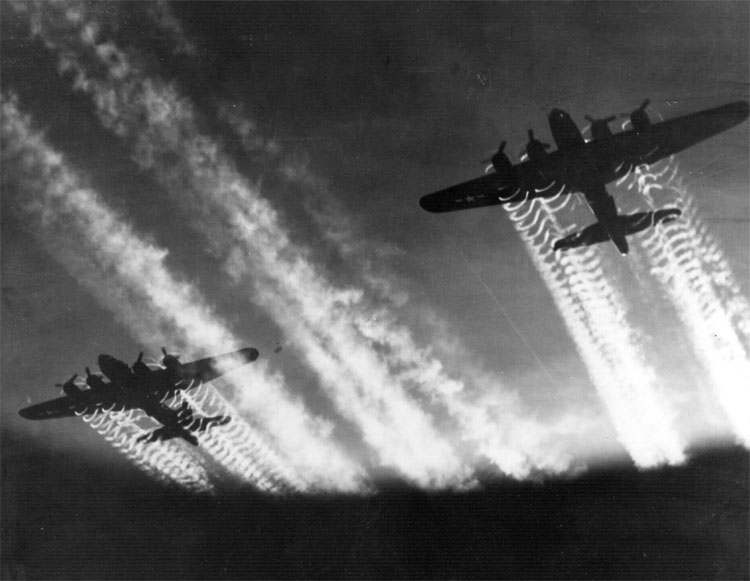
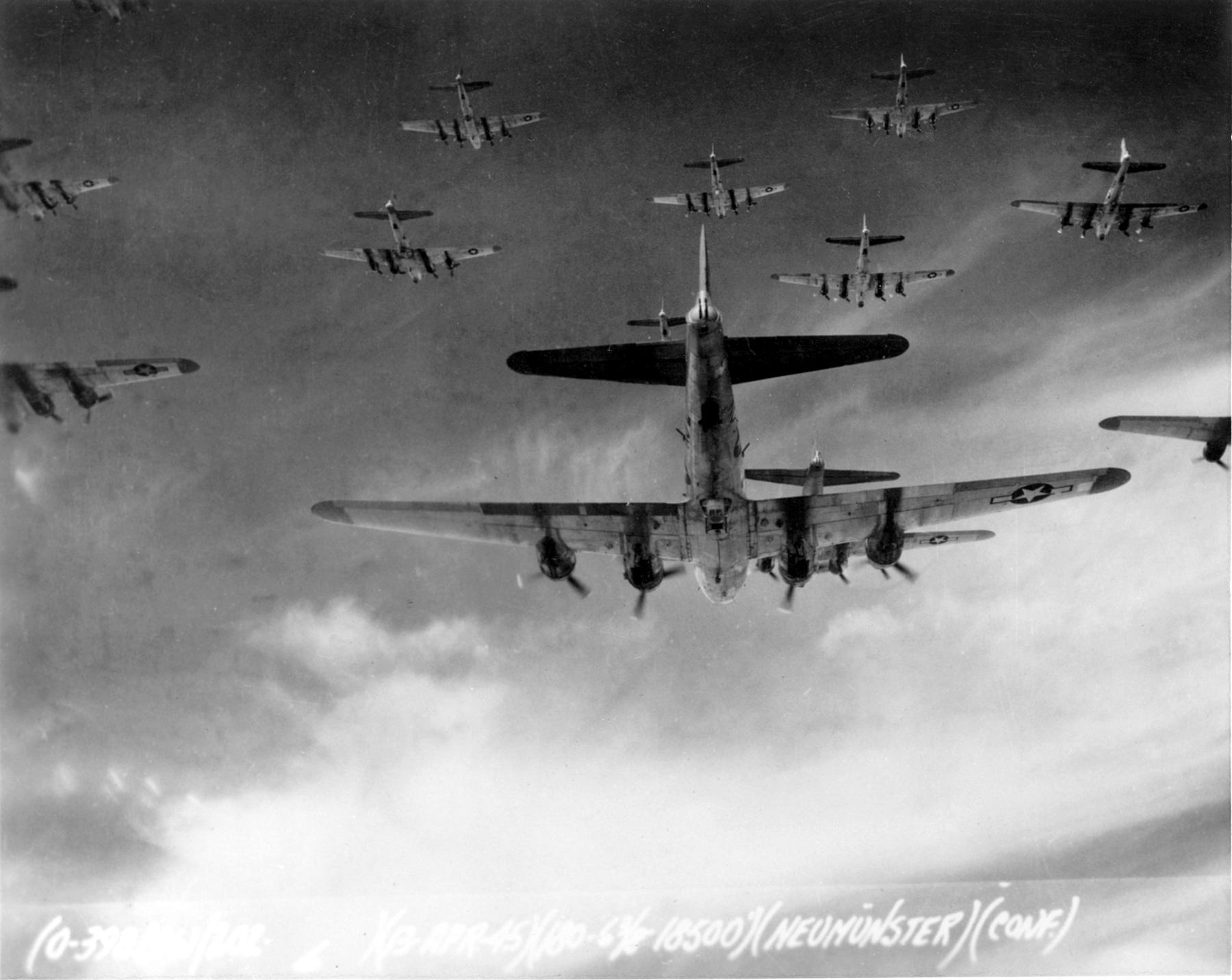
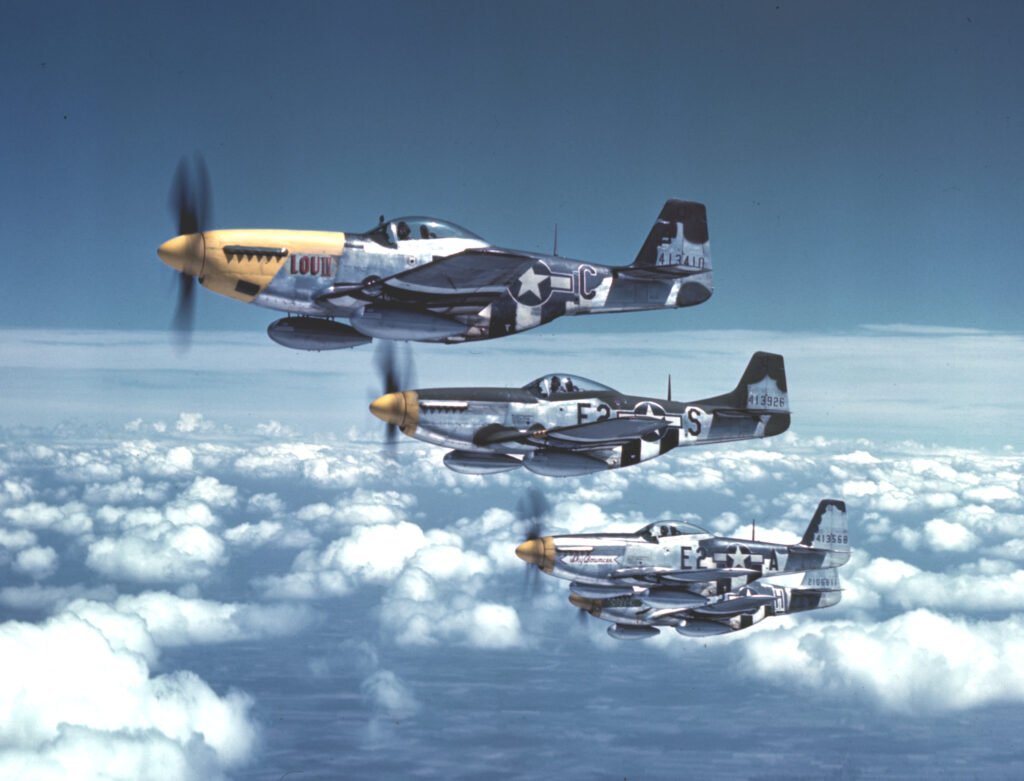
The bomber formations, made up largely of B-17 Flying Fortresses and B-24 Liberators, crossed into German airspace under escort from long-range fighters. The arrival of the North American P-51 Mustang had changed the air war. With extended range, these fighters could now protect bombers deep inside Germany, reducing earlier vulnerabilities that had cost many lives.
As the bombers approached their targets, German air defenses responded. Fighter units rose to meet them, and anti-aircraft guns opened fire from the ground. The skies over southern Germany filled with aircraft and smoke. Despite the resistance, many of the bombers reached Regensburg and Augsburg and released their payloads on aircraft assembly plants, machine shops, and related industrial sites. Damage reports later showed that several facilities were hit hard, though German engineers worked quickly to restore operations.
Heavy Losses in the Air
Big Week had been designed not only to strike factories but also to draw the German fighter force into repeated combat. Allied planners believed that destroying aircraft on the ground was only part of the task. They also needed to reduce the number of trained pilots defending the Reich. Over the course of the week, large air battles took place almost daily.
By the end of the campaign, German losses were severe. Estimates suggest that roughly one-third of the available fighter aircraft had been destroyed or damaged beyond immediate use. Even more serious was the loss of about 20 percent of experienced fighter pilots. Aircraft production continued in the months that followed, but replacing skilled airmen proved far more difficult than building new machines.
A Shift in the Air War
Allied forces also suffered losses during Big Week. Hundreds of bombers and fighters were shot down, and many airmen were killed or captured. Yet the steady pressure placed on German air defenses began to show results. The ability of the German air force to respond in strength declined as 1944 progressed.
The strikes on Regensburg and Augsburg marked the close of a concentrated effort that reshaped the air campaign over Europe. In the weeks that followed, Allied bombers continued to attack transportation networks, oil facilities, and other strategic targets. Big Week had demonstrated that sustained, escorted bombing missions could reach deep into Germany and return with growing confidence, setting the stage for the battles that would follow in the months ahead.





.svg)