

On This Day in WWII (1943): “Cactus Air Force” Secures Victory as Guadalcanal Campaign Officially Ends
US Navy, Public domain, via Wikimedia Commons
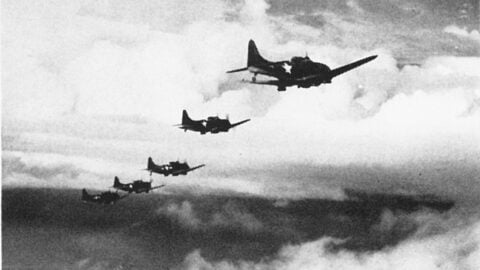
On February 9, 1943, Allied leaders declared the long and bitter Guadalcanal Campaign officially over. After six months of hard fighting on land, sea, and in the air, the island was firmly under Allied control. The final confirmation came from the skies, where Allied aircraft found no remaining enemy forces. Central to this success was the group of flyers known as the “Cactus Air Force,” whose efforts shaped the outcome of the campaign.
The Birth of the Cactus Air Force
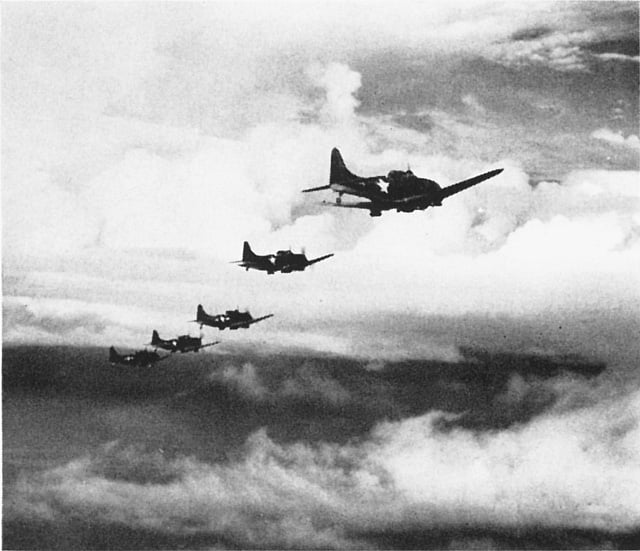
The Cactus Air Force took its name from the code word “Cactus” used for Guadalcanal. It was formed in August 1942 after Allied forces landed on the island and captured an unfinished airstrip later named Henderson Field. The air group was made up of Marine, Navy, and Army pilots flying a mix of fighters, dive bombers, and patrol aircraft. Supplies were limited, aircraft were often damaged, and crews lived under constant threat.
Despite these conditions, the airmen flew daily missions against enemy aircraft, ships, and ground positions. They often took off while the airfield was under artillery fire or air attack. Maintenance crews worked in the open, repairing planes with few spare parts. These efforts allowed the Cactus Air Force to keep aircraft in the air when they were most needed, even during the hardest weeks of the campaign.

Gaining Control of the Skies
Air control over Guadalcanal slowly shifted as the campaign continued. Early in the fighting, enemy aircraft based at Rabaul and nearby islands struck Henderson Field regularly. Over time, losses and long flight distances weakened these attacks. Allied pilots learned enemy tactics and improved coordination between units. As reinforcements arrived, the number of serviceable aircraft increased, strengthening air defenses.
By late 1942, the Cactus Air Force was not only defending the island but also striking shipping and airfields beyond Guadalcanal. Enemy supply runs, often called the “Tokyo Express,” suffered growing losses from air attacks. This pressure made it harder to bring food, ammunition, and troops to the island. Air power played a key role in wearing down enemy forces on the ground.
Operation Ke and Final Sweeps
In January 1943, Allied intelligence began to notice changes in enemy activity. Air patrols reported fewer aircraft and ships arriving at Guadalcanal. These signs pointed to Operation Ke, a secret evacuation plan designed to withdraw remaining forces. Under cover of night and air support, thousands of troops were quietly removed over several weeks.
On February 9, 1943, Cactus Air Force aircraft flew reconnaissance missions across the island and surrounding waters. Pilots saw abandoned positions and no signs of organized resistance. These flights confirmed that the evacuation was complete. With this discovery, Allied commanders announced the end of the Guadalcanal Campaign, marking a major turning point in the Pacific War.
From Defense to Offense
With Guadalcanal secure, Henderson Field and nearby Fighter One and Fighter Two airstrips changed roles. No longer isolated defensive bases, they became staging grounds for future operations. Aircraft could now strike deeper into enemy-held territory and protect naval movements through the Solomon Islands.
The experience gained by the Cactus Air Force shaped later Allied air operations. Pilots, ground crews, and commanders learned how to operate under extreme conditions and coordinate joint air efforts. Their success at Guadalcanal helped open the path toward Rabaul and beyond, shifting the balance of air power in the Pacific.








.gif)