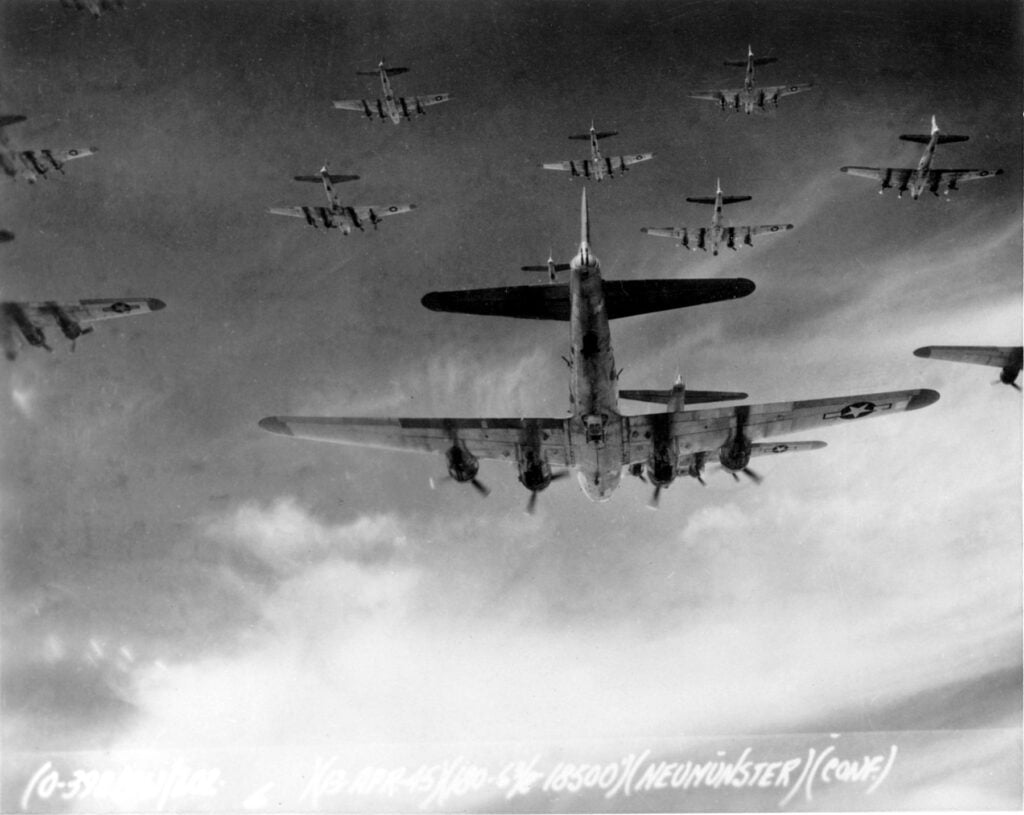
On This Day in WWII (1943): U.S. 8th Air Force Launched First All-American Bombing Raid on Germany
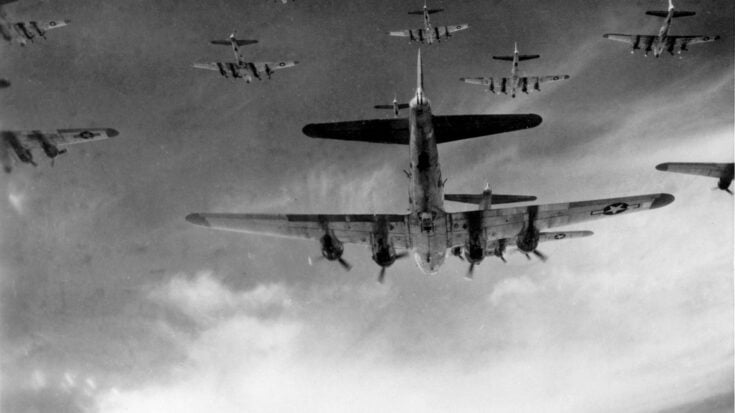
See page for author, Public domain, via Wikimedia Commons
Early Air War and the 8th Air Force
By early 1943 the air war over Europe had been adjusting to new forces and tactics from both sides. The British Royal Air Force had been carrying out night bombing attacks over German cities and industrial centers for months. The United States Army Air Forces (USAAF), organized as the 8th Air Force and based in England, had been flying missions against targets in France and occupied Europe since 1942. These included rail yards, factories, and other sites within range of their heavy bombers.
Heavy bombers such as the Boeing B-17 Flying Fortress and the Consolidated B-24 Liberator were central to the USAAF’s plans. These large four-engine aircraft carried large bomb loads and were built to fly in tight formations so that they could defend each other with machine guns. The 8th Air Force’s leadership believed in daylight precision bombing, a doctrine that aimed to strike military and industrial targets during the day and to rely on formation defense to protect the aircraft on deep missions.
Planning the First Attack on German Soil
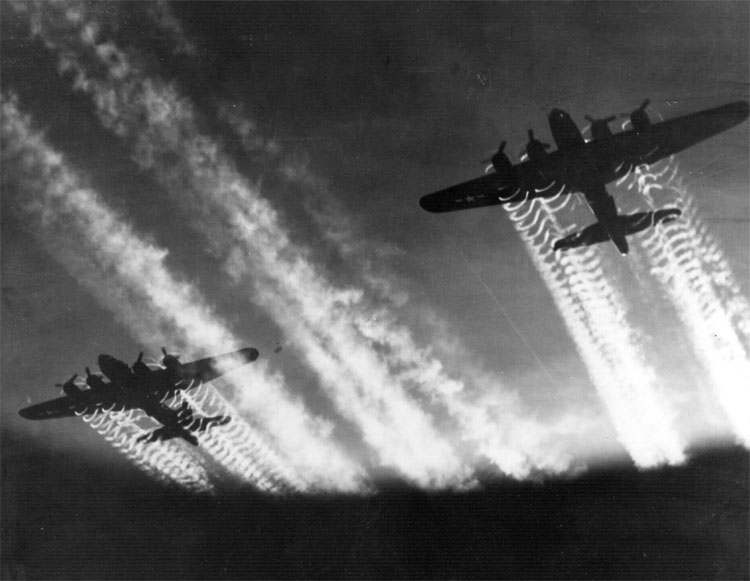
As January 1943 approached, planners in the 8th Air Force prepared for the first direct attack on Germany itself. The target chosen was the naval port of Wilhelmshaven, on the North Sea coast. This port was an important base for German naval forces, including submarine and surface ship facilities. Striking it would test the USAAF’s ability to operate deep into enemy territory under daylight conditions.
On January 27, 1943, a large force of bombers took off from bases in England to carry out the mission. The raiding force included aircraft from several bomb groups, with B-17s forming the bulk of the striking force. They climbed to altitude over the English Channel and set course toward Wilhelmshaven, knowing that they would encounter air defenses and fighters as they crossed into German airspace.
Reaching the Target
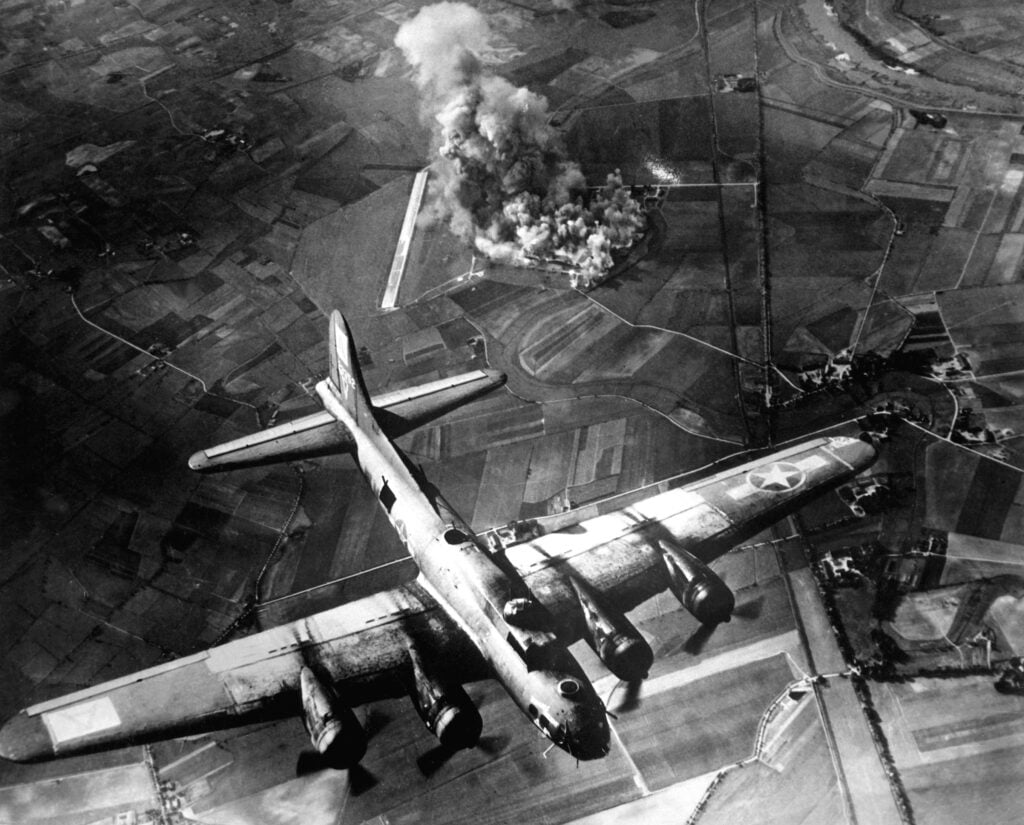
Of the 64 bombers dispatched for the mission, 53 were able to reach the target area despite weather challenges and navigational difficulties. Once over Wilhelmshaven, the bomber crews released their bombs against warehouses, docks, and industrial facilities that supported the German war effort. These attacks aimed to disrupt shipbuilding, storage, and other functions that contributed to naval operations in the North Sea.
Flying in daylight without long-range fighter escort left the bombers vulnerable. German defenders, including fighter aircraft, were alerted and scrambled to intercept the formation. The American bombers were met with resistance from up to 50 to 75 German fighters, along with anti-aircraft fire from the ground.
Combat and Losses
Despite the threat from enemy fighters and ground fire, the 8th Air Force crews pressed on. They managed to deliver their bombs on the Wilhelmshaven port and cause damage to the target area. In the aerial combat that followed, American gunners and the bomber formations defended themselves vigorously. Reports from the mission noted that the bombers were credited with claiming a significant number of enemy aircraft destroyed, even as they suffered losses of their own.
Records indicate that three B-17 Flying Fortresses were lost during the mission. This relatively light loss rate was due in part to the element of surprise, as German defenses were still organizing responses to American daylight raids. The success of this first attack gave the USAAF confidence that heavy bombers could reach and strike targets within Germany, opening the way for larger and deeper raids later in the war.
Aftermath and Impact on the Air War
The January 27 mission marked a significant shift in the air war over Europe. It was the first time that the 8th Air Force sent a large formation of heavy bombers in daylight against a target on German soil. It showed that American air power could project force far into enemy territory and carry out strategic bombing without complete dependence on night operations.
In the months that followed, the 8th Air Force continued to refine its tactics and increase the scale of its daylight raids. Missions grew larger and more ambitious, with deeper penetrations into the heart of Germany. These operations would prove costly as German air defenses improved, but they also demonstrated the growing strength and reach of American air forces in the European theater.
The first Wilhelmshaven raid stands as a historical moment in World War II aviation, reflecting the willingness of the United States to apply its industrial and military strength in a sustained air campaign against major enemy territory.