

On This Day in WWII (1944): Hellcats, Avengers, and Dauntlesses Crush the ‘Gibraltar of the Pacific’
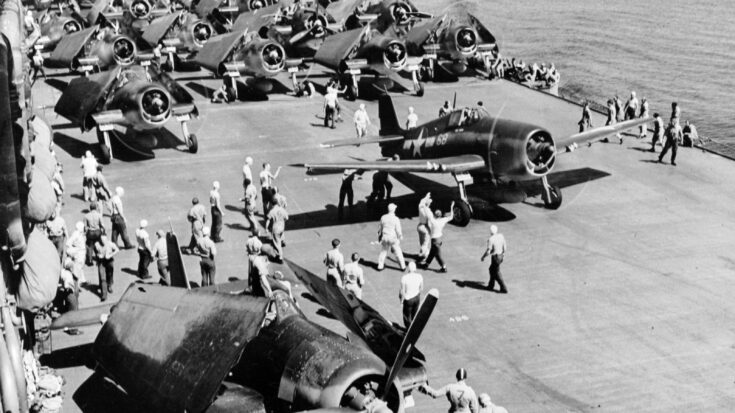
United States. Office of War Information. Overseas Picture Division., Public domain, via Wikimedia Commons
In February 1944, American naval forces prepared to strike a base that had long supported enemy warships, submarines, and aircraft across the central Pacific. Truk Atoll, part of the Caroline Islands, was a large lagoon surrounded by coral islets. Japanese forces had used it as a major anchorage and air hub, storing fuel, aircraft, and supplies to support military operations throughout the region. Allied leaders dubbed it the “Gibraltar of the Pacific” because of its size and strategic value.
The U.S. Navy chose to attack by air rather than attempt a costly landing. On February 17, 1944, Task Force 58 set sail with a powerful group of carriers, battleships, cruisers, destroyers, and submarines assigned to neutralize Truk. Over the next two days, hundreds of American aircraft were launched in a sustained assault known as Operation Hailstone.
Stealth and Surprise at Dawn
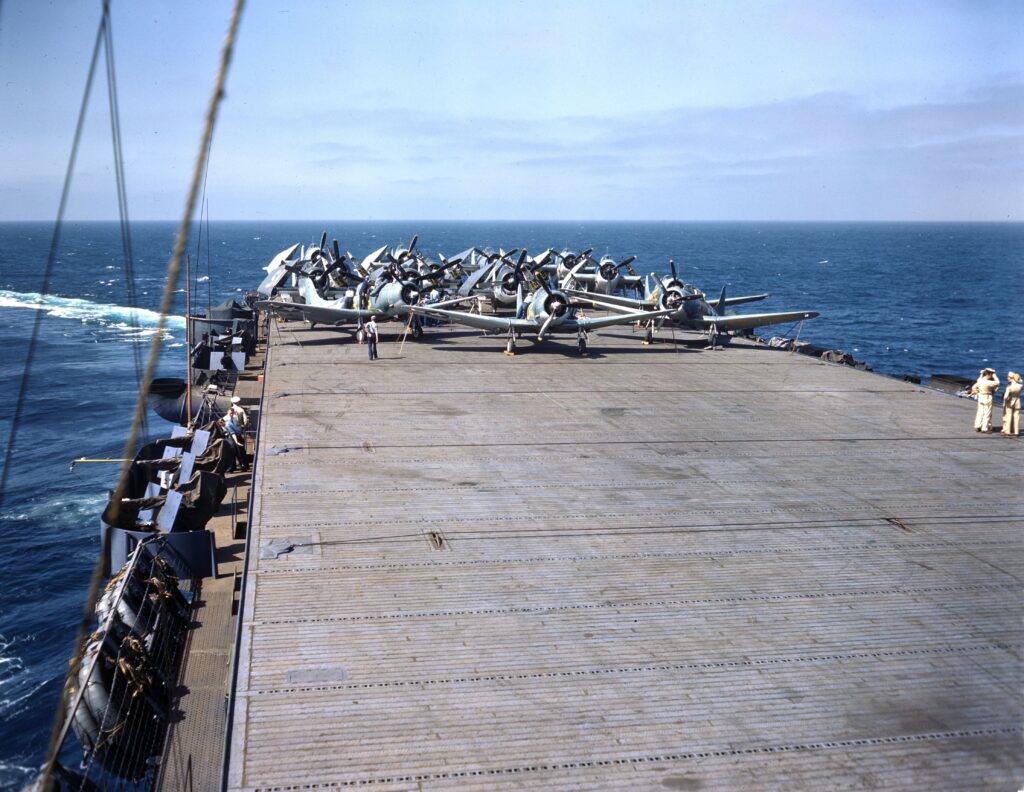
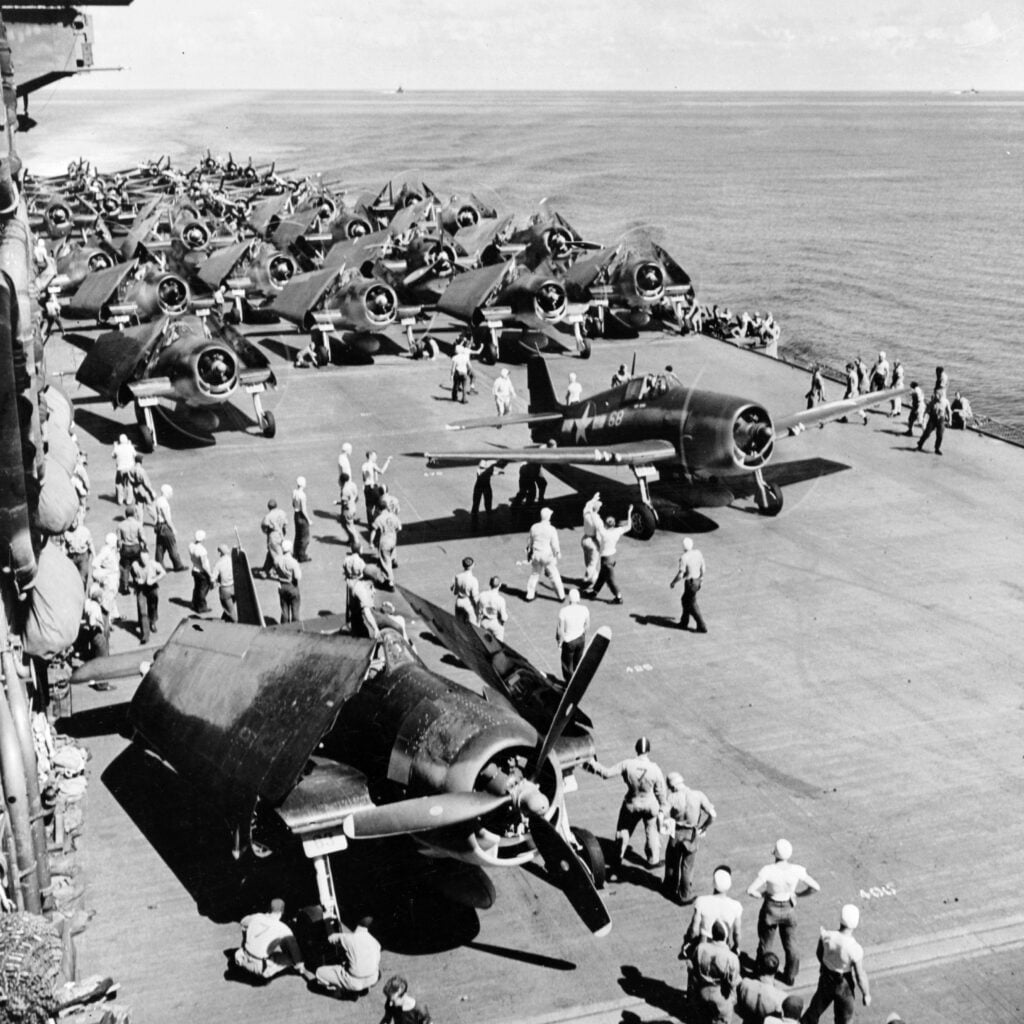
Task Force 58 approached Truk Lagoon from the northeast and took position about ninety miles offshore before first light on February 17. In the hours before dawn, aircraft began launching from nine carriers, including five fleet carriers and four light carriers. Among them were Grumman F6F Hellcat fighters, Douglas SBD Dauntless dive bombers, and Grumman TBF Avenger torpedo bombers. These planes were organized into strike waves to overwhelm the base’s defenses in a coordinated sweep.
The initial fighter sweep involved dozens of Hellcats ascending in darkness and flying toward the enemy airfields spread across the atoll. Because radar and warning systems in the base were limited, many Japanese aircraft and pilots were caught off guard. Within the first minutes of the attack, American Hellcats engaged enemy fighters and strafed runways and aircraft parked on the ground. Many of the defenders were unable to reach the air before the attack hit.
Airfields and Ships Under Fire
Following the fighter sweep, dive bombers and torpedo aircraft moved in to strike both land and sea targets. Avengers dropped fragmentation and incendiary bombs that tore into runways and damaged dispersal areas, making it difficult for the few surviving enemy planes to take off. Dauntless dive bombers and other attack aircraft focused on shipping in the lagoon, aiming torpedoes and bombs at transport vessels, tankers, and support ships anchored near the islands.
Over the two days of Operation Hailstone, carrier aircraft flew more than 1,200 strike sorties against targets at Truk. By the end of the action on February 18, American pilots and aircrews were credited with destroying between 250 and 275 Japanese aircraft, both in the air and on the ground. The attacks also sank dozens of ships, including transports, auxiliaries, and supply vessels, totaling hundreds of thousands of tons of shipping lost.
Destruction and Losses
The scale of destruction at Truk was immense. Fixed defenses, fuel storage, and airfield facilities were cratered or burned, and many of the island’s aircraft were rendered unserviceable. Japanese loss figures included more than 4,500 personnel killed and the destruction of fuel stores that had been critical for naval operations. Some light cruisers, destroyers, and auxiliary warships were sunk during the raid. Oil slicks spread across parts of the lagoon where tankers had been hit. Cargo ships and smaller naval vessels burned or settled beneath the surface in the shallow anchorage. Although some major warships had left the base days earlier, the loss of transport capacity and aircraft support dealt a serious blow to Japanese operations in the central Pacific.
American losses, while far lower, were not light. U.S. forces lost around 25 aircraft during the operation, and several airmen were killed or listed as missing. A night torpedo attack by Japanese aircraft struck the carrier USS Intrepid and caused serious damage, forcing her to withdraw for repairs. Even so, Task Force 58 remained in control of the area throughout the strike period and withdrew only after completing its objectives.
Strategic Impact Across the Pacific
Operation Hailstone did not involve an invasion of Truk. Instead, it removed the atoll as an effective forward base. With airfields damaged, fuel reserves destroyed, and shipping sunk, the lagoon could no longer support large fleet operations. Japanese forces stationed there were isolated and largely cut off from further supply. The base, once seen as secure, was reduced to a stranded outpost.
For American planners, the success of the carrier assault confirmed the growing strength of naval aviation. The coordinated use of Hellcats for air superiority, Avengers for torpedo and level bombing runs, and Dauntless dive bombers for precision strikes showed how carrier groups could cripple a fortified base without landing troops. After February 1944, Allied advances continued westward through the Marshalls and toward the Marianas, leaving Truk behind as a silent reminder of how quickly control of the Pacific had shifted.







_1943.jpg)
