

On This Day in WWII (1944): Task Force 58 Launches Carrier Air Attacks on Kwajalein to Destroy Japanese “Betty” Bombers at Eniwetok
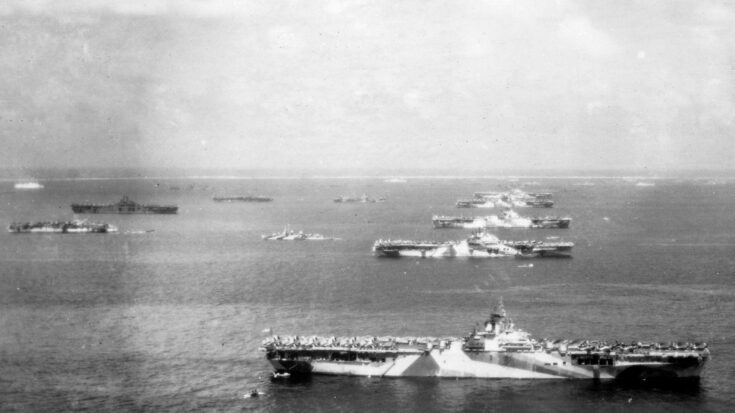
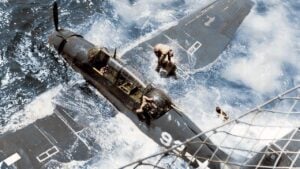
Naval History & Heritage Command, Public domain, via Wikimedia Commons
On January 30, 1944, the United States Navy’s fast carrier force struck at Japanese air power in the central Pacific. Aircraft launched from Task Force 58 attacked the airfields of the Marshall Islands. These strikes were meant to weaken aviation that could interfere with an upcoming large American assault on Kwajalein Atoll. In one of these raids, carrier aircraft destroyed fifteen Japanese medium bombers on the ground at Eniwetok Atoll. This action unfolded in the days before Operation Flintlock, the campaign to capture Kwajalein and other islands in the Marshalls that would shape the course of the Pacific conflict.
The Task Force 58 Offensive Begins
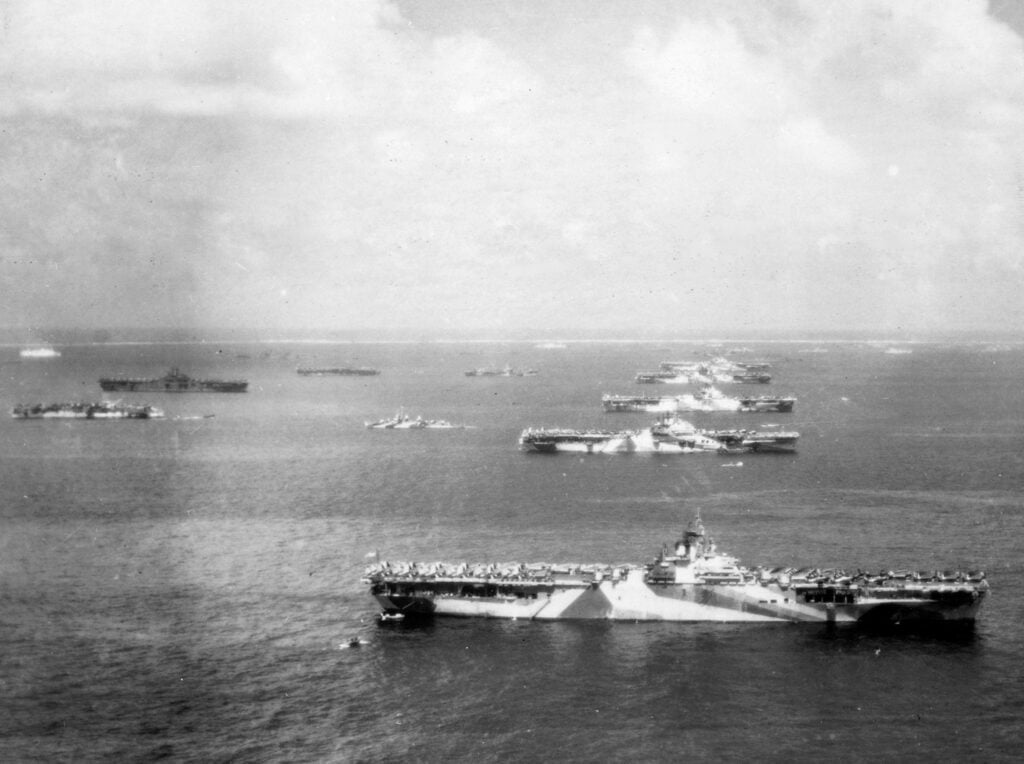
The fast carrier force known as Task Force 58, under the command of Vice Admiral Marc A. Mitscher, moved into striking range of the Marshall Islands in late January 1944. This large naval group was built around four task groups of aircraft carriers, each carrying numerous fighter, dive-bomber, and torpedo-plane squadrons. The carriers were supported by battleships, cruisers, and destroyers to protect them and to bombard land targets. Their purpose was to knock out airfields and defensive positions that could threaten American warships or troops.
On January 29, carrier air groups from these ships launched early morning strikes on nearby atolls such as Maloelap and Kwajalein itself. These initial raids found many enemy aircraft still on the ground and inflicted heavy damage on runways, hangars, and support facilities. Strikes were also flown against Wotje. The speed of the American carrier planes and the strength of their numbers ensured that Japanese air strength in the eastern Marshalls was caught off guard and pushed toward collapse.
The January 30 Strike on Eniwetok
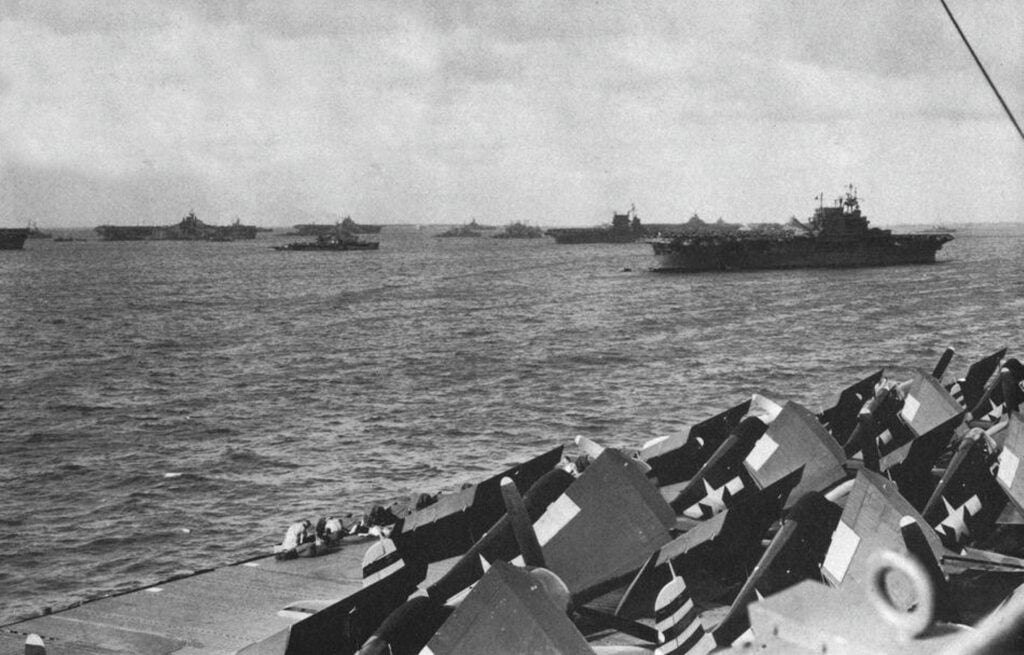
At dawn on January 30, Task Group 58.3, joined by carriers such as Bunker Hill, Monterey, and Cowpens, lifted waves of aircraft against targets at Eniwetok Atoll. The raids focused on enemy aircraft parked in revetments and on the ground, rather than engaging in dogfights in the air. In this action, American pilots and bombardiers set fire to at least fifteen Japanese Mitsubishi G4M medium bombers, known to Allied forces by the code name “Betty,” along with several smaller floatplanes. This struck a blow against the capacity of Japan to launch air operations from that atoll.
These carrier aircraft were backed by Grumman F6F Hellcat fighters, Douglas SBD Dauntless dive-bombers, and Grumman TBF Avenger torpedo bombers. The Hellcats provided cover against any opposing aircraft that might take to the skies, while dive-bombers and torpedo planes targeted airfield facilities and aircraft on the ground. By attacking in this coordinated manner, American aviators helped to reduce the threat from Eniwetok’s airfield before ground forces arrived.
Broader Neutralization of Japanese Airfields
The attack on Eniwetok was part of a larger effort by Task Force 58 to neutralize Japanese air strength in the Marshalls before the landings at Kwajalein. Carriers from separate groups flew multiple strikes that day against Kwajalein Island airfields and against those at Roi-Namur. Combined with the previous day’s missions, these attacks left very few serviceable Japanese aircraft east of Eniwetok. By the end of January 30, American carrier planes had removed much of the threat posed by local aviation, opening the way for ground operations.
The reduction of enemy air power in the region also eased the risk to the invasion fleet itself. Without effective opposition from land-based aircraft, the carriers and support ships could operate closer to shore and maintain air patrols that would shield troop transports and landing craft heading toward Kwajalein. This groundwork was essential to preparing the large assault scheduled for January 31.
Setting the Stage for Operation Flintlock
The strikes on January 29 and 30 helped set the stage for Operation Flintlock, the amphibious assault that would begin with landings on January 31. This invasion involved Army and Marine units landing on small surrounding islands to secure fire support bases and control passages into the atoll’s interior waters. Once those positions were held, larger troop and supply movements could proceed toward the main islands of Kwajalein.
In the days following these carrier raids, American forces continued daily air strikes against Eniwetok through early February. The sustained pressure further reduced Japanese capacity to launch aircraft and defend their positions. By the time ground troops arrived in mid-February for the Eniwetok assault, air resistance was greatly diminished, reflecting the impact of the carrier offensive that began on January 30.

.jpg)
