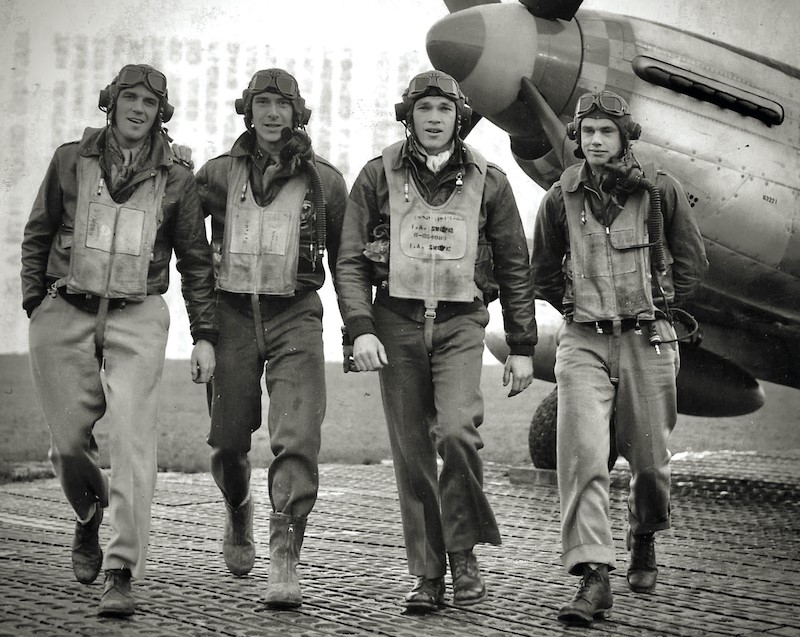
On This Day in WWII (1945): P-51 Mustangs of the “Yoxford Boys” Down Germany’s First Operational Jet Fighter, the Me 262, Near Magdeburg
Public domain, via Wikimedia Commons
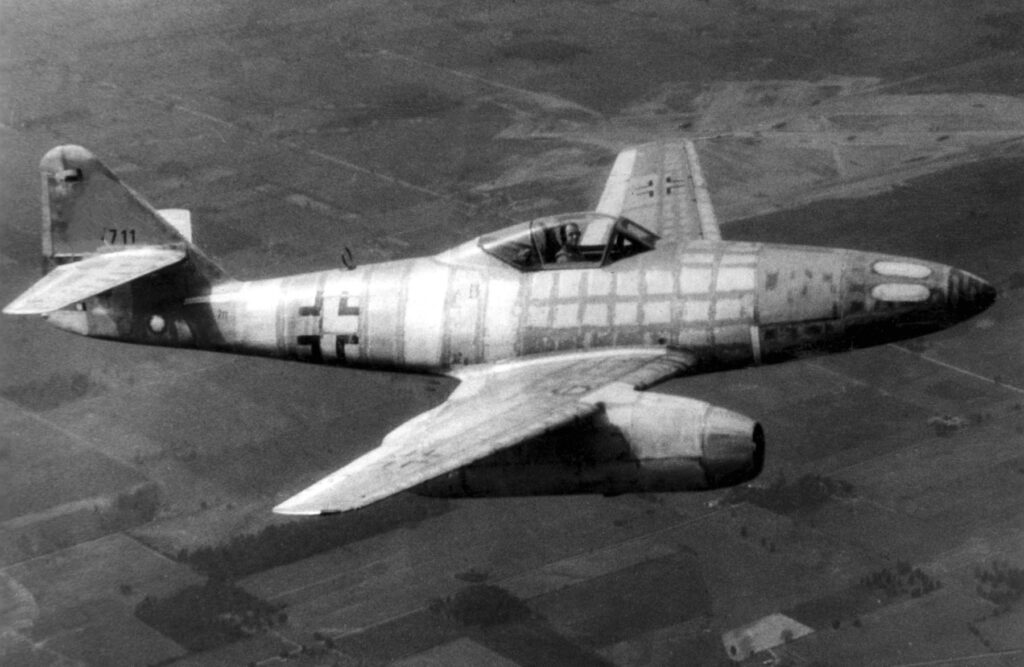
By early 1945, the air war over Europe had entered its final and most intense phase. Allied bombers were flying deep into German airspace with large fighter escorts to protect them. One of the most feared threats in the sky was the German Messerschmitt Me 262, the first operational jet fighter to see combat. Faster than any piston-engine plane, the Me 262 was difficult to catch in combat. Yet Allied pilots learned tactics to deal with this new threat. On this day, Mustangs of the U.S. Eighth Air Force engaged these jets near Magdeburg, and one of the first jet aerial victories credited to the Allied side involved a Mustang pilot who caught an Me 262 at a vulnerable moment.
The German Jet and Allied Fighter Strategy
The Messerschmitt Me 262 was introduced into combat in the summer of 1944, powered by early jet engines that gave it higher top speed than any Allied fighter of the time. It carried four 30 mm cannons that could destroy large targets with few hits. Although advanced, the jet also had engines that were temperamental and fuel-hungry, and its defensive value was limited by shortages of trained pilots and fuel late in the war.
Because the jet was so fast, Allied air planners developed tactics to counter it. Instead of trying to chase Me 262s in straight pursuit during level flight, fighters like the P-51 Mustang looked for them when they were most vulnerable. That included moments when jets were taking off, landing, or climbing after an attack on bomber formations. P-51 pilots would patrol near airfields where jets operated, watching for aircraft that had just lifted off or were slowing to land, then dive in to get into firing range.
The 357th Fighter Group Over Germany
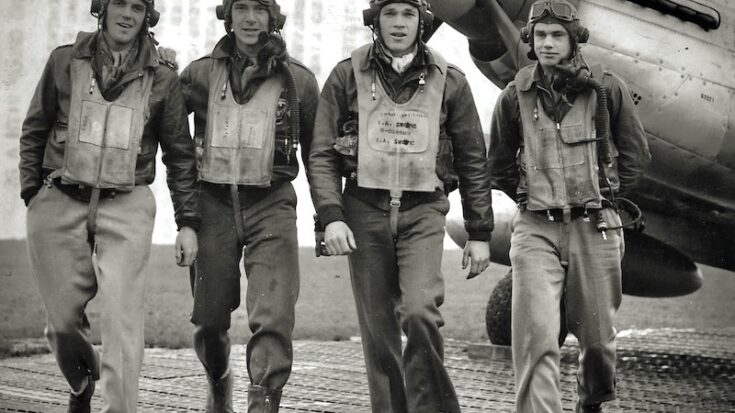
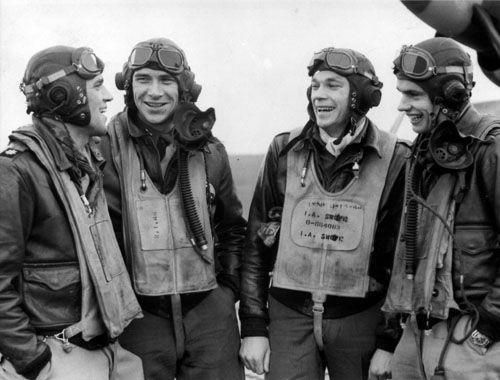
The 357th Fighter Group, known as the “Yoxford Boys,” was one of the most successful Mustang units in the Eighth Air Force. From their bases in England, these pilots flew long escort missions with heavy bombers attacking targets deep inside Germany. By early 1945, they had gained a reputation for aggressive flying and high victory counts against German piston fighters. They also added some jet engagements as the war progressed and the Me 262 came into more frequent action.
The Mustang’s performance — including its range, speed, and maneuverability at high altitude — made it a good escort aircraft for bomber missions and a credible opponent even against jets when flown cleverly. While the Me 262 was faster in a straight line, the Mustang could dive to gain extra speed or turn sharply to gain firing position once a jet had slowed past its top advantage, such as during an attack run or landing approach.
Engagements Near Magdeburg
As heavy bombers took to the skies over Germany in early 1945, Me 262 units scrambled to intercept them. On several occasions over the first months of the year, American fighters flying with bomber escorts encountered German jets. In some cases, like missions in March and April, Mustangs claimed victories against Me 262s either during combat with escorting fighters or as the jets struggled to join the fight.
One of the first confirmed Mustang kills of a Me 262 by U.S. pilots was scored by a member of the 357th Fighter Group on March 19, 1945, when P-51s chased and hit a jet that was unable to accelerate out of range after beginning an attack. This engagement occurred near Giessen, just east of Magdeburg, and was credited to Major Robert W. Foy of the 363rd Fighter Squadron, who hit the Me 262’s engine and caused it to crash.
The fighting over German fields was chaotic and fast moving. German jets, though fast, often had to operate from fields with limited protections, and flak defenses were heavy in the Magdeburg area. Allied pilots learned to use these conditions against the jets, pressing them when they lacked speed or altitude. For many Mustang pilots, scoring a jet kill was both a rare and prized victory, since the Me 262 was widely feared for its high speed and new technology.
Air Warfare in Early 1945
By February and March 1945, the Allied bomber offensive had brought hundreds of B-17 and B-24 bombers over Germany in repeated raids. Fighter units like the 357th pursued air superiority and protected the bomber formations from attacks by anything from piston fighters to jets. The role of Mustang pilots in these missions was broad; they had to be ready for aggressive combat at high altitude, rapid descents after enemy contacts, and the challenge of keeping bombers safe during long flights over hostile territory.
The Me 262, while an advanced aircraft, could not be fielded in large numbers, and the Allies quickly adapted tactics to deal with it. Pairing long-range escort fighters with heavy bombers ensured that jets faced stiff resistance. Over the last months of the war, P-51 pilots added to the growing record of victories against German fighters of all types.