



The Story of a One-Eyed Air Gunner Who Achieves Five Confirmed Night Fighter Kills Despite Duane’s Syndrome
Bingeable / YouTube
Early Life and Joining the RCAF
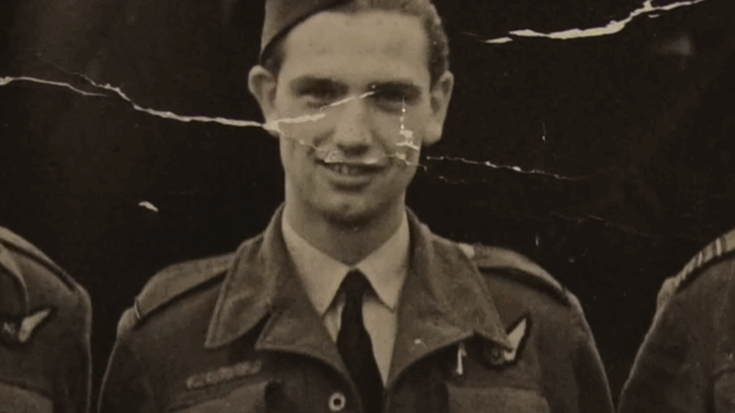
Clarence Bentley Sutherland, known to his friends as Larry, was born in East Mountain, Colchester County, Nova Scotia. From an early age, Larry faced a challenge that would have disqualified most people from military aviation: his left eye could not move due to a birth defect, later identified as Duane’s syndrome. Despite this limitation, Larry displayed determination and skill, qualities that would define his wartime career.
On 29 July 1942, he joined the Royal Canadian Air Force (RCAF). During his physical examination, medical officers noted his eye condition, which might have prevented him from serving. Yet, Larry was accepted and posted to No. 9 Bombing and Gunnery School at Mont-Joli, Quebec, where he trained as an air gunner. Remarkably, the defect in his eye provided an unexpected advantage: he possessed exceptional night vision. This quality would later make him an outstanding asset during night bombing raids.

First Combat and Night Operations
Pilot Officer Sutherland flew thirty-five operational missions in Lancasters with 207 Squadron. His early sorties included nine dangerous raids over Berlin during what became known as the Battle of Berlin, a period marked by high losses for Bomber Command. Despite the risks, Larry’s skill as an air gunner was immediately apparent, particularly in defending his aircraft from German night fighters.
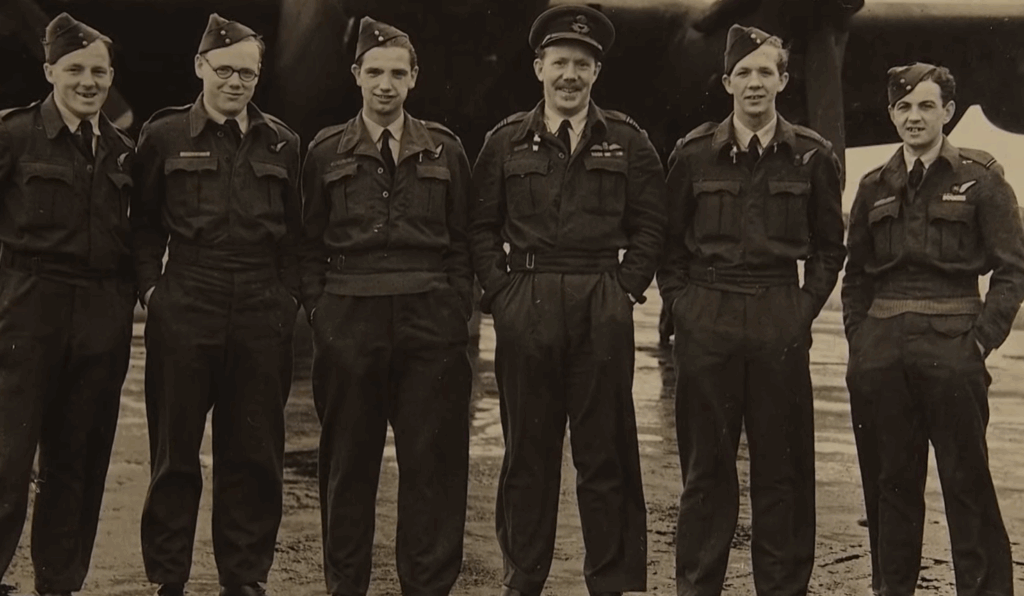
In June 1944, Larry’s courage was formally recognized. During a mission over Cerisy, he and Flying Officer Wallace McIntosh faced repeated attacks from enemy aircraft. Larry, stationed as the mid-upper gunner, and McIntosh, in the rear turret, fired accurately on three separate enemy planes. One Junkers 88 spiraled down with both engines on fire, another exploded in mid-air, and a third caught fire before crashing into the sea. The official citation highlighted their precision and composure under pressure, noting that their actions contributed significantly to the safe return of their bomber.
Distinguished Flying Cross and Bar
Larry’s accomplishments earned him the Distinguished Flying Cross (DFC) in July 1944. The award recognized his ability to remain calm during attacks and deliver accurate gunnery fire that neutralized enemy fighters. A few months later, in December 1944, he was awarded a Bar to his DFC, marking a second recognition for his exceptional performance. By that time, he had been credited with the destruction of seven enemy aircraft and damaging another.
The citation for the Bar specifically mentioned two missions in July 1944. During one raid near Stuttgart, Larry helped destroy two enemy aircraft and drove off the remainder. On another occasion, he had already been involved in the destruction of three enemy fighters in a single mission. These accounts underscore how his precise aim and calmness were crucial in protecting his crew during multiple engagements with German aircraft.
Notable Combat Engagements
On the night of 7–8 June 1944, flying at 8,000 feet, Larry and his fellow gunners engaged three enemy planes. A Junkers 88 attacking from the port quarter was struck by their fire, spiraling out of control with both engines ablaze. Almost immediately, they encountered another Junkers 88, which exploded under the Lancaster’s tail. Later, a Me 410 approached from behind, and sustained hits caused it to crash into the sea. All three enemy aircraft were claimed as destroyed.
During the night of 12–13 July 1944, Larry helped shoot down a Messerschmitt 109 near Stuttgart. The aircraft caught fire and crashed after both gunners scored hits on the nose and wing. Later, on 28–29 July, at altitudes above 17,000 feet, Larry and his crew engaged four more German aircraft, including two Ju 88s and two Me 109s, all of which were set on fire and destroyed. These missions demonstrated not only his accuracy but also his ability to operate effectively under intense pressure.
Skills and Coolness Under Fire
Reports consistently highlighted Larry’s calmness and skill during combat. He survived multiple dangerous situations, including a training flight crash, a malfunctioning oxygen mask at 5,500 meters, and repeated attacks from enemy fighters. His Lancaster occasionally returned with heavy damage, including one mission where it landed with only a single functioning engine. Yet Larry’s precision as an air gunner ensured the safety of his crew and the success of the mission.
His ability to remain focused while under attack became a standard for his squadron. Fellow airmen often noted that his presence gave the crew confidence during the most harrowing operations. The combination of his unique visual ability and trained skill made him an invaluable member of his crew. Larry’s career demonstrated how determination and adaptation could overcome physical challenges in the most dangerous of circumstances.
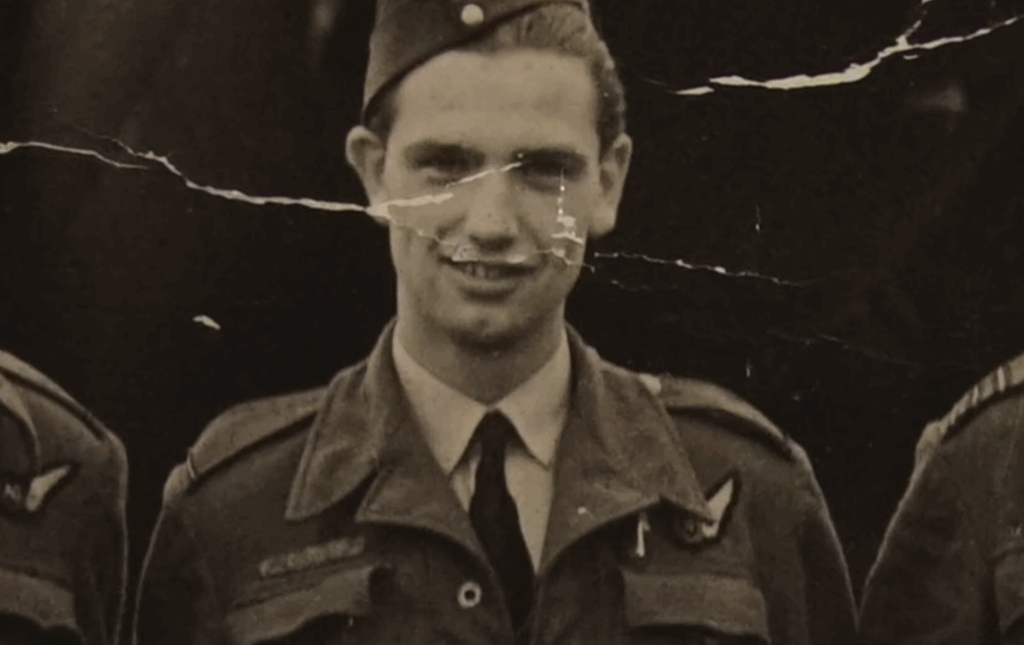
Legacy and Recognition
In 2010, Larry’s nephew, Gary Chisholm, published a biography titled The One-Eyed Gunner. Chisholm emphasized that within Bomber Command, only three heavy bomber aces were recognized for achieving multiple kills without losing their aircraft. These included Wallace McIntosh of the RAF with six kills, Peter Engbrecht of the RCAF with five kills, and Larry Sutherland with seven confirmed enemy aircraft destroyed and one damaged.
Larry’s story remains a remarkable example of courage and skill. Despite a serious vision impairment, he achieved extraordinary success as an air gunner during World War II. His ability to excel under life-threatening conditions and his contributions to key night operations stand as enduring examples of dedication, precision, and resilience in the face of adversity.