Why P-51s Flew Faster With Holes in Them
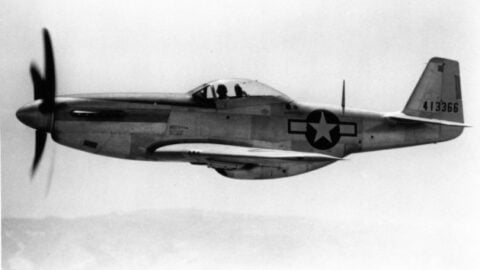
YouTube / Airvex-f3d
The Drag Problem That Should Have Slowed the Mustang
At high speed, large openings in an aircraft normally create heavy aerodynamic penalties. For most fighters of World War II, radiator intakes were a necessary compromise. They cooled the engine but reduced top speed. On paper, the P-51 Mustang appeared to violate this rule. Its large ventral radiator duct created a wide opening beneath the fuselage that should have increased drag at speeds above 400 mph.

Yet operational data showed the opposite. Late-war Mustangs reached speeds exceeding 430 mph. This placed them ahead of other Merlin-powered fighters such as the Spitfire, despite using the same basic engine. The difference was not raw horsepower. It was how the Mustang turned waste heat into usable thrust.
Turning Heat Into Forward Force
Engineers analyzing airflow through the Mustang’s radiator system discovered an unusual effect. Air entered the duct at a relatively large opening, then flowed into a narrowing channel toward a much smaller exit. As the airflow was compressed and heated by the radiator, its velocity increased.
Instead of simply spilling out and adding drag, the heated air exited the rear of the duct at higher speed than when it entered. This created a small but measurable jet effect. The result was forward thrust generated by the cooling system itself. Testing showed this effect could produce the equivalent of roughly 270 pounds of thrust, comparable to several hundred horsepower of free power.

This phenomenon became known as the Meredith effect. It allowed the Mustang to recover much of the drag normally caused by radiator cooling. In some conditions, it did more than recover drag. It produced net thrust that contributed directly to top speed.
A Design That Changed Escort Warfare
This system helped explain why the Mustang could outperform fighters with cleaner looking airframes. It also contributed to one of the aircraft’s most important advantages. Efficient cooling and aerodynamic recovery allowed the Mustang to combine high speed with exceptional fuel economy.

The result was a fighter with the range to escort heavy bombers deep into German airspace. Earlier escort fighters lacked the endurance to stay with bomber formations all the way to targets and back. The Mustang’s cooling system played a quiet but critical role in solving that problem.