How the ‘Flying Bathtub’ P-47 Racked Up Over 80,000 Rail Cars and 6,000 Armored Vehicles Destroyed
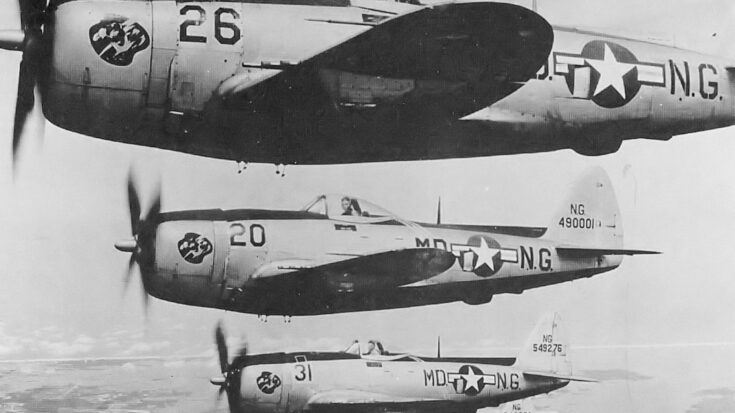
United States National Guard, Public domain, via Wikimedia Commons
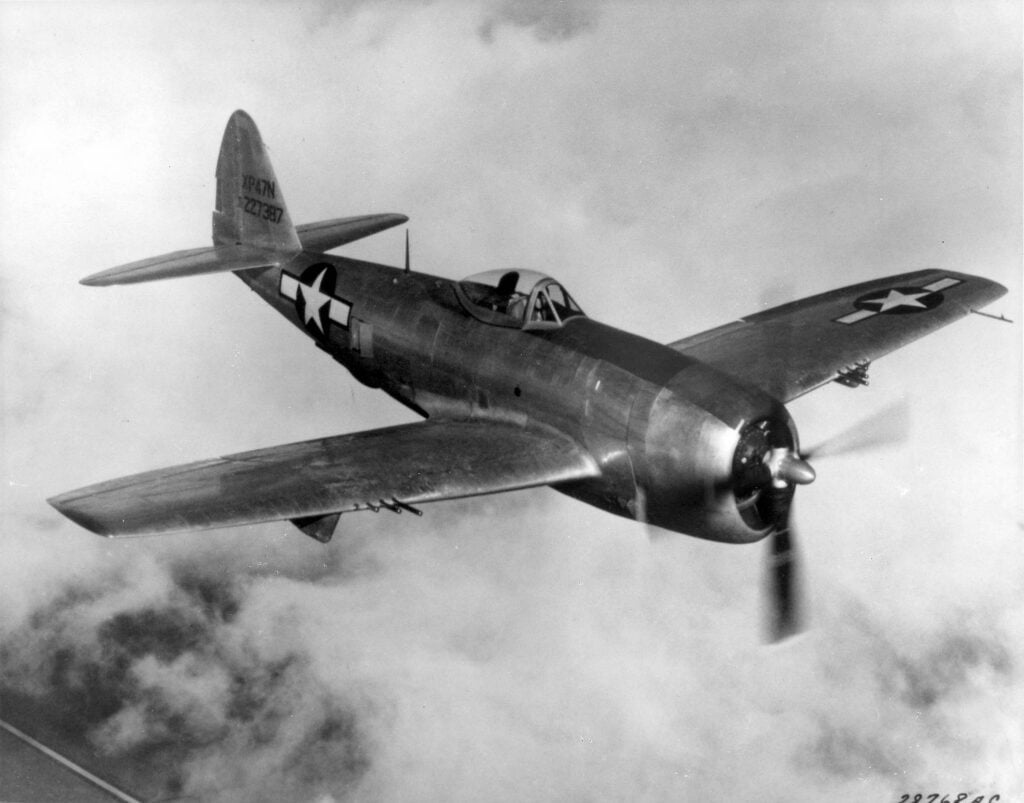
During the Second World War, air combat evolved rapidly as aircraft grew faster, heavier, and more specialized. Among the many fighters developed by the United States, the Republic P-47 Thunderbolt stood apart for its unusual size and rugged construction. Pilots nicknamed it the “Jug” and the “Flying Bathtub,” labels that reflected its bulky shape rather than any lack of performance. Though often compared with the sleeker P-51 Mustang, the Thunderbolt earned its reputation through endurance, firepower, and an unmatched ability to survive damage while completing dangerous missions over Europe.
The Thunderbolt’s development began before the United States entered the war. Designed by Republic Aviation under engineer Alexander Kartveli, the aircraft first flew on May 6, 1941. At a time when many fighters emphasized light weight and agility, the P-47 followed a different philosophy. Engineers built it around a massive Pratt & Whitney R-2800 Double Wasp radial engine paired with a turbo-supercharger, allowing strong performance at high altitude. When it entered U.S. Army Air Forces service in late 1942, it immediately stood out as one of the largest single-engine fighters ever produced.
Size, Strength, and Firepower
The P-47’s dimensions surprised many pilots encountering it for the first time. The widely used P-47D variant weighed roughly 10,000 pounds empty and could exceed 17,000 pounds at takeoff, far heavier than most contemporary fighters. Despite this bulk, it could reach speeds around 426 miles per hour, proving that size did not prevent effective performance. Its thick fuselage also offered protection, shielding pilots with armor plating and self-sealing fuel tanks that reduced the risk of fire after enemy hits.
Armament played a major role in the aircraft’s success. Eight .50-caliber Browning machine guns, four mounted in each wing, delivered a powerful stream of fire capable of destroying aircraft, vehicles, and ground targets. The Thunderbolt also carried bombs or rockets totaling as much as 2,500 pounds, transforming it into a formidable fighter-bomber. These capabilities allowed it to adapt as Allied strategy shifted from defensive air combat toward aggressive attacks on transportation networks and military infrastructure across occupied Europe.
Dominance in the Air and on the Ground
While early missions focused on bomber escort duties, the Thunderbolt soon proved especially effective in ground-attack roles following the Allied invasion of Western Europe in 1944. Flying low over railways, bridges, and armored formations, P-47 pilots targeted supply lines essential to German operations. Historical records credit Thunderbolt units with destroying roughly 86,000 railway cars, 9,000 locomotives, and about 6,000 armored vehicles during the conflict. These attacks disrupted logistics and limited the movement of enemy forces during critical stages of the war.
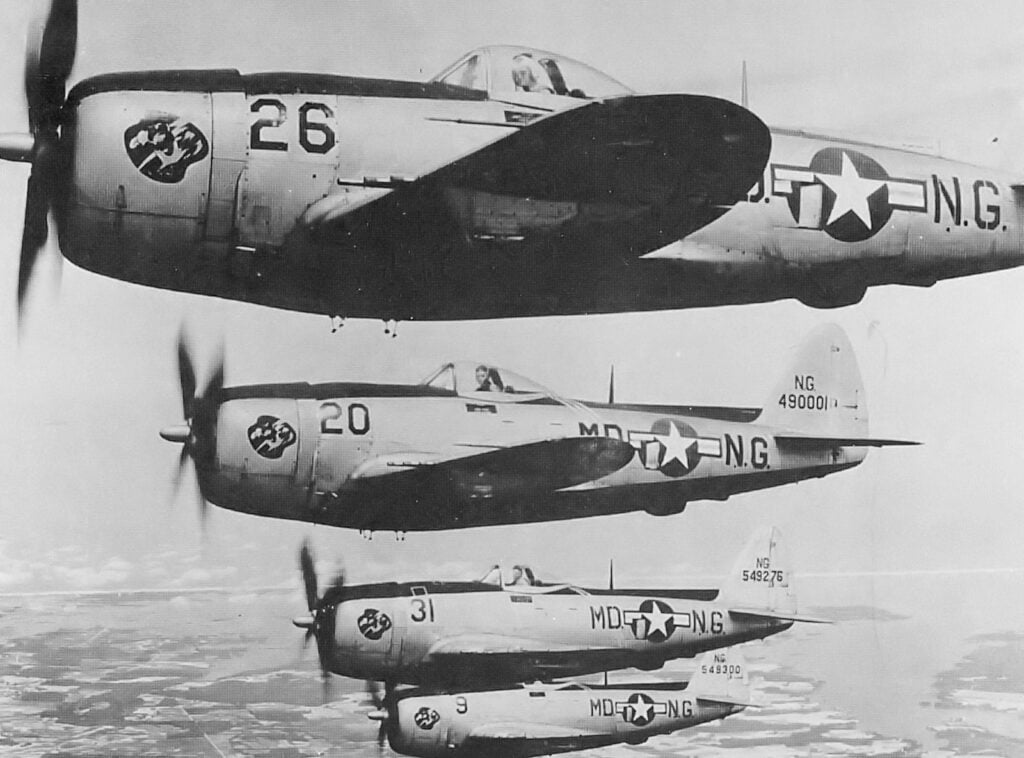
Despite its weight, the aircraft remained competitive against advanced opponents. American pilots flying P-47s successfully engaged early jet aircraft, including the Messerschmitt Me 262, achieving several confirmed victories. Its ability to dive rapidly gave Thunderbolt pilots an advantage, allowing them to attack quickly and withdraw before enemy fighters could respond effectively.
Production reflected its importance. Between 1941 and 1945, more than 15,600 Thunderbolts were built, making it one of the most produced American fighters of the war. By combining durability, heavy weapons, and adaptability, the so-called “Flying Bathtub” became a central tool in Allied air operations across multiple theaters.