Which Was Better in the Pacific: The P-51 Mustang or the F4U Corsair?
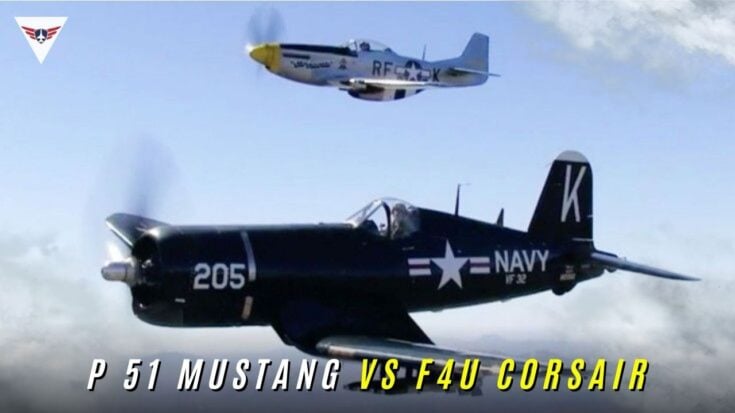
YouTube / Combat Zone
Two Fighters Built for Very Different Wars
The P-51 Mustang and the F4U Corsair became two of the most recognizable American fighters of World War II, yet they were designed around very different operational needs. The Mustang was shaped by the high altitude escort battles over Europe, while the Corsair emerged as a naval fighter optimized for the brutal conditions of the Pacific. When both aircraft met the same theater of war, their strengths and weaknesses became sharply defined.
P-51 Mustang: Range and Altitude Control
The P-51 Mustang entered the Pacific with one major advantage that few Allied fighters could match: range. Powered by the Packard built Rolls-Royce Merlin, the Mustang combined speed with long endurance, allowing it to escort bombers across vast stretches of ocean. This capability was essential in a theater where distances between targets and bases often exceeded hundreds of miles.

The Mustang also held a clear advantage at altitude. Its climb performance and high speed allowed American pilots to dictate when and how engagements occurred. Against Japanese fighters such as the A6M Zero, the Mustang could attack from above, disengage at will, and preserve energy throughout the fight. However, these advantages diminished at low altitude. The liquid cooled engine made the aircraft vulnerable to ground fire, and rough island airstrips placed additional strain on its landing gear.
F4U Corsair: Power, Durability, and Low Altitude Dominance
The F4U Corsair was built around the massive Pratt and Whitney R-2800 radial engine, giving it exceptional power and durability. Its distinctive inverted gull wing allowed the aircraft to carry a large propeller while maintaining ground clearance for carrier operations. In combat, the Corsair excelled at low to medium altitudes where most Pacific engagements occurred.

Corsair pilots valued the aircraft’s ability to absorb damage and continue fighting. It proved highly effective in ground attack missions, close air support, and fleet defense. Japanese pilots feared the Corsair not only for its firepower, but also for the distinctive sound it produced during high speed dives. While its high altitude performance lagged behind the Mustang, the Corsair dominated the environments where island fighting was most intense.
Which Fighter Was Better?
The Pacific War did not reward a single type of aircraft. The Mustang provided long range escort and high altitude control, while the Corsair delivered sustained combat power over beaches, islands, and carrier decks. Each aircraft succeeded because it was used where it performed best. Together, they formed a complementary force that helped secure Allied air superiority across the Pacific.