U.S. Navy Confirms Loss of MQ-4C Triton Over Persian Gulf
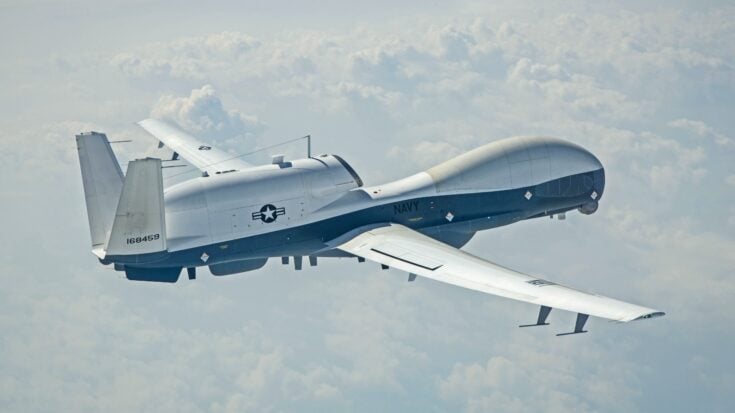
The U.S. Navy has confirmed the loss of an MQ-4C Triton surveillance drone following an incident over the Persian Gulf on April 9, 2026. The uncrewed aircraft had disappeared from tracking systems days earlier after signaling an in-flight emergency. A Naval Safety Command report now classifies the event as a Class A mishap, confirming the drone crashed with no personnel involved.
Final Moments Before the Crash
Flight data showed the Triton descending rapidly from its typical operating altitude above 50,000 feet to below 10,000 feet in less than 15 minutes. Before the descent, the aircraft transmitted emergency transponder codes. It first signaled a loss of communication link with ground control, followed by a general emergency alert.
#USNAVY United States Navy – 🚨 7700 General Emergency
Northrop Grumman MQ-4C Triton 1x#AE7815 169804 – Unknown C/S
A US Navy MQ-4 drone operating over the Persian Gulf and Strait of Hormuz has declared an emergency en route back to Sigonella Naval Station.
At 0956z it made a… pic.twitter.com/xbqvrOby2t
— Armchair Admiral 🇬🇧 (@ArmchairAdml) April 9, 2026
The drone was returning to Naval Air Station Sigonella in Italy after completing a surveillance mission when the incident occurred. Its last known track placed it over international waters in the Persian Gulf, moving in the direction of Iran. The exact crash location remains undisclosed.
Cause Unknown as Investigation Begins
The Navy has not identified the cause of the crash. A technical malfunction remains a leading possibility, particularly involving the aircraft’s communication systems. There is no confirmed evidence of hostile action, though the region’s tense security environment leaves multiple scenarios under review.
On its way back to base, the US Navy MQ-4C Triton reconnaissance drone that had been patrolling the Strait of Hormuz took a turn towards Iran, squawked code 7700 (general emergency), and started descending, falling off ADS-B as it dropped under 10k feet. pic.twitter.com/1Ki8OsEk9k
— OSINTtechnical (@Osinttechnical) April 9, 2026
Recovery efforts have not been detailed. Any attempt to retrieve the wreckage could be complicated by regional threats, including reported naval mining activity in nearby waters. The possibility of sensitive systems falling into foreign hands adds urgency to any recovery decision.
A High-Value Surveillance Asset
The MQ-4C Triton plays a central role in the Navy’s maritime surveillance network. Derived from the RQ-4 Global Hawk, it is designed for long-endurance missions over vast ocean areas. The aircraft can remain airborne for more than 24 hours, surveying millions of square miles in a single sortie.
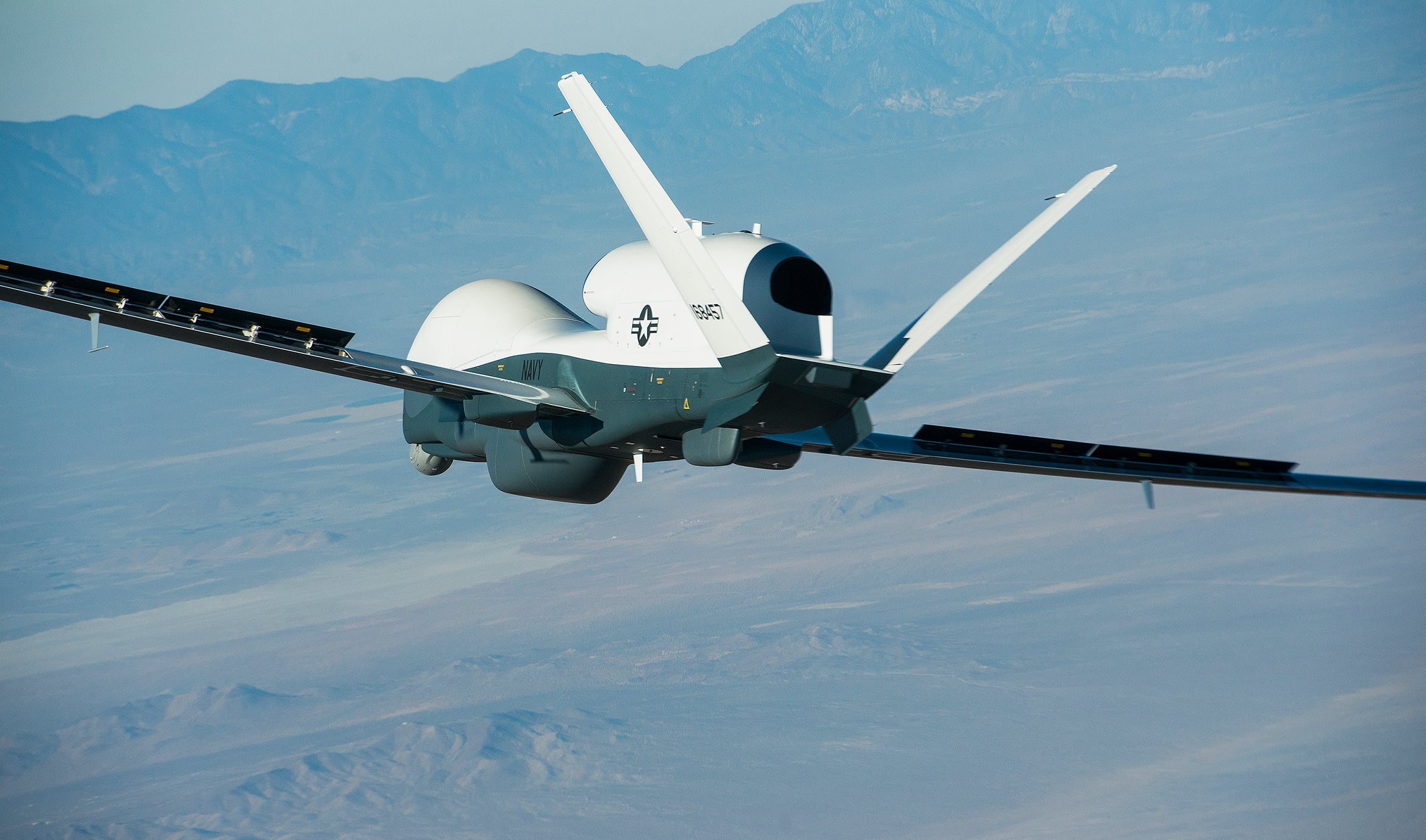
Its sensor suite includes advanced radar, electro-optical and infrared imaging, and signals intelligence systems. These capabilities allow it to track ships, monitor activity across key waterways, and contribute to a broader intelligence picture alongside aircraft like the P-8 Poseidon.