

The One Thing You Never Wanted to See on an American Plane
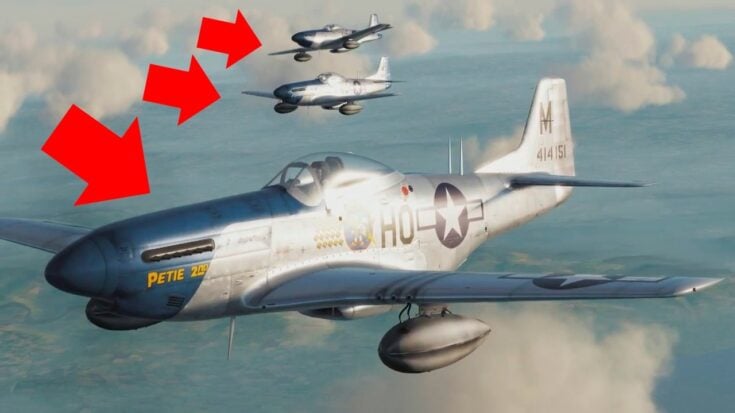
YouTube / Dark Skies
On January 1, 1945, pilots of the P-51 Mustang prepared for a routine patrol from a forward airstrip in Belgium. Within moments of takeoff, the situation changed. German fighters appeared over the field as part of a large-scale offensive aimed at destroying Allied aircraft on the ground.
Lieutenant Colonel John C. Meyer lifted off under fire and immediately engaged. With his landing gear still retracting, he attacked an incoming Focke-Wulf Fw 190 and shot it down. Behind him, the rest of the squadron launched without waiting for clearance, climbing directly into combat.
A Fighter Group Built for Escorting
The 352nd Fighter Group formed in 1942 and trained on the Republic P-47 Thunderbolt. This changed with the arrival of the Mustang. Its extended range allowed continuous escort coverage, altering the balance of the air war. The group adopted a distinctive blue nose marking, earning the nickname that would define its reputation.

The Fight Over the Airfield
The attack on Y-29 was part of Operation Bodenplatte, Germany’s final attempt to regain air superiority in the west. The plan relied on surprise and numerical advantage.
At Y-29, neither held. Twelve Mustangs met a much larger force in the airspace directly above the runway. Pilots engaged immediately, often at low altitude and within sight of ground crews.
Despite the conditions, the 352nd maintained control of the fight. Pilots engaged multiple targets, adapted to rapidly changing positions, and continued fighting even after sustaining damage. Within less than an hour, the German formation had been driven off.

Results and Impact
The engagement ended with 24 German aircraft destroyed and no American losses in the air. Several Mustangs sustained damage, but all returned safely. The result reflected a combination of training, coordination, and individual initiative.
The failure of Operation Bodenplatte marked the end of large-scale German air offensives in the west. For the 352nd, the battle at Y-29 represented the peak of its wartime effectiveness.

Final Operations and Record
The group continued operations through the final months of the war, supporting bomber missions and ground advances across Europe. By May 1945, it had flown more than 400 missions and destroyed hundreds of enemy aircraft.

The record included dozens of aces and tens of thousands of combat hours. The numbers reflect sustained operations rather than a single event.







