1 Photographer vs. 13 Japanese Planes: The Impossible Dogfight Of WW2
YouTube / WW2 Hidden Voices
A Recon Mission Over Luzon
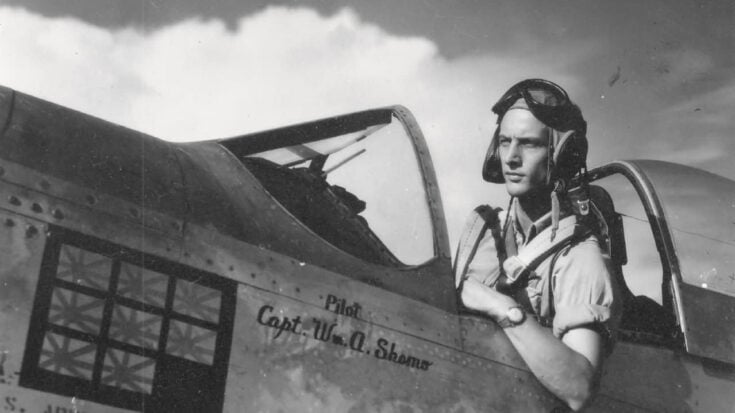
In early 1945, Major William Shomo of the US Army Air Forces took off on what was supposed to be a routine reconnaissance mission over Luzon in the Philippines. Shomo was flying an F-6D Mustang, a photo reconnaissance version of the P-51. Its role was clear. Locate enemy formations, take photographs, and avoid combat whenever possible. The aircraft carried cameras instead of heavy armament and was not intended to engage enemy fighters.

While cruising at altitude, Shomo spotted a large Japanese formation below. It consisted of a single bomber escorted by twelve fighters. Thirteen aircraft in total. For a reconnaissance pilot, this was a situation to observe briefly and then escape.
Breaking Protocol
Shomo was not alone. His wingman, Second Lieutenant Arthur Clark, flew alongside him in another F-6 Mustang. Standard procedure called for a quick photo pass followed by withdrawal. Engaging such a force was considered unnecessary and reckless. Shomo assessed the formation and made a decision that ran directly against standing orders.

He radioed his wingman and announced his intention to attack. Moments later, the two reconnaissance Mustangs rolled into a dive toward the Japanese formation. Their aircraft lacked the protection and firepower of standard fighter variants, yet they retained the Mustang’s speed, stability, and accurate guns.
Six Minutes of Combat
What followed was a short and violent engagement. Shomo attacked with speed and surprise, focusing on the fighters first. Within minutes, multiple Japanese aircraft were destroyed before the formation could organize a coordinated defense. The sudden aggression disrupted any attempt to counterattack.

In less than six minutes, Shomo shot down seven enemy aircraft. Clark destroyed three more. The Japanese formation was effectively wiped out before meaningful return fire could be mounted. The remaining aircraft scattered, abandoning the bomber they were meant to protect.
Aftermath and Recognition
Shomo and Clark returned safely to base. In a single mission, Shomo had become an ace, a distinction usually earned over months of combat. His actions were later recognized with the Medal of Honor, one of the highest awards for valor in the United States military.

The engagement demonstrated how speed, positioning, and decisive action could outweigh numerical disadvantage. It also showed that even aircraft designed for observation could become lethal when flown with aggression and precision. Shomo’s encounter remains one of the most remarkable solo actions of the Pacific air war.