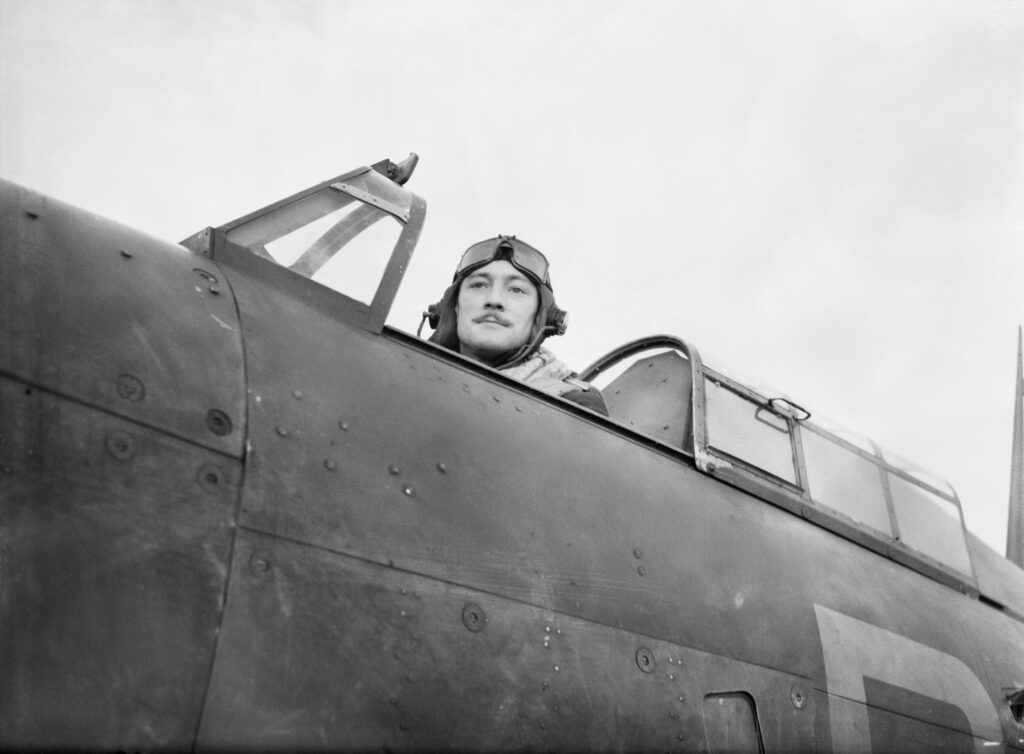
The Story of RAF Ace Robert Stanford Tuck Crashed Under Fire — German Crew Cheered Instead of Finishing Him Off
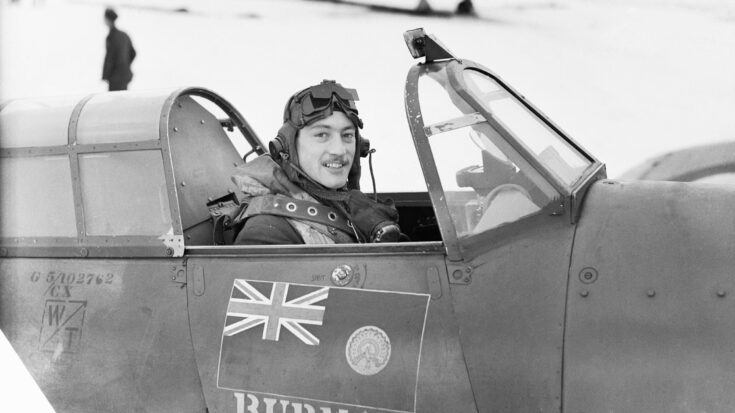
Royal Air Force official photographer, Tovey P H F (Mr), Public domain, via Wikimedia Commons
Early Career and Aerial Combat
Robert Stanford Tuck was a Royal Air Force fighter pilot who flew many combat missions during the air war over France and Britain. He became one of the more experienced pilots in his squadron, credited with numerous victories against enemy aircraft. Tuck’s skill and calm judgment in the air earned him respect among fellow pilots, and his name appeared often in operational reports from both sides of the conflict.
By early 1941, Tuck had already flown many sorties and was well known for his ability to handle danger with a clear mind. The war in the skies was harsh, with pilots facing light aircraft protection, heavy anti‑aircraft fire from the ground, and relentless patrols of opposing fighters. Flying at low altitude was especially dangerous, as aircraft that took damage often offered little chance to recover or escape before hitting the earth.
The Mission Over France
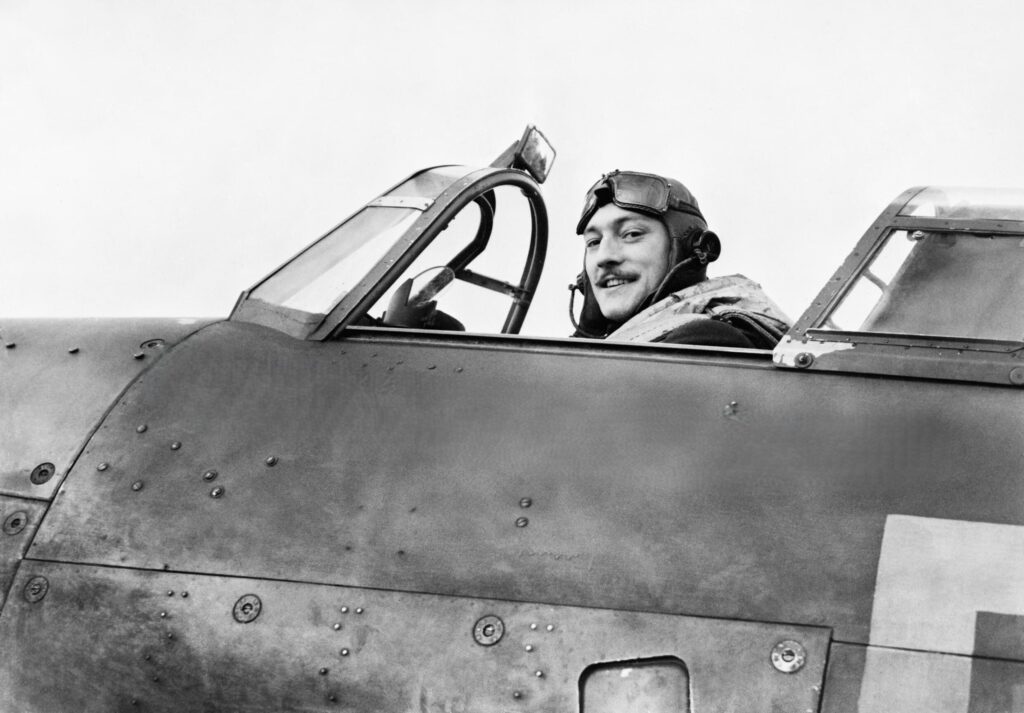
In January 1941, Tuck was flying a mission over occupied France when his aircraft came under heavy ground fire. On that day, anti‑aircraft guns opened up as he carried out a low‑level attack on an enemy position. The bursts of flak punctured his aircraft’s skin and damaged vital systems, sending smoke into the cockpit and reducing control response. At the height he was flying, there was no time or altitude to bail out safely.
Faced with rapidly failing controls, Tuck made the hard choice to glide his fighter down toward safer ground. His aircraft, already struggling, lost speed and altitude quickly as he tried to maintain a controlled descent. In the final moments before the forced landing, he noticed that an anti‑aircraft gun position still had its weapon trained on him and ready to fire.
The Forced Landing and Final Moments
With little time to think, Tuck manned his remaining weapons and fired on the gun crew below. Eyewitness accounts and later reports described how his rounds struck the position, even entering the barrel of the weapon itself and deforming it. Such an event was unusual but possible given the close alignment between the aircraft’s machine guns and the target during a low, fast attack.
The damaged fighter then hit the ground hard in an open field near the position it had just fired upon. The impact threw Tuck from the aircraft’s controlled flight into a crash that left the machine battered and smoking. Ground troops from the opposing force ran to the wreckage, many expecting to find a badly injured pilot or evidence of a fatal impact.
German Troops’ Reaction
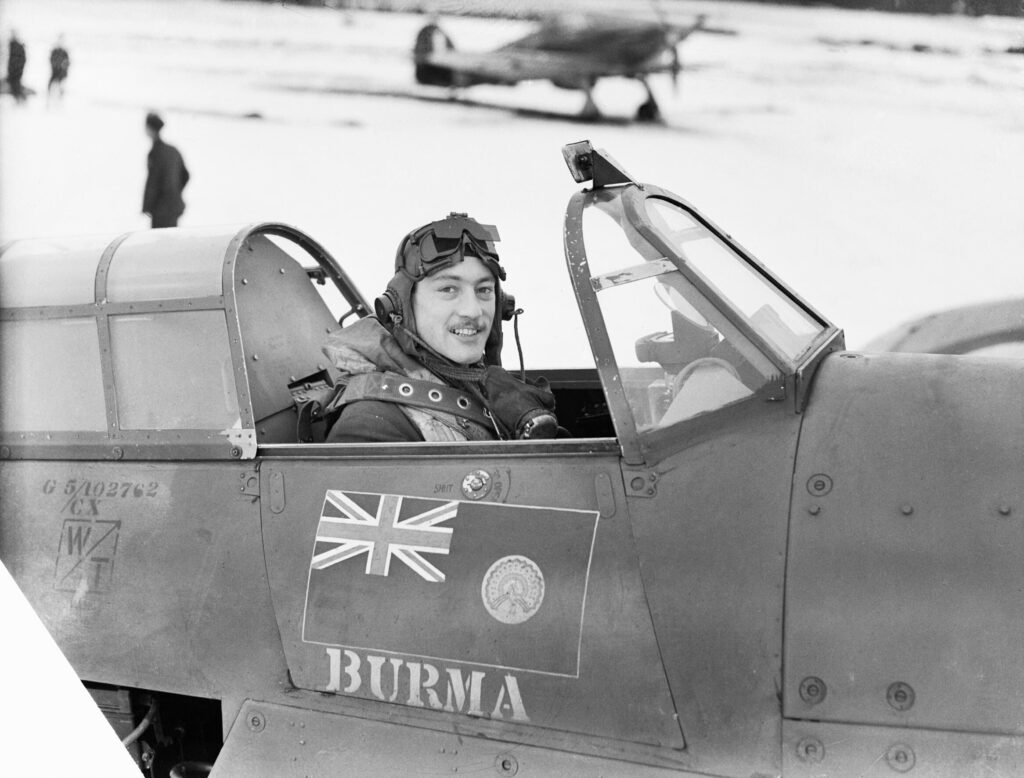
What happened next surprised some who later gave accounts of the event. Instead of being beaten or shot at the moment of capture, Tuck found himself being pulled out of his aircraft by soldiers who then brought him toward the anti‑aircraft gun position. There, several soldiers pointed out the weapon barrel that had been struck by his rounds, flattened and bent in a way that drew attention and curiosity.
The soldiers’ reaction was not one of cruelty but rather of acknowledgement of the odd circumstance. They tapped him on the back and gestured toward the damaged gun, indicating in their own way that they saw what had happened and understood it. Tuck, expecting hostility, took a few seconds to grasp that the impacts he felt were not blows meant to harm, but gestures tied to that understanding.
Aftermath and Captivity
Following this event, Tuck became a prisoner of war. He was taken back through lines and later held alongside other captured airmen. During captivity he made efforts to escape and continued to display the resilience that had marked his flying career. Records from both British and German sources confirm the shootdown, forced landing, and the interaction with the ground soldiers that followed.
Stories like this from the air war are rare, partly because the intensity of combat often left little time for such moments to be recorded. The account of Tuck’s forced landing and the reaction of the enemy soldiers who found him highlights how the unpredictable nature of war could produce events that seemed almost beyond belief. It also shows how individual moments, even amid violence and hardship, could reflect complex human reactions on both sides.
Tuck survived his time in captivity and returned to service later in the conflict, continuing his role as a fighter pilot. His experiences, including the crash and unexpected reception by opposing soldiers on that January day, helped shape the memory of a conflict fought not only in numbers and strategy but in personal encounters high above the ground.