

This Day in WWII (1944): F6F Hellcats and Dauntless Dive Bombers Hammer Japanese Airfields
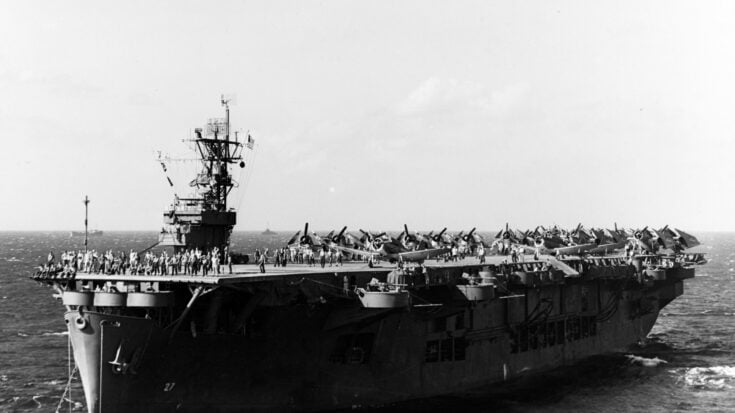
Naval History & Heritage Command, Public domain, via Wikimedia Commons
On February 2, 1944, American naval and air forces struck at Japanese airfields on islands in the Marshall group as part of Operation Flintlock, the campaign to capture Kwajalein Atoll. This assault came after days of air and sea bombardment meant to weaken enemy defenses ahead of landings by U.S. Army and Marine units. Carrier fighters and dive bombers played a critical role in suppressing Japanese air power on Roi-Namur and Kwajalein, disrupting operations from those fields and aiding the larger invasion that was underway. These aerial attacks formed one of many coordinated efforts to shape the battles in the Central Pacific.
Assailing the Airfields
Before American troops even set foot on the beaches, overhead forces were hard at work. The atoll’s two main airfields, one on Roi-Namur to the north and another on Kwajalein in the south, were vital to Japanese defense and offered space for both fighters and bomber support planes. American commanders understood that allowing enemy aircraft to remain intact on the ground could jeopardize the entire invasion force approaching the islands. U.S. carrier aircraft struck repeatedly in the days before February 2 to reduce these threats.
The fast carrier task groups of the U.S. Fifth Fleet began their role by attacking these targets on D-2 of the operation, January 29, destroying much of the Japanese aircraft still in the Marshalls. Many of the planes that remained were believed to be out of action by early February, and aircraft carriers continued to launch fighters and dive bombers to patrol the skies and press attacks against airfield facilities.
Fighters in the Lead
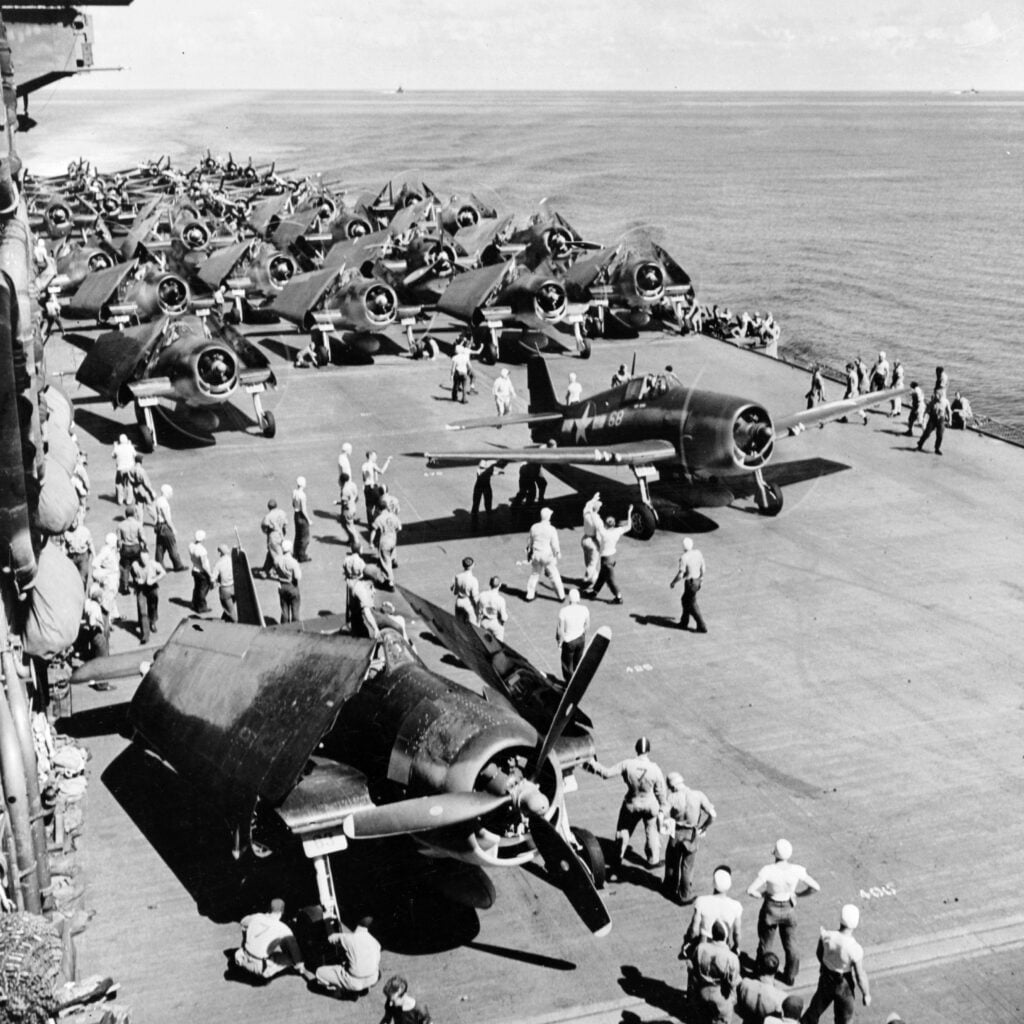
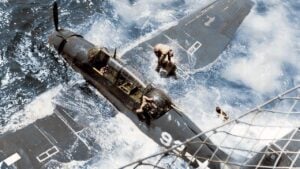
At the heart of these strikes were the Grumman F6F Hellcats, which were the primary carrier-based fighter flown by American naval air groups. These aircraft escorted slower dive bombers and dive-armed planes, but they also strafed runways, fuel depots, and parked aircraft to make it harder for remaining Japanese planes to take off. The Hellcats had been designed to gain air superiority and were well matched to their tasks in the Central Pacific, offering pilots a blend of speed, firepower, and range that made them effective in both dogfights and ground attacks.
Flying in close coordination with fighters were Douglas SBD Dauntless dive bombers. These planes had been an important part of U.S. naval aviation earlier in the war and were still used to deliver precise bombing against hard targets such as bunkers, hangars, and anti-aircraft positions near runways. The Dauntless crews practiced steep dive attacks that helped make each bomb’s impact more accurate. During the operations around Kwajalein, these dive bombers added depth to the assault from above by dropping ordnance directly onto the most important parts of the enemy’s air defenses.
The Marshalls Under Fire
On February 1 and into the morning of the 2nd, combined air attacks from carriers and land-based Army Air Corps bombers pummeled Japanese positions. Observers on warships described how pre-invasion bombardment by surface ships and aircraft left islands scarred, with airfields broken and defensive works blasted. American troops later found many anti-aircraft emplacements destroyed and runways so pocked with bomb craters that movement of aircraft and vehicles was seriously hindered.
The sheer volume of sorties flown over the target area in this phase of Operation Flintlock meant that opponents on the islands had few opportunities to regroup. Some aerial resistance did remain, but much of it had been worn down by prior waves of attacks and by the intensive naval fire support that accompanied the landings. This effect was evident in the relative freedom with which carrier fighters and dive bombers could operate over the atoll on February 2, as fewer serviceable enemy aircraft remained airborne to contest control of the skies.
Supporting the Invasion
The airfield strikes were directly tied to the amphibious landings that had begun on January 31. American ground forces from the Army and Marine Corps seized nearby small islands and artillery positions that could support the main assault on Kwajalein and Roi-Namur. Planes flying overhead helped suppress Japanese fire and made it less likely that troops ashore would be caught in open view by defending aircraft.
By early February 2, American troops had moved inland across lightly held defensive lines, and air operations continued to press targets deeper into the atoll. Engineers and combat crews worked to repair runways and establish forward air bases for further operations in the Marshalls. The pressure from the air forces in the days leading up to this point had helped reduce the risk to the landing force, and once the islands were secure, those same airfields would be turned to use by Allied aircraft as the campaign moved northward toward other islands still under Japanese control.
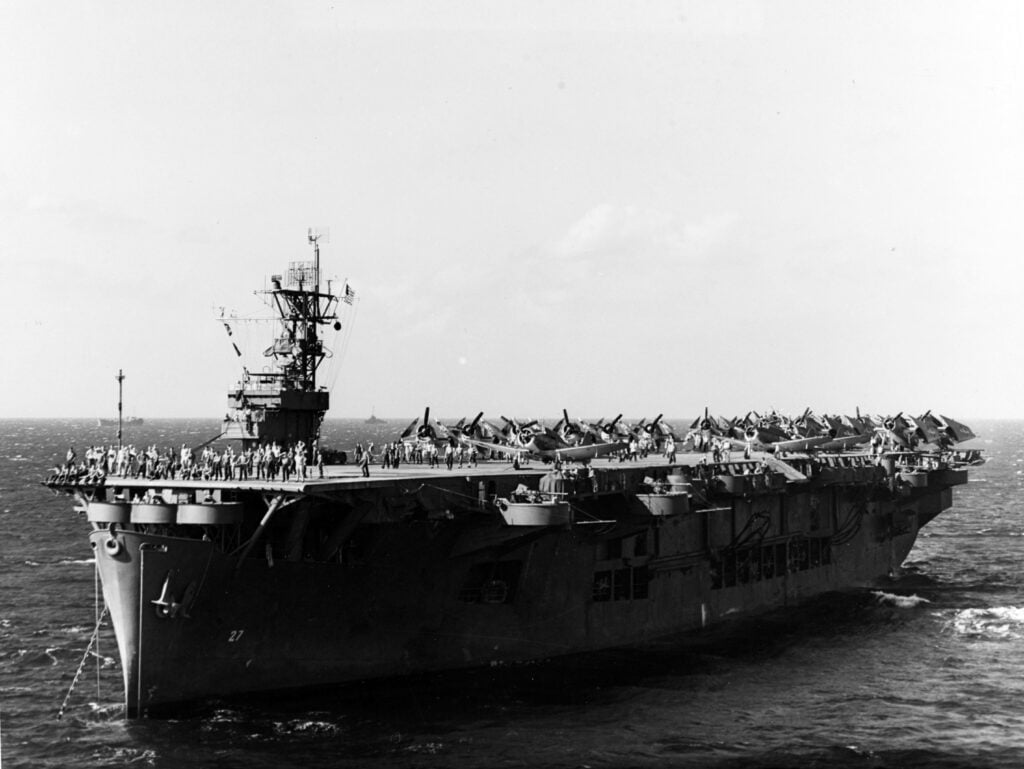
_at_anchor_at_Kwajalein_atoll_on_7_February_1944_(NH_106578).jpg)
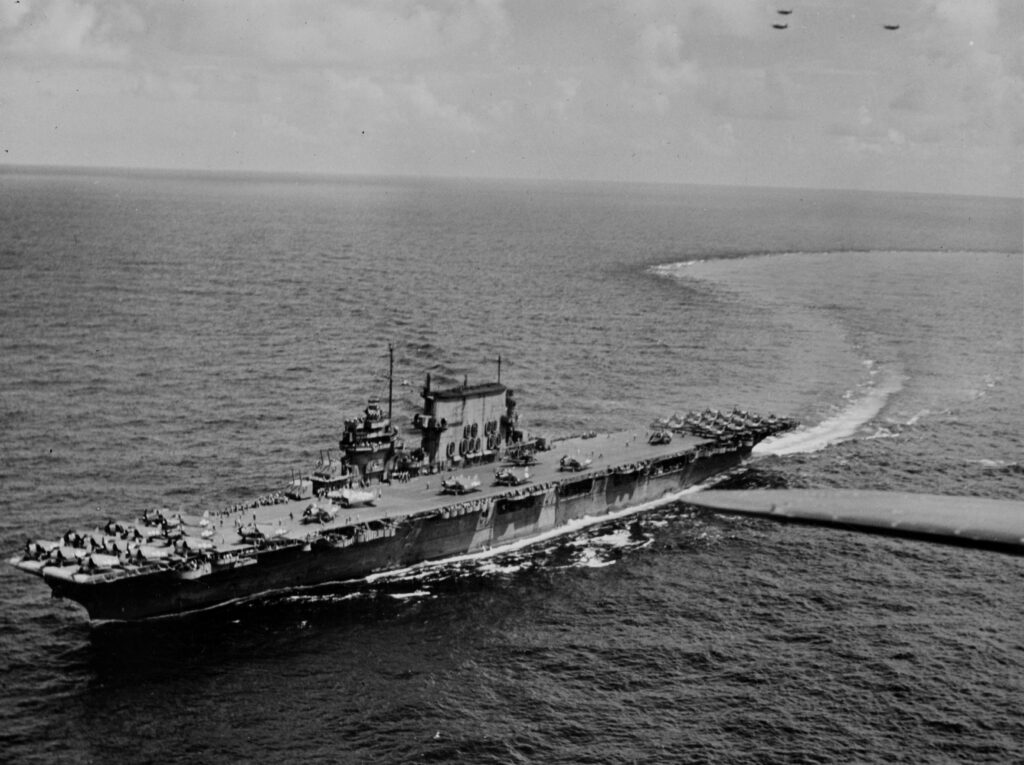
_1943.jpg)
_1943-44.jpg)