Top 8 WWII Fighters with Highest Kill-to-Loss Ratios
YouTube / The Buzz
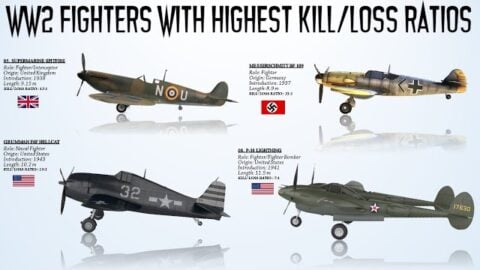
During World War II, several fighter aircraft achieved remarkable kill-to-loss ratios, highlighting their effectiveness and influence on the battlefield. These high-performing fighters played a major role in securing air superiority and supporting ground and naval operations. While numbers can vary depending on sources and theaters of war, the following aircraft are often recognized for their impressive combat records.
8. Lockheed P-38 Lightning – Kill/Loss Ratio: 7:1
The Lockheed P-38 Lightning stood out with its twin-engine design and long-range capability. It performed especially well in the Pacific, where it was used for bomber escort and interception missions. Its firepower and versatility contributed to a solid combat record.
7. North American P-51 Mustang – Kill/Loss Ratio: 11:1
The North American P-51 Mustang became one of the most effective long-range escort fighters of World War II. Its ability to protect bombers deep inside enemy territory significantly reduced Allied losses while increasing its own success in air-to-air combat.
6. Vought F4U Corsair – Kill/Loss Ratio: 11:1
The Vought F4U Corsair was a powerful carrier-based fighter used primarily in the Pacific. Known for its speed and heavy armament, it proved highly effective against Japanese aircraft and played a key role in gaining aerial dominance.
5. Supermarine Spitfire – Kill/Loss Ratio: 13:1
The Supermarine Spitfire is one of the most iconic fighters of WWII. It was crucial during the Battle of Britain and remained competitive throughout the war due to continuous upgrades. Its agility and balanced performance helped it maintain a strong combat ratio.
4. Curtiss P-40 Warhawk – Kill/Loss Ratio: 18:1
The Curtiss P-40 Warhawk may not have matched the performance of later fighters, but it was rugged, reliable, and effective in skilled hands. It saw action in multiple theaters, including North Africa and China, where it earned a respectable combat record.
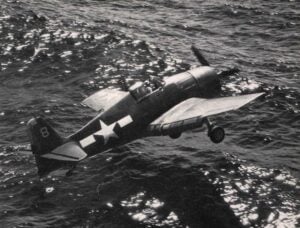
3. Grumman F6F Hellcat – Kill/Loss Ratio: 19:1
The Grumman F6F Hellcat was one of the most successful naval fighters of the war. Designed to counter Japanese aircraft like the Zero, it dominated the skies in the Pacific and achieved one of the highest kill-to-loss ratios among U.S. fighters.
2. Messerschmitt Bf 109 – Kill/Loss Ratio: 21:1
The Messerschmitt Bf 109 was Germany’s primary fighter throughout the war. It was flown by many of the highest-scoring aces in history, contributing to its impressive kill record. Its adaptability allowed it to remain effective across multiple fronts.
1. Brewster F2A Buffalo – Kill/Loss Ratio: 26:1
The Brewster F2A Buffalo is often seen as an underdog, especially due to its poor performance with U.S. forces early in the war. However, in Finnish service, it achieved an outstanding kill-to-loss ratio against Soviet aircraft. This highlights how pilot skill, tactics, and conditions can significantly influence combat effectiveness.
Conclusion
These fighters demonstrate that success in aerial warfare depended on more than just speed or firepower. Training, strategy, and operational context all played vital roles. The aircraft listed here earned their place in history through their impressive performance and lasting impact on World War II air combat.