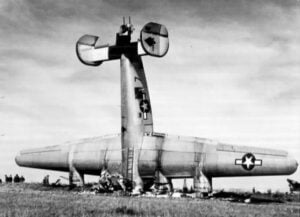
Watch Jaw-Dropping 1954 Footage of a B-17 Obliterated by a Nike Missile
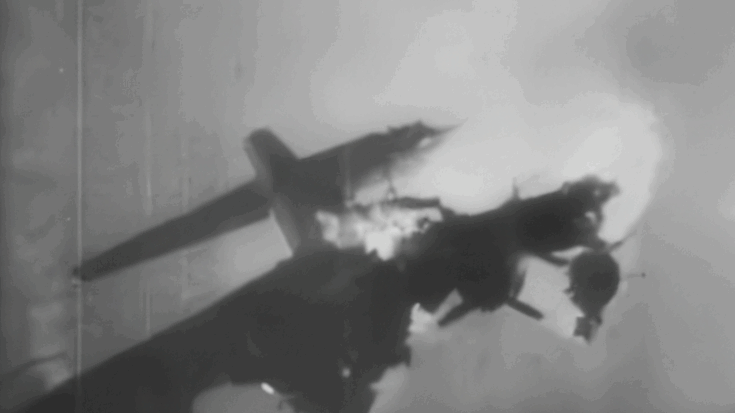
War Archives / YouTube
In the early years of the Cold War, the United States Army developed one of the first guided surface‑to‑air missile systems, called Nike. This system was designed to defend key cities and military sites against high‑flying bombers by using radar guidance and radio control to steer a missile toward a target. The first model, known as Nike Ajax, was the beginning of a new era in air defense and carried out a series of tests against unmanned aircraft in controlled settings to prove how guided missiles could intercept enemy bombers.
Testing a New Form of Air Defense
During development in the early 1950s, Army engineers and missile crews conducted a range of live‑fire drills at White Sands Missile Range in New Mexico and other test sites. These trials used remotely controlled heavy bombers, such as the Boeing B‑17, which had been widely used during World War II and were available in surplus. In one such test, a Nike Ajax missile was guided to strike a B‑17 flying as a drone target, showing that the system could track and destroy aircraft in flight.
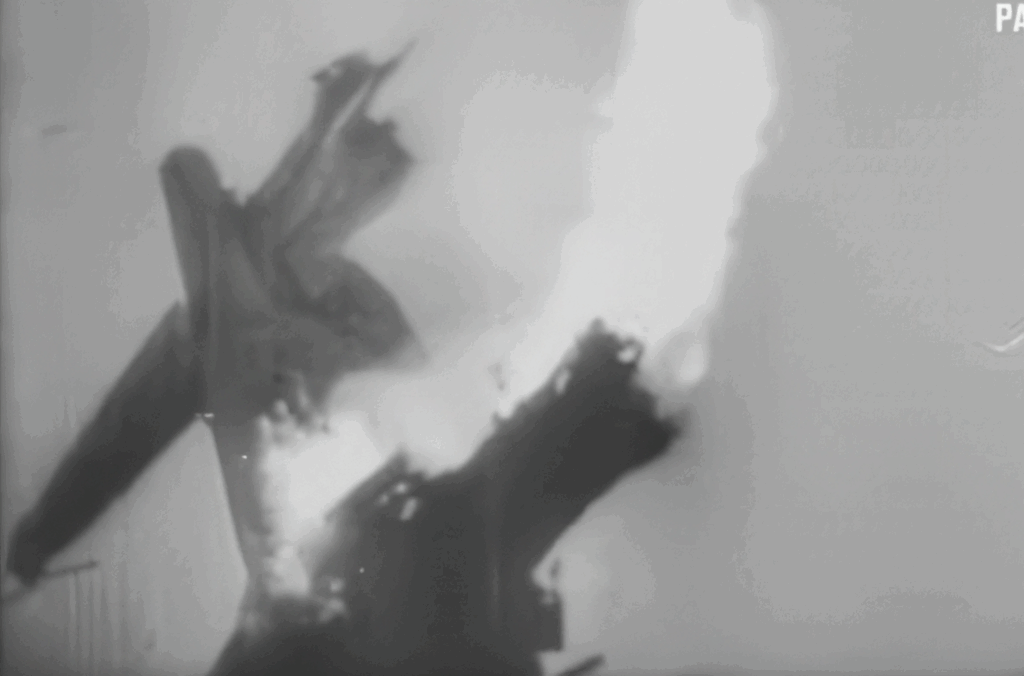
In the footage from 1954, viewers can see the preparation and launch of a Nike missile. Radar operators and technicians worked together to track the drone aircraft and coordinate the interception. Once the missile was airborne and its guidance system was active, it closed in on the target. When the missile hit the drone, the bomber’s airframe was destroyed in mid‑air.
Nike Ajax and the Era of Guided Missiles
Nike Ajax was the first series of anti‑aircraft guided missiles deployed by the U.S. Army beginning in the early 1950s. The design included ground‑based radar systems that scanned the skies for incoming aircraft and relayed tracking data to computers that guided the missile toward its target. This represented a major shift from traditional anti‑aircraft guns to guided weapons that could engage aircraft at high altitudes and high speed.
As the Cold War progressed, the basic Nike concept was expanded to create more advanced variants, such as Nike Hercules, which could reach even higher altitudes and engage targets flying faster or in larger formations. These systems became part of a layered air defense network intended to protect major cities and military installations from potential threats.
A Visual Record of Changing Technology
The 1954 footage of a Nike missile striking a B‑17 bomber remains one of the most dramatic examples of early guided missile capability. It highlights how rapidly military technology was evolving in the decade after World War II. The footage is a historical snapshot, showing not only the mechanics of a missile launch but also the way radar and guided systems were beginning to change how nations thought about air defense in the nuclear age.