WATCH P-47 Thunderbolts Engage the Luftwaffe: Rare WWII Gun Camera Combat Footage
Trevor McIntyre / YouTube
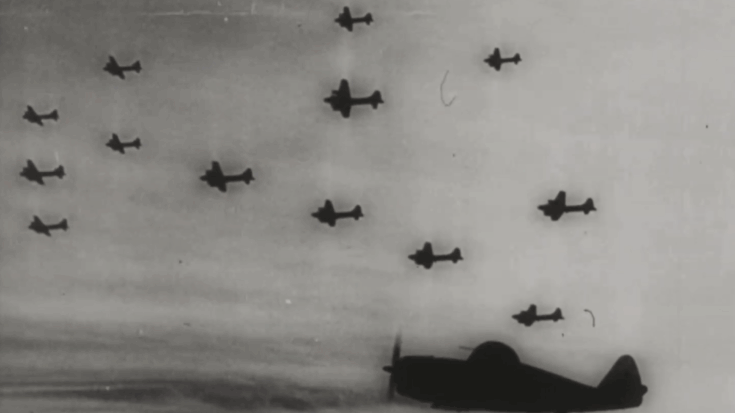
The grainy combat film looks simple at first. Dark shapes move across a bright sky, and flashes mark where guns fire. But this rare footage captures some of the most important air fighting of the Second World War. It shows American P-47 Thunderbolts escorting B-17 Flying Fortress bombers deep over Europe, meeting German fighters head-on in daylight combat.
These scenes were filmed by gun cameras mounted inside the fighters. They recorded exactly what pilots saw when they pressed the trigger. For historians, this footage offers direct proof of how air combat unfolded above occupied Europe and why control of the sky became so important to the Allied war effort.
The Role of the P-47 in Daylight Bombing
By 1943, the U.S. Eighth Air Force was sending heavy bombers far into enemy territory. The goal was to strike factories, rail yards, and oil targets that supported the German war effort. Early missions suffered heavy losses because bombers could not defend themselves alone for long periods.
The P-47 Thunderbolt became a key answer to this problem. Large and heavily built, it carried eight .50-caliber machine guns and could absorb damage that would destroy lighter fighters. With added fuel tanks under its wings and belly, it could escort bombers to targets once thought out of reach.
Meeting German Fighters in the Clouds
The footage shows P-47s climbing to meet incoming German interceptors. These included Bf 109s, Fw 190s, and twin-engine Bf 110s sent to break up the bomber formations. The Thunderbolts did not wait for attacks to develop. They pushed forward, diving at high speed to disrupt enemy formations before they reached the bombers.
Gun camera film reveals short, violent encounters. Pilots closed in fast, fired brief bursts, and pulled away just as quickly. The P-47’s weight gave it great speed in a dive, allowing pilots to attack and escape before opponents could react.
Technology Behind the Combat Film
Each fighter carried a camera linked to its guns. When the pilot fired, the camera began recording. This created clear evidence of hits, misses, and aircraft falling away. These films were used to confirm victory claims and to train new pilots.
The footage also shows how chaotic air combat could be. Aircraft flash across the frame, sometimes disappearing in clouds or smoke. There is no dramatic narration in the cockpit, only motion, vibration, and brief moments where an enemy plane fills the screen.
Watch the footage below: