Watch: Rare WWII Footage of the Dornier Do 217 Taking Off and Flying
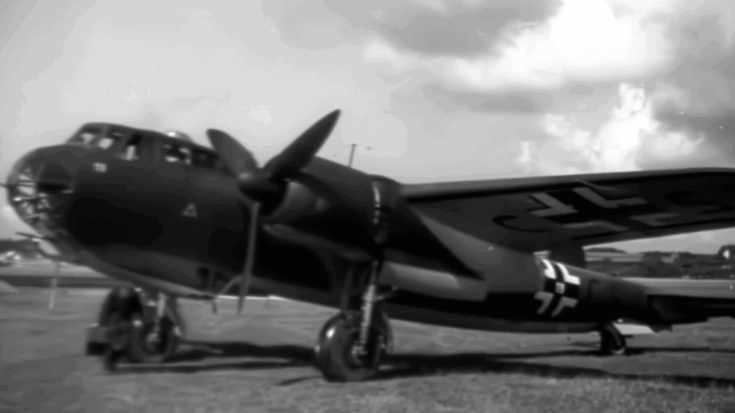
Look in The Past War Archives / YouTube
During the Second World War, operating a military aircraft required careful coordination between ground crew and pilot. The German Dornier Do 217E, a twin-engine bomber used for reconnaissance and attack missions, followed strict procedures before it could even leave the ground. These routines were designed to reduce mechanical failure and ensure the aircraft performed as expected under combat conditions.
Before engine start, ground crews secured the aircraft with wheel chocks to prevent movement. A power cart was then brought in and connected to the aircraft’s electrical system. This step had to be done in the correct order to avoid sparks or short circuits. Once connected, a light on the control panel confirmed that external power was active, allowing systems to be checked without draining onboard batteries.
Preparing the Engines and Systems
With electrical power established, attention shifted to the engines. Crew members adjusted the propellers into position and manually rotated them several times while the ignition remained off. This helped circulate oil and ensured that internal components were moving freely before startup. The engine cowling was secured, and fuel systems were set to the correct tank.
Next, essential controls inside the cockpit were prepared. The fuel selector was set, ignition switches were activated, and the throttle was placed at idle. A booster pump ensured steady fuel flow, which was especially important for reliable ignition. These steps reflected standard practices in many wartime aircraft, where engine reliability could not be taken for granted.
Starting the engine required engaging a starter system that used stored mechanical energy. The pilot would allow the starter to build momentum before coupling it to the engine. Once engaged, the engine would turn over and begin running. If the system failed, a manual hand crank could be used instead, though this demanded physical effort and coordination from the crew.
Manual Starting and Final Checks
The manual starting method involved attaching a crank to the engine’s starter mechanism. Ground crew would secure the device in place and rotate it until enough energy was stored to turn the engine. At the right moment, ignition was switched on, and the engine engaged. Once running, all temporary equipment was removed and stored.
After startup, the aircraft underwent a final inspection. Control surfaces such as rudders and elevators were tested for smooth movement. This ensured that the pilot could maintain control during flight. The horizontal stabilizer was adjusted to match the aircraft’s weight and balance, which could vary depending on fuel and bomb load.
Takeoff speeds depended on total weight. A lighter aircraft could lift off at lower speeds, while a heavier load required more runway and higher speed. Flaps were set to assist with lift, and once airborne, they were retracted along with the landing gear. The pilot would then adjust trim settings to keep the aircraft stable without constant control pressure.

Flight Handling and Landing Procedure
The Dornier Do 217E was considered stable in flight, with responsive controls across normal operating conditions. Engine power and propeller settings were adjusted during flight to maintain efficiency and performance. Unlike some aircraft, it allowed for safe operation even with flaps extended at higher speeds, thanks to built-in safeguards.
Landing required careful speed control. Pilots approached the runway at a moderate speed before reducing it further just before touchdown. Once on the ground, the aircraft would roll for several hundred meters before stopping, depending on weight and wind conditions. Brakes were used sparingly to avoid damage.
These procedures reflect the disciplined approach required to operate a complex bomber during wartime, where both preparation and precision played essential roles in survival.