

WWII Pilot Reunites With Aircraft He Flew at 19—Now 101 Years Old
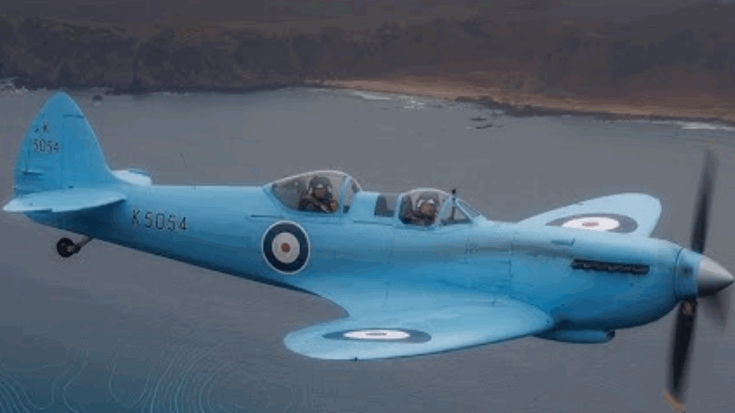
BFBS Forces News / YouTube
A Wartime Pilot Meets the Spitfire Again After Nine Decades
For many who lived through the Second World War, memories of service are often tied to places or people. For one former pilot, however, those memories were carried in the shape and sound of an aircraft. More than eighty years after he first flew it, Douglas Seale stood once again before a Supermarine Spitfire, describing the moment as a quiet reunion with something long absent from his life.
The meeting took place at RAF Leuchars, where a two-seat Spitfire TR9 had arrived as part of a national tour marking ninety years since the aircraft’s first flight in 1936. Now 101 years old, Seale had last flown the type during wartime service between 1943 and 1945, when the Spitfire played a central role in defending Britain and supporting Allied operations across Europe.
From Australia to the Skies of War
Seale’s path to the cockpit began far from Britain. Born in Australia, he joined the air force at the age of eighteen, part of a wider Commonwealth effort that saw thousands travel overseas to train and serve. During the war, programs such as the Empire Air Training Scheme prepared pilots across Canada, Australia, and other regions before sending them to operational units.
After initial instruction, Seale earned his pilot’s wings and was posted for further duty abroad. Like many young men of his generation, he entered service at a time when training was fast-paced and expectations were high. Pilots often moved quickly from classrooms to operational aircraft, learning through experience as much as formal instruction.
Learning to Fly the Spitfire
Seale recalled his early flights with a sense of clarity that had not faded with time. On one occasion, during a training sortie, his instructor tested his awareness in the air. Understanding position and movement in three dimensions was essential for survival, especially in combat where confusion could prove fatal.
The Spitfire itself was both admired and demanding. Designed by R. J. Mitchell, it combined speed, maneuverability, and a distinctive elliptical wing. While it gained fame during the Battle of Britain, it continued to serve in multiple roles throughout the war, including escort missions and ground attack operations.

War, Youth, and Lasting Impressions
Seale remembered the wartime period as intense but filled with purpose. Many pilots were in their late teens or early twenties, entering a world that required discipline and quick decisions. Airfields across southern England, including those in counties like Lincolnshire and Cambridgeshire, became hubs of activity as squadrons prepared for daily operations.
After the war ended in 1945, Seale returned to Australia and resumed civilian life, working in banking. Like many veterans, he found the transition from military service to routine employment difficult. The pace and responsibility of flying had left a lasting impression that ordinary life could not easily replace.
Standing beside the Spitfire decades later, he reflected not on combat, but on the experience of flight itself. The aircraft, once a tool of war, had become a symbol of memory, linking past and present through its continued presence in the skies.






