

How WWII Engineers Used Rocket Bottles to Launch Fully Loaded Navy Aircraft at Sea
Beyond Armed Forces / YouTube
A Desperate Problem
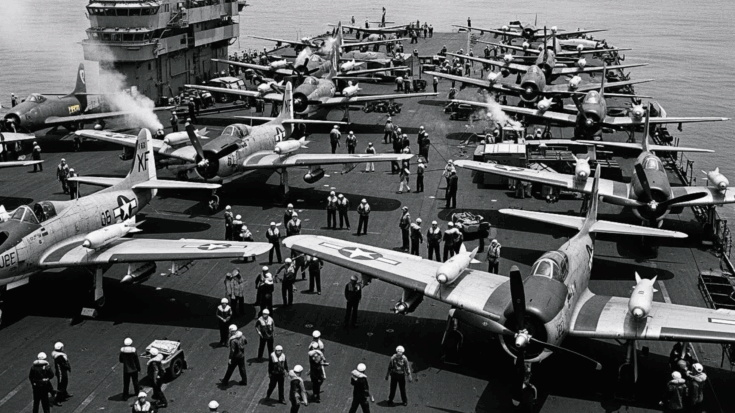
In December 1941, the attack on Pearl Harbor left the U.S. Pacific Fleet badly damaged. Aircraft carriers faced a pressing challenge: their planes were often too heavy to take off safely from short decks, especially with full fuel and bombs. Pilots risked their lives not just from enemy attacks but from the difficulty of getting airborne. Engineers needed a solution fast, and the Navy turned to an experimental concept called jet-assisted takeoff, or JATO. This involved attaching rocket bottles to aircraft to provide extra thrust for launch. The idea was simple in theory but dangerous in practice.
The earliest tests began far from the ocean, in the California desert at the Guggenheim Aeronautical Laboratory at the California Institute of Technology. Scientists, led by Theodore von Kármán, experimented with rocket propulsion in aircraft. Among them was chemist John Whiteside Parsons, whose work with volatile fuels helped develop early rocket motors. Small planes were fitted with crude rockets under their fuselages. Researchers would ignite them and run for cover. Sometimes the rockets worked; often they exploded. These experiments were unpredictable, but the Navy needed every advantage it could find.
From Experiment to Application
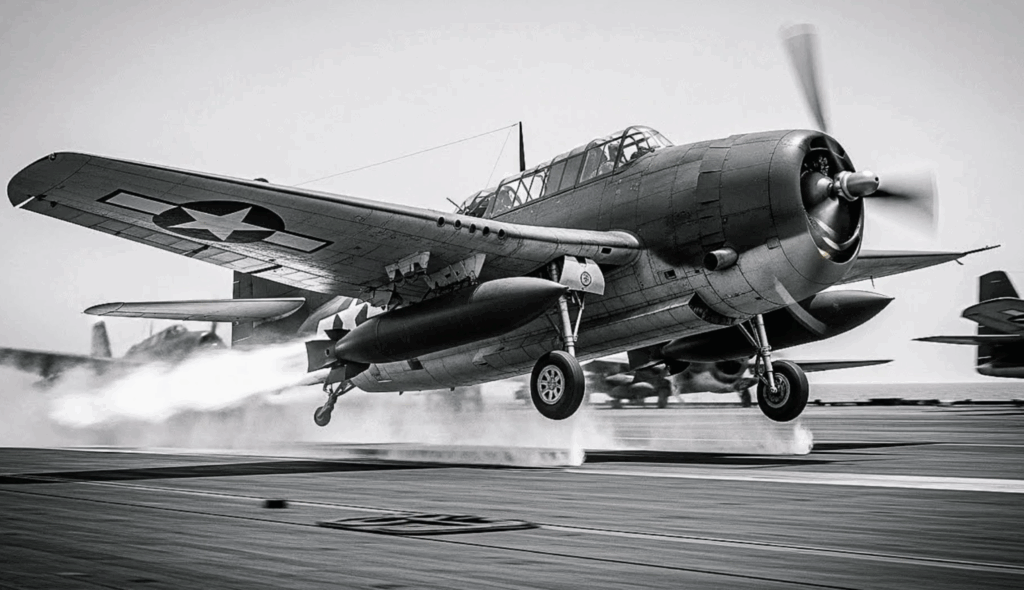
By 1942, the Navy began applying these rockets to carrier operations. Standard procedures required aircraft to be light, limiting fuel, bombs, and ammunition. JATO allowed fully loaded planes to take off from shorter distances, increasing range and combat effectiveness. Each rocket bottle weighed over 100 pounds and burned for 12 to 15 seconds, generating around 3,000 pounds of thrust. Planes could lift off with loads that would have been impossible otherwise, but the acceleration was violent and the risks extreme.
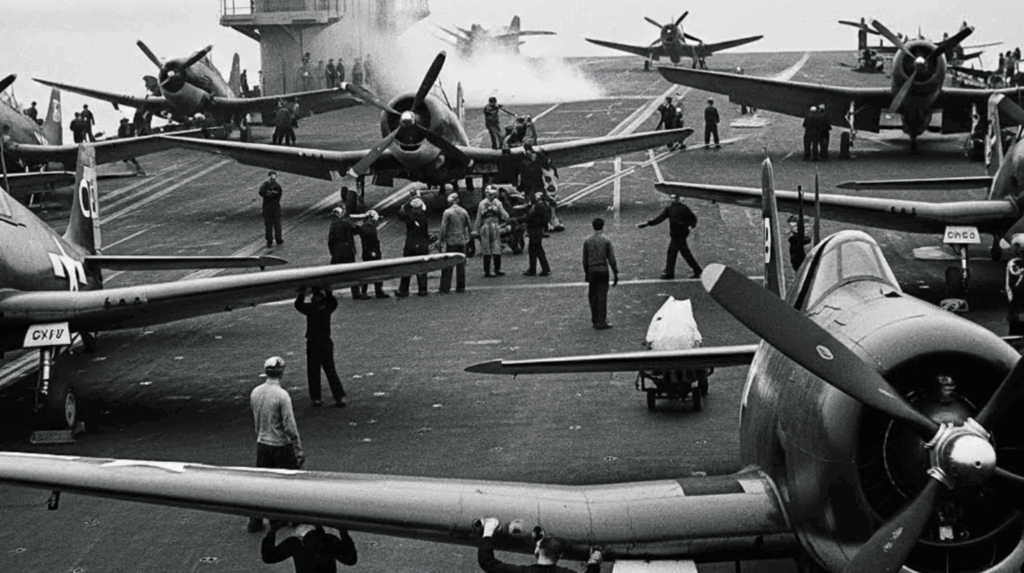
The first operational tests at sea were chaotic. Sailors had to learn new procedures for handling rockets on pitching decks, often in high winds. One early incident on the USS Chenango in 1943 illustrated the danger: a rocket ignited prematurely, firing across the deck and causing the aircraft it was attached to lurch forward. Miraculously, no one was killed, but it emphasized that JATO was as hazardous as it was valuable. Engineers quickly improved propellant stability, ignition systems, and mounting hardware, transforming JATO from a risky experiment into a practical tool.
Changing Naval Aviation
By 1944, JATO was regularly used on U.S. carriers. Bombers like the PBJ Mitchell, TBF Avenger, and even some fighters relied on rocket assistance. Strike aircraft could carry full bomb loads, launch in conditions that previously grounded them, and operate from smaller escort carriers. This changed naval strategy: carriers could be deployed more widely, and heavier aircraft could be launched without relying solely on long decks or calm weather. JATO extended both range and flexibility for naval aviation.
The human cost of these innovations was significant. Dozens of sailors and pilots were killed in JATO-related accidents during the war. Fires, premature ignitions, structural failures, and bad luck all contributed. Each accident led to better safety measures and improved equipment. Despite the risks, pilots embraced the technology because the alternative — limited aircraft capability — was worse. Lieutenant Harold Fischer described his first JATO-assisted takeoff as being pushed forward like a freight train, with G-forces pinning him to his seat, the roar of the rockets nearly drowning out the engines, and then, just as suddenly, airborne with a full bomb load.
A Legacy Beyond the War
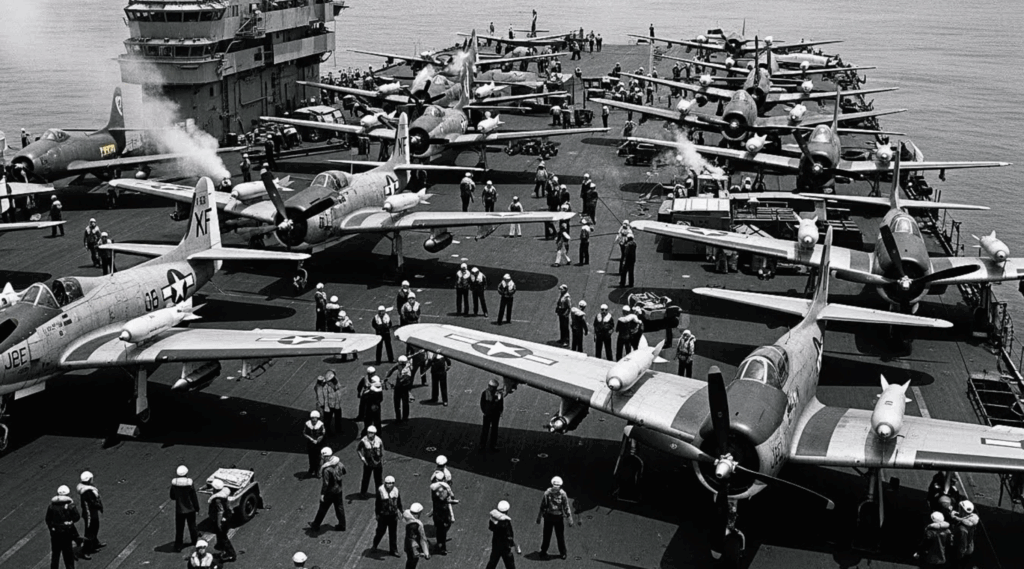
JATO technology extended beyond carriers. Land-based aircraft used it to take off from short or damaged runways and at high altitudes. Transport planes relied on it to carry heavy cargo from jungle strips, and experimental aircraft used it to reach speeds and altitudes otherwise impossible. After World War II, rocket-assisted takeoff continued to aid early jet aircraft, providing extra lift when engines were underpowered. The research laid the foundation for U.S. missile and space programs, as engineers applied knowledge from strapping rockets to planes to launching satellites and humans into space.
Modern carrier operations no longer rely on JATO. Advances in engines, catapults, and aircraft design have made rocket assistance unnecessary for most flights. Yet the daring innovation of strapping rockets to fully loaded aircraft saved lives during the war and changed the way carriers and their planes operated. Every time a naval aircraft launches from a carrier deck, the lessons learned from those early rocket experiments remain in practice.






