YFQ-42 Prototype Crashes During Takeoff, GA-ASI Temporarily Halts Testing and Launches Inquiry
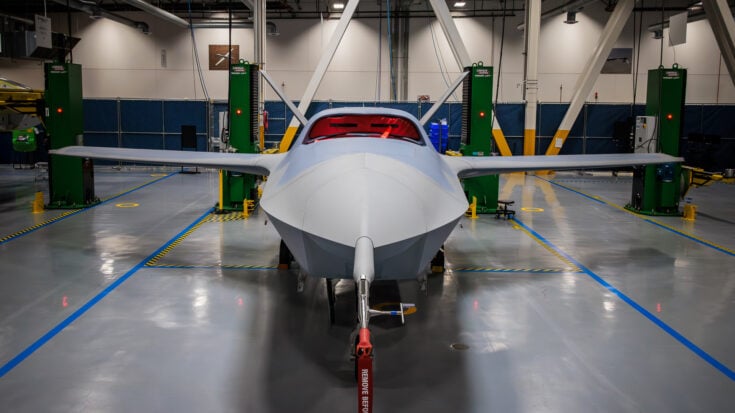
Photo by Secretary of the Air Force Public Affairs, Public domain, via Wikimedia Commons
On April 6, 2025, a prototype combat aircraft crashed shortly after lifting off from a desert runway in California, halting a closely watched experiment in military aviation. The aircraft, known as the YFQ-42A Dark Merlin, represented a new generation of semi-autonomous partners designed to fly alongside human pilots and reshape future air operations in coming decades ahead.
General Atomics Aeronautical Systems, Inc. confirmed that the aircraft experienced a mishap during takeoff at its Gray Butte flight facility near Palmdale. Company officials reported no injuries and immediately suspended flight testing while investigators began examining data, wreckage, and operational procedures. Early statements stressed caution, noting that conclusions would depend on a disciplined review rather than speculation alone.
Testing Setbacks Explained
The Dark Merlin belongs to the Collaborative Combat Aircraft program, an effort by the United States Air Force to develop unmanned jets able to operate with varying degrees of autonomy. Unlike traditional drones, these aircraft are intended to cooperate with crewed fighters, sharing risks during dangerous missions while extending surveillance reach and carrying additional weapons when required operationally.
First-generation CCAs combine automation with human oversight. Systems already demonstrated include automated taxiing, independent takeoff sequences, waypoint navigation, and safe recovery procedures. Engineers describe these features as stepping stones toward aircraft capable of limited decision-making in contested airspace, though commanders continue to emphasize the importance of human supervision during early operational phases of development and evaluation today worldwide.
Software and Competition
As testing progressed, software integration became central to the program’s goals. In early 2026, one Dark Merlin airframe flew using Sidekick autonomy software developed by Collins Aerospace, reflecting a deliberate strategy to allow multiple developers to work across platforms. Military planners hoped this approach would prevent dependence on a single supplier and encourage faster innovation in coming years.
Parallel efforts unfolded with other industry partners. Shield AI advanced its Hivemind autonomy system, while Anduril tested the YFQ-44A Fury, another aircraft chosen for the same development phase. Flights included simulated combat tasks and missile carriage trials, signaling how rapidly autonomous control concepts were moving from laboratory environments into practical flight testing and operational evaluation phases worldwide today.
Supporting Programs Continue
Development of the Dark Merlin also drew upon earlier experimental aircraft. The MQ-20 Avenger served as a flying laboratory, testing autonomy software during simulated air combat scenarios and remote control experiments linked to advanced fighters such as the F-22. These exercises allowed engineers to refine communication links and pilot interfaces before transferring lessons to newer designs under evaluation.
Another supporting effort, the XA-67A Off-Board Sensing Station, explored how unmanned aircraft could gather information beyond the reach of traditional sensors. Tested with the Air Force Research Laboratory, the platform examined distributed sensing concepts, allowing multiple aircraft to share targeting data in real time, an ability considered essential for modern networked warfare across contested operational environments worldwide today.
Looking Ahead Strategically
Competition within the program continued as additional designs entered consideration. Northrop Grumman’s YFQ-48A Talon Blue received its designation late in 2025, joining proposals such as Lockheed Martin’s stealth-focused Vectis concept. Both were expected to compete for later development stages, where performance lessons from early aircraft would shape requirements and influence long-term procurement decisions for future combat fleets globally.
The April crash underscored the experimental nature of collaborative combat aircraft development. Investigators focused on determining whether mechanical failure, software behavior, or operational factors contributed to the accident, while flight testing paused as a precaution. Historically, aviation progress has often advanced through careful analysis of setbacks, shaping safer designs before new technologies enter wider military service globally today.