Inside the Ohka Manned Missile
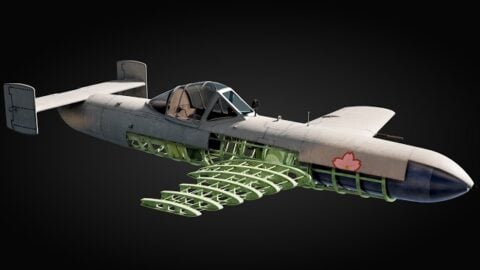
YouTube / Blue Paw Print
During the last years of WWII, as Allied forces advanced steadily across the Pacific, Japan turned to increasingly unconventional methods to slow the tide of the war. One of the most radical of these was the Yokosuka MXY-7 Ohka. It’s a purpose-built, manned flying bomb designed for a single, irreversible mission.
Unlike traditional aircraft, the Ohka was never meant to return. It represented a calculated gamble: trading a pilot and a machine for the chance to inflict catastrophic damage on heavily defended Allied warships.
Design: Simplicity with a Deadly Purpose
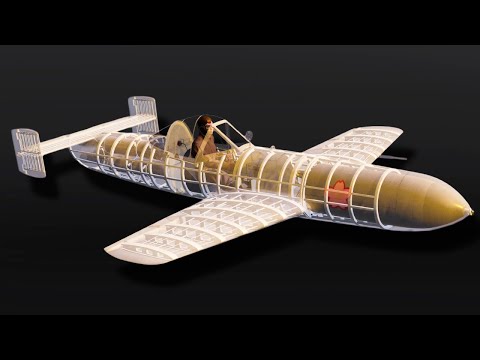
The Ohka’s design was brutally straightforward. A massive high-explosive warhead formed its nose, while a solid-fuel rocket motor was mounted at the rear. Sandwiched between these components was the pilot’s cramped cockpit, equipped with only the most basic flight controls and instruments.
Lightweight wooden wings provided lift and maneuverability during its terminal dive. Meanwhile, the rocket engine enabled bursts of tremendous speed, making interception extremely difficult in the final seconds before impact.
How It Worked
Unlike conventional strike aircraft, the Ohka was not capable of taking off under its own power. Instead, it was carried beneath a modified twin-engine bomber, most commonly the Mitsubishi G4M, until it reached a designated release point near an Allied fleet.
Once launched, the pilot would glide toward the target before igniting the rocket boosters for a high-speed terminal attack. At full thrust, the Ohka could exceed speeds that rendered most naval anti-aircraft defenses ineffective.
Deployment in Combat
Operational use of the Ohka began in 1945, mainly during the Battle of Okinawa. Japanese forces hoped its unprecedented speed and explosive payload would prove capable of breaching the dense defensive screens surrounding Allied naval task forces. While the weapon did achieve several successful strikes. Its reliance on slow-moving carrier bombers made it vulnerable before release, often resulting in heavy losses long before the Ohkas could be deployed.
The Ohka stands as one of the most striking examples of wartime innovation driven by desperation. Though technologically advanced in concept, its operational limitations ultimately reduced its strategic effectiveness.