Inside the V2 rocket, Nazi Wonder Weapon
YouTube/ Blue Paw Print
Few weapons have changed warfare as much as the V2 rocket. Built during World War II, it was the first long-range, mass-produced ballistic missile and the first human-made object to reach beyond Earth’s atmosphere.
It was designed to hit targets from hundreds of kilometers away without being stopped. Fighter planes could not catch it, anti-aircraft guns could not shoot it down, and there were no effective defenses against it. The V2 struck without warning, destroying anyone even heard it coming.
Sections
The V2 rocket was one of the most advanced weapons of World War II. Unlike airplanes or traditional artillery, it was a long-range ballistic missile that traveled high into the sky before falling toward its target at an extremely high speed. Once launched, it could not be stopped.
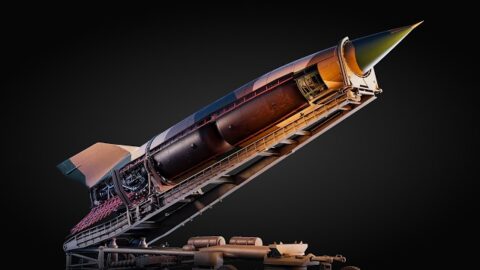
The rocket was built in several main sections. At the top was the warhead, which carried about one ton of explosive material. Below that was the guidance section. This area housed gyroscopes and control systems that maintained the rocket’s stability and ensured it remained pointed in the correct direction during flight.
The middle part of the rocket held the fuel and oxygen tanks. These tanks stored the propellants needed to power the engine. At the bottom was the engine section. This area included the main rocket engine, steering vanes, and fins that helped guide the missile while it was under power. Each section worked together to make the V2 fly accurately and reach its target.
Engine
The engine was the heart of the V2. It was a liquid fueled rocket engine that produced about 25 tons of thrust. This powerful force pushed the rocket upward at incredible speed. The V2 could travel faster than the speed of sound and reach the edge of space before descending toward its target.
Inside the engine, fuel and oxygen were mixed and ignited in a combustion chamber. The burning mixture created hot gases that shot out of the nozzle at the back of the rocket. This produced thrust and pushed the missile forward. To prevent the engine from overheating, engineers designed a cooling system that allowed fuel to flow around the combustion chamber before being burned. This helped protect the engine from extreme heat during flight.
Fuel System
The V2 used two main liquids for fuel: ethanol (a type of alcohol) and liquid oxygen. These were stored in separate tanks inside the rocket. When the missile was ready to launch, pumps forced both liquids into the engine, where they mixed and burned.
A special steam-powered turbopump helped move the fuel and oxygen at high pressure. This system made the engine strong and efficient, but it also made the rocket complicated to operate. Liquid oxygen had to be loaded shortly before launch because it was extremely cold and would quickly evaporate. This made launch preparations more difficult and time-sensitive.
Conclusion
The V2 rocket was a major step forward in rocket technology. Although it was created as a weapon, it introduced ideas and engineering methods that later helped shape modern missiles and space rockets. Its design showed that rockets could travel to the edge of space, opening the door to future space exploration.